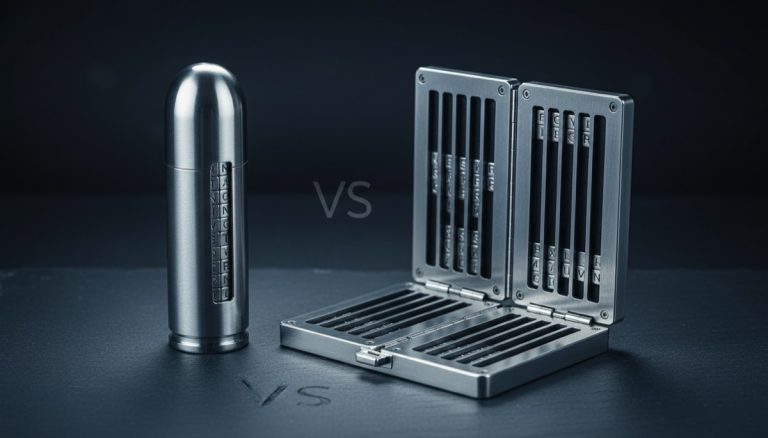

The increasing mainstream adoption of Bitcoin has brought cold storage security to the forefront of cryptocurrency asset protection. As Bitcoin’s value continues to reach new heights, the importance of implementing robust security measures has become paramount for both individual and institutional holders. This comprehensive analysis explores the various approaches to Bitcoin custody, with a particular focus on multisignature solutions and their role in modern digital asset security.
The fundamental challenge of Bitcoin custody lies in striking the optimal balance between security and accessibility. While single-signature wallets offer simplicity and ease of use, they present a single point of failure that could compromise an entire Bitcoin holding. This topic is explored further in our post on hardware wallet security models. This vulnerability has driven the development and adoption of more sophisticated security models, particularly multisignature (multisig) solutions that require multiple independent signatures to authorize transactions.
Multisignature setups typically implement configurations like 2-of-3 or 3-of-5, where a specified number of signatures from a larger set are required to execute transactions. This approach creates redundancy while protecting against both external threats and internal points of failure. However, the increased security comes with added complexity in setup and maintenance, requiring careful consideration of key storage locations, backup procedures, and inheritance planning. We explore this in detail in our article on Bitcoin inheritance planning.
The evolution of hardware wallet technology has played a crucial role in enabling secure multisig implementations. You can learn more about this in our resource on hardware wallet multisig setup. Modern devices offer air-gapped operation, robust security features, and increasingly user-friendly interfaces. The practice of using multiple hardware wallets from different manufacturers adds an additional layer of security by protecting against vendor-specific vulnerabilities or backdoors.
Key management represents perhaps the most critical aspect of any Bitcoin custody solution. For a deeper look at this topic, see our guide on modern Bitcoin custody solutions. The proper storage and backup of extended public keys (xpubs), derivation paths, and wallet configuration details are essential for maintaining long-term access to funds. Steel backups and redundant storage solutions have become standard practice for securing critical wallet recovery information against physical threats like fire or flooding.
Inheritance planning has emerged as a crucial consideration in Bitcoin custody solutions. The challenge lies in creating systems that remain secure during the holder’s lifetime while ensuring authorized heirs can eventually access the funds. Various approaches have emerged, from traditional estate planning incorporating detailed technical instructions to specialized services offering institutional-grade inheritance solutions.
The rise of specialized custody services and collaborative custody solutions presents new options for Bitcoiners seeking professional-grade security. Our comprehensive guide on collaborative Bitcoin custody covers this further. These services often combine institutional security practices with user-friendly interfaces, though they require careful evaluation of the trust trade-offs involved in delegating partial control to third parties.
Privacy considerations intersect significantly with custody solutions, particularly regarding the separation of KYC (Know Your Customer) and non-KYC UTXOs. Advanced users often implement coin control and mixing strategies to maintain privacy while ensuring regulatory compliance where required. This has led to the development of sophisticated wallet software that enables granular control over transaction inputs and outputs.
Looking forward, the continued evolution of Bitcoin custody solutions will likely focus on improving the user experience while maintaining or enhancing security standards. The development of new signature schemes, hardware security modules, and recovery mechanisms will further expand the options available to Bitcoin holders seeking to secure their assets for the long term.
The future may also see greater standardization of multisig protocols and inheritance solutions, making these security measures more accessible to mainstream users. As Bitcoin continues its journey toward broader adoption, the importance of robust custody solutions will only increase, driving further innovation in this critical aspect of the Bitcoin ecosystem.
Broader security architecture matters — review Bitcoin Wallet Sync: Security Deep Dive.
For a complete security picture, see Bitcoin Security: Cold vs Hot Wallet Setup.
Broader security architecture matters — review Air-Gapped to Quantum: Bitcoin Security.
Broader security architecture matters — review Bitcoin Inheritance: Cold Storage Planning.
For a broader perspective, explore our Bitcoin seed phrase security guide.
Step-by-Step Guide
Setting up a secure multisignature cold storage system requires methodical planning and disciplined execution. Follow these steps to implement a 2-of-3 multisig arrangement that eliminates single points of failure while preserving long-term access to your Bitcoin.
Step 1: Select Three Hardware Wallets from Different Manufacturers. Purchase hardware signing devices from at least two different vendors (e.g., Coldcard, Trezor, and Foundation Passport). Ordering from separate manufacturers protects against supply-chain compromises and vendor-specific firmware vulnerabilities. Verify each device’s authenticity using the manufacturer’s verification procedures before proceeding.
Step 2: Initialize Each Device in a Secure Environment. Set up each hardware wallet in a private location with no cameras or wireless devices nearby. Generate a fresh 24-word seed phrase on each device using its built-in entropy source. Write down each seed phrase on paper or stamp it into a metal backup plate. Never type seed phrases into a computer or take digital photos of them.
Step 3: Export Extended Public Keys (Xpubs). From each initialized device, export the extended public key via microSD card or QR code. These xpubs are needed to construct the multisig wallet descriptor but do not expose your private keys. Store the xpubs separately from the seed phrases, as they reveal your balance and transaction history if discovered.
Step 4: Build the Multisig Wallet in Coordinator Software. Use a wallet coordinator like Sparrow Wallet or Nunchuk to create a new 2-of-3 multisig wallet. Import all three xpubs and verify the resulting wallet descriptor. Each hardware wallet should display the same multisig receive address when prompted, confirming correct configuration across all devices.
Step 5: Test with a Small Transaction. Send a small amount of Bitcoin to the newly created multisig address. Then initiate a spending transaction, signing with two of the three devices to confirm the setup works correctly. Verify the transaction broadcasts and confirms on the blockchain before depositing larger amounts.
Step 6: Distribute Keys Across Geographic Locations. Store each hardware wallet and its corresponding seed backup in a separate physical location—your home safe, a bank safety deposit box, and a trusted family member’s secure storage, for example. This distribution protects against localized disasters such as fire, flood, or burglary while maintaining the ability to sign from any two locations.
Step 7: Document Your Configuration and Inheritance Plan. Record the wallet descriptor, derivation paths, and signing quorum requirements in a secure document. Store copies of this configuration data alongside at least two of the three seed backups. Include clear instructions for heirs that explain how to reconstruct the wallet and sign transactions, ensuring your Bitcoin remains accessible across generations.
Common Mistakes to Avoid
1. Storing All Signing Devices in One Location. Keeping all hardware wallets and seed backups together defeats the purpose of multisig. If a single theft, fire, or government seizure targets that location, you lose access to all keys simultaneously. Always distribute keys across geographically separate, secure locations with independent access controls.
2. Neglecting to Back Up the Wallet Descriptor. Many users back up their seed phrases but forget the multisig wallet descriptor—the file that defines which keys belong to the quorum and the derivation paths used. Without this descriptor, recovering the wallet from seed phrases alone becomes extremely difficult. Treat the descriptor as equally critical to your seed backups.
3. Using the Same Seed Phrase on Multiple Devices. Some users attempt to simplify their setup by loading the same seed onto more than one hardware wallet. This collapses the security model from a true multisig to what is effectively a single-key wallet, reintroducing the single point of failure that multisig is designed to eliminate.
4. Skipping the Verification Step After Setup. Failing to send a test transaction and verify that two devices can cooperatively sign before depositing significant funds is a critical error. Configuration mistakes—wrong derivation paths, mismatched xpubs, or incompatible script types—are much easier to fix before substantial Bitcoin is locked in the wallet.
5. Ignoring Firmware and Software Updates. Running outdated firmware on hardware wallets or using unsupported coordinator software introduces known vulnerabilities. Schedule periodic reviews to ensure all components of your multisig stack receive security patches, and always verify update authenticity through the manufacturer’s official channels before applying.
Frequently Asked Questions
What happens if one of my three hardware wallets breaks or is lost?
In a 2-of-3 multisig configuration, losing one device does not affect your ability to access funds. You can still sign transactions using the remaining two devices. However, you should immediately set up a replacement third key to restore the full redundancy of your security model. Use the seed phrase backup for the lost device to restore it onto a new hardware wallet, or generate an entirely new key and migrate funds to a fresh 2-of-3 wallet.
Is a multisig setup necessary for smaller Bitcoin holdings?
For holdings under a few thousand dollars, a well-secured single-signature hardware wallet with a proper seed backup is generally sufficient. Multisig adds complexity in setup, maintenance, and transaction signing that may not be justified for smaller amounts. However, as your holdings grow or if you need shared custody (family funds, business treasury), multisig becomes a proportionate security measure. The threshold for adopting multisig is a personal decision based on your risk tolerance and technical comfort.
Can I use multisig with a mobile phone as one of the signing devices?
Technically, some wallet software allows a phone to serve as a signing device in a multisig quorum. However, phones are general-purpose computing devices connected to the internet, making them significantly more vulnerable than dedicated hardware wallets. Using a phone as one key in a 2-of-3 setup reduces overall security. For cold storage of meaningful amounts, all signing devices should be dedicated hardware wallets that support air-gapped transaction signing.
How often should I verify my multisig cold storage setup?
Perform a full verification at least every six months. This includes powering on each hardware wallet to confirm it functions correctly, verifying that each device still recognizes the multisig wallet configuration, and checking that seed backups remain intact and readable at their storage locations. Regular verification catches problems—dead batteries, degraded paper backups, corroded metal plates—before they escalate into key loss scenarios.
What is the difference between 2-of-3 and 3-of-5 multisig for personal use?
A 2-of-3 setup requires any two of three keys to sign and is the most practical configuration for individuals and families. It tolerates one lost or compromised key while keeping transaction signing manageable. A 3-of-5 setup offers higher redundancy—two keys can be lost without affecting access—but adds significant operational complexity. Most individual holders find 2-of-3 provides the optimal balance between security and usability, while 3-of-5 is better suited for institutions or high-value treasuries requiring distributed governance.
Related Resources
- Hardware Wallet Buying Guide 2026 – Compare the top hardware wallets for use in your multisig cold storage setup.
- 2-of-3 Multisig Bitcoin Setup Guide – A hands-on walkthrough for creating your first 2-of-3 multisig wallet.
- The Complete Guide to Bitcoin Seed Phrase Security – Master the fundamentals of generating, storing, and protecting your seed phrases.
- Multisig Inheritance Planning Guide – Ensure your heirs can access your Bitcoin with proper inheritance documentation.
- Sparrow Wallet Multisig Tutorial – Step-by-step instructions for configuring multisig using Sparrow as your coordinator.