Five questions to check your seed
Most seeds are fine. These five questions find the few that are not. You can answer all of them without typing or showing your words anywhere.
- Did a device with a known flaw make your seed? In July 2026 a Coldcard firmware flaw produced seeds that attackers could guess. Look up your device and firmware in our security advisories.
- Have you tested it, starting from the paper? A device showing the right address proves the device works, not your paper. The test means typing the words from your backup into a hardware wallet. How to test your backup.
- If you use a passphrase, is it written down, and kept apart from the words? Without it, your words open a different, empty wallet. If it is forgotten, nobody can recover the funds.
- Have you ever typed your words into a website or a form, or given them to someone in a chat who said they were “support”? No real company asks for them. If you have, treat the seed as exposed: make a new one and move your funds to it.
- Do all your keys come from one manufacturer? Then one faulty generator can weaken all of them at once. Why three keys from one vendor are not multisig.
Go through it question by question with our seed backup checkup. It never asks for your words.
The secure storage of cryptocurrency private keys and seed phrases represents one of the most critical challenges in the realm of digital asset self-custody. As the cryptocurrency ecosystem continues to mature, implementing robust security measures while maintaining practical accessibility has become increasingly important for both individual investors and institutional players alike.
The fundamental principle of cryptocurrency security centers around the protection of seed phrases - those crucial sequences of words that serve as the master key to digital asset recovery. While hardware wallets provide an excellent first layer of security for active cryptocurrency management, the backup of their seed phrases requires careful consideration of multiple threat vectors including physical degradation, theft, fire, flood, and social engineering attacks.
A comprehensive seed phrase security strategy must address three core requirements: durability, accessibility, and redundancy. Durability ensures that the backup medium can withstand environmental threats like fire, water, and physical deterioration. Accessibility means that authorized parties can retrieve the information when needed, while maintaining sufficient security barriers against unauthorized access. Redundancy provides protection against catastrophic loss through geographic distribution of backups.
The evolution of seed phrase storage solutions has given rise to various approaches, from simple paper backups to sophisticated metal storage devices. Metal storage solutions have emerged as a preferred method due to their resistance to environmental damage. Stainless steel starts to melt at around 1,400°C and titanium at 1,668°C, far beyond what typical house fires reach. Additionally, these materials resist corrosion and physical degradation, ensuring long-term durability.
Implementing a multi-location strategy for seed phrase storage adds another crucial layer of security. This approach, often called geographic distribution, protects against localized disasters and provides redundancy without creating a single point of failure. However, each additional storage location must maintain the same high security standards to avoid introducing vulnerabilities.
Physical security measures like tamper-evident packaging play a vital role in protecting against unauthorized access and manipulation. These solutions provide visible evidence of any attempted interference, adding an important layer of security monitoring to static storage solutions. When combined with proper operational security practices, such measures significantly increase the difficulty of successful attacks.
The regulatory landscape surrounding cryptocurrency self-custody continues to evolve, presenting another dimension of risk that must be considered in security planning. As different jurisdictions implement varying approaches to cryptocurrency regulation, maintaining privacy and legal compliance becomes increasingly complex. This necessitates careful consideration of jurisdiction selection for backup storage locations.
Institutional approaches to seed phrase security often involve more complex solutions like multi-signature arrangements and sophisticated custody services. However, these solutions must balance security with practical usability - excessive complexity can itself become a security risk if it leads to implementation errors or creates recovery challenges.
The future of seed phrase security will likely see continued innovation in both physical storage solutions and digital recovery mechanisms. Emerging technologies like secure enclaves and advanced encryption schemes may provide new options for backup security, while improvements in physical storage materials and methods will enhance traditional approaches.
In conclusion, effective seed phrase security requires a carefully planned approach that combines multiple security layers while maintaining practical usability. The optimal solution typically involves durable physical storage, geographic distribution, and careful consideration of operational security practices. As the cryptocurrency ecosystem continues to evolve, staying informed about emerging security solutions and threats remains crucial for maintaining robust protection of digital assets.
Step-by-Step Guide: Building a Robust Seed Phrase Backup System
This guide walks through creating a secure, multi-location seed phrase backup system using metal storage, tamper-evident packaging, and geographic distribution.

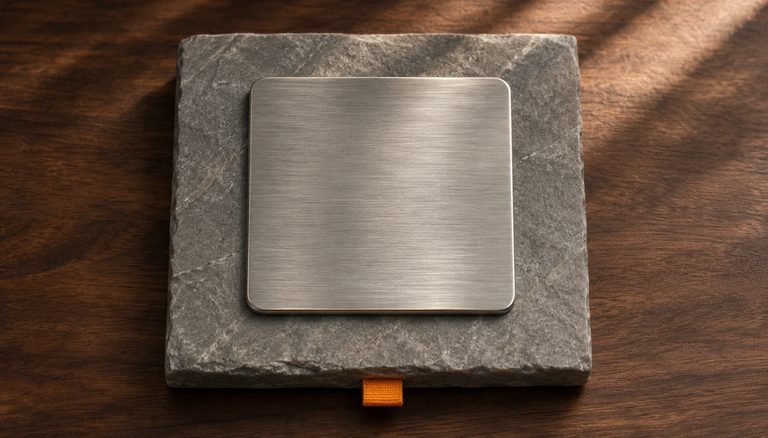
Step 1: Choose a metal backup medium. Select a stainless steel or titanium seed phrase storage device. Products like the Blockplate, Seedplate, or Cryptosteel Capsule (now sold as the Seed24) are purpose-built for this task. Avoid aluminum — it melts at 660°C, well within range of a house fire. Stainless steel (which starts to melt at around 1,400°C) and titanium (1,668°C) stay solid far above house-fire temperatures, but the design matters too: in Jameson Lopp’s stress tests, the heat warped one tile tray (the Billfodl) and letters fell out, while punched plates such as the Blockplate and Seedplate got top marks. For the most budget-friendly option, purchase a set of stainless steel washers from a hardware store and stamp each word’s first four letters onto individual washers, then thread them onto a bolt in order.

Step 2: Stamp or engrave your seed words. Work in a private location — no cameras, no other people present. Stamp each word onto your metal backup using a letter punch set and hammer, or use the device’s built-in letter tiles or sliding mechanism. Double-check every word against your hardware wallet’s displayed seed phrase. Verify the order: word 1 is position 1, word 12 (or 24) is the last position. A single transposed word renders the entire backup useless.
Step 3: Test the backup before you store it. The test has to start from the metal, not from the device. Several hardware wallets have a built-in check where you type the words from your backup on the device and it tells you whether they match: Trezor calls it Check backup (Device settings, Wallet backup), and Ledger has the Recovery Check app. Nothing is erased. Check every word and its position; do not skim. Our guide on how to test your seed phrase backup covers the other method, restoring on a second device, and how to test a passphrase.

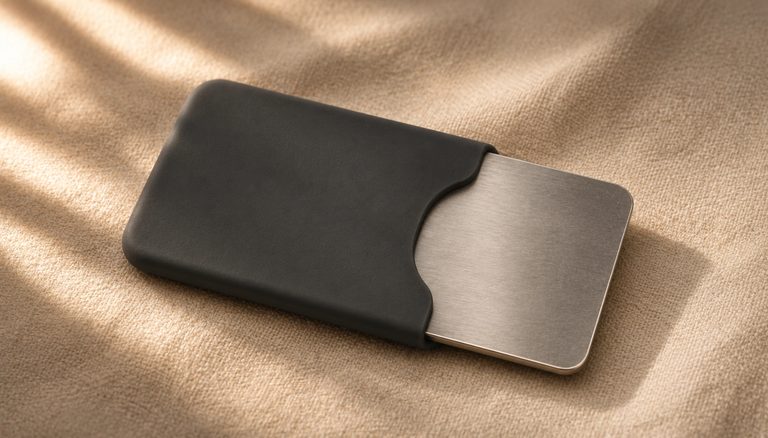
Step 4: Package with tamper-evident seals. Place the metal backup inside a tamper-evident bag (available from security supply vendors or Amazon). These bags have serial numbers and show visible signs of tampering — the word “VOID” appears once the seal has been opened, and pressing it shut again does not hide it. Record the serial number separately so you can verify the seal’s integrity when you check on the backup. For additional physical security, place the sealed bag inside a fire-resistant document safe or a bank safe deposit box.
Step 5: Create a second backup and distribute geographically. Make a second identical metal backup. Store the two backups in separate physical locations — for example, one in a home safe and one in a bank safe deposit box, or one at your primary residence and one at a trusted family member’s home in a different city. The goal is to survive any single-location disaster (fire, flood, earthquake) while still being able to recover your Bitcoin. A stolen copy is different: a second copy can’t undo it, so treat the seed as exposed and move your funds to a new one.
Step 6: Document your backup locations without revealing the seed. Write two documents, and put the words in neither. A letter of instructions tells a trusted person that the backups exist, whom to call and how to restore the wallet on a hardware wallet: the words never go into a phone or computer. A separate sheet says where each backup is, and where the passphrase is if you use one; seal it and keep it somewhere else, for example with a lawyer, so that nobody holds both documents and the backups at once. These documents are critical for inheritance planning: our inheritance planning lesson shows what goes on each.
Step 7: Schedule regular verification checks. Every 6-12 months, physically inspect each backup. Verify the tamper-evident seal is intact (check the serial number). Open one backup periodically to confirm the stamped words are still legible and correctly ordered, then seal it in a new bag and record the new serial number. Environmental exposure, even inside a safe, can degrade materials over decades — regular checks catch problems before they become emergencies.

Warning: Never photograph or digitize your seed phrase, and never type it into a phone or computer, not even to check it. A photo on your phone, a note in a cloud service, or an email to yourself creates a digital copy that can be stolen remotely. Never type the words into a website or give them to anyone who says they are “support”: no real company asks for them. Seed phrases must remain strictly offline and physical. If you believe your seed phrase has been compromised at any point, immediately transfer funds to a new wallet with a freshly generated seed.
Common Mistakes to Avoid
Storing the seed phrase only on paper. Paper degrades. Ink fades. Water destroys it. Fire consumes it. A paper backup stored in a drawer is a temporary solution at best. Even “laminated” paper backups fail under sustained heat or humidity. Invest in a metal backup: as of November 2026, many well-graded plates cost well under $100 (Lopp’s reviews list current prices), little next to the Bitcoin they protect.
Keeping all backups in the same location. A single-location backup protects against device failure but not against house fires, floods, burglaries, or natural disasters. If your home burns down and your only seed backup was in the desk drawer, your Bitcoin is gone permanently. Geographic distribution across at least two locations is the minimum standard for any meaningful amount of Bitcoin.
Using a BIP39 passphrase without a separate backup of it. A passphrase (the “25th word”) creates a completely separate wallet. If you use a passphrase and only back up the 24-word seed, you have a backup for the wrong wallet — the one without the passphrase. Back up your passphrase separately from the seed phrase and store it with the same level of security. Losing the passphrase is equivalent to losing the entire wallet.
Telling others where your seed phrase is stored. The fewer people who know the locations of your backups, the safer they are. Even well-meaning family members can inadvertently reveal this information. Use the sealed envelope method for inheritance: give a trusted attorney or family member a sealed envelope with recovery instructions, to be opened only in specific circumstances.
Splitting the words between places. Keeping words 1-12 in one place and 13-24 in another means losing either place loses everything, and the cleverer “two of three” splits leave a thief with far fewer words to guess. The FAQ below has the numbers. If you want your backup in pieces, use a scheme designed for it.
Verifying the seed only once and never again. Metal stamps can be misread years later. Environmental exposure can corrode letters. People relocate and forget about a backup in a previous home. Regular verification every 6-12 months ensures your backup system remains functional when you actually need it.
Frequently Asked Questions
What happens if I lose my seed phrase?
If you lose all copies of your seed phrase and your hardware wallet breaks, is stolen, or becomes unusable, your Bitcoin is permanently inaccessible. There is no password reset, no customer support, and no recovery process. The seed phrase is the only way to reconstruct your private keys. This is why redundant backups in separate physical locations are essential.Can someone steal my Bitcoin if they find my seed phrase?
Yes. Anyone who obtains your 24-word seed phrase can import it into any compatible wallet and immediately transfer all funds. If you use a BIP39 passphrase, the seed alone is not sufficient — the attacker also needs the passphrase. This is why physical security (tamper-evident packaging, locked safes, geographic separation) and operational security (not telling people where backups are) are both critical.Should I split my seed phrase and store parts in different locations?
No. Splitting the words themselves fails in two ways. Keep words 1-12 in one place and 13-24 in another, and losing either place loses everything. Use a “two of three” split instead (each of three places holds 16 of the 24 words), and whoever finds one place only has to guess the 8 missing words: about 80 bits of randomness instead of 256. With a 12-word seed the same split leaves about 40 bits, roughly what Coinkite estimated for the weakest Coldcard seeds of July 2026, made on the Mk2 and Mk3. Our seed split risk tool shows what a split does to those numbers.

If you want a backup in pieces, use a scheme built for it. SLIP-39 (Shamir’s Secret Sharing) creates shares where knowing fewer than the required number “does not leak information about the master secret”. Trezor’s Multi-share Backup uses it on the Safe 3, Safe 5, Safe 7 and Model T. SLIP-39 is not compatible with an existing BIP-39 seed: you create a new wallet and move your funds to it. The other option is a multisig wallet with keys from different manufacturers. Or simply keep two complete copies in two separate places.
How often should I check my seed phrase backup?
Every 6-12 months. Check that tamper-evident seals are intact, the storage location is secure, and the backup medium is legible. If you have moved, changed safes, or experienced a life event (divorce, death in the family), check immediately. The cost of a 15-minute inspection is trivial compared to discovering a problem when you actually need the backup.Is a bank safe deposit box a good place for a seed phrase backup?
It is one of the best options for a secondary backup location. Safe deposit boxes are protected against fire, flood, and theft better than most home storage. However, they have limitations: access requires the bank to be open, they may be subject to legal seizure, and in many countries the bank does not insure what is in the box. Never use a safe deposit box as your only backup location — maintain at least one backup you can access 24/7 at home in a personal safe.Sources
- Trezor: Check wallet backup on Trezor Safe 3 and Multi-share Backup on Trezor.
- Ledger: Recovery Check.
- SLIP-39 and BIP-39.
- Jameson Lopp: Metal Bitcoin storage reviews (grades and the heat, acid and crushing tests).
Last reviewed: 8 November 2026.
Related Resources
- Bitcoin Seed Management: Hot to Cold Storage Guide
- Bitcoin Wallet Passphrases: Create Hidden Wallets
- Dark Skippy Attack: Is Your Hardware Wallet Safe?
- Hardware Wallet Firmware Updates: Security Best Practices
- BIP-85 Explained: Derive Multiple Seeds From One