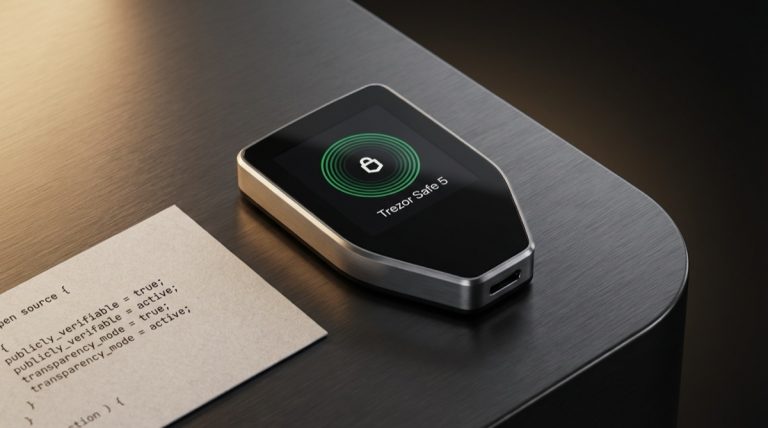

The increasing adoption of cryptocurrency has brought sophisticated security measures to the forefront, with multisignature (multisig) wallets representing one of the most powerful yet complex tools in Bitcoin security. You can learn more about this in our resource on Bitcoin multisig security. As users seek to enhance their financial sovereignty, understanding the intricacies of multisig implementations becomes crucial for both security and practical utility.
The fundamental architecture of Bitcoin multisig wallets relies on multiple private keys and their corresponding public keys (xpubs) working in concert to authorize transactions. In a typical 2-of-3 multisig setup, three separate hardware wallets generate independent key pairs, but any two signatures are sufficient to authorize a transaction. We explore this in detail in our article on hardware wallet multisig setup. This creates a robust security model that protects against both loss and theft while maintaining practical usability.
When implementing multisig solutions, users must navigate the complex interaction between different wallet software, hardware devices, and Bitcoin’s underlying protocol rules. The distinction between single-signature and multisignature addresses becomes particularly important, as they operate under different constraints and require different handling methods. This topic is explored further in our post on hardware wallet security models. Watch-only wallets, while useful for monitoring purposes, add another layer of complexity to this ecosystem.
The technical implementation of Bitcoin multisig relies heavily on P2SH (Pay to Script Hash) or P2WSH (Pay to Witness Script Hash) address types, which encapsulate the multiple-signature requirement within their script structure. For a deeper look at this topic, see our guide on hardware wallet seed migration. This implementation detail becomes particularly relevant when dealing with Partially Signed Bitcoin Transactions (PSBTs), which require specific transaction data to properly construct and validate multisig transactions.
Understanding PSBT requirements is crucial for successful multisig operation. These transactions need complete input information, including previous transaction data (txhex) for proper validation and signing. This requirement becomes especially important when dealing with non-segwit inputs, where the full transaction history must be available to construct valid signatures.
The interaction between different wallet software implementations can create additional challenges. While standards exist for multisig wallet creation and operation, different applications may handle xpubs, address generation, and transaction construction in slightly different ways. Our comprehensive guide on multisig wallet best practices covers this further. This can lead to complications when attempting to use multiple wallet applications with the same multisig setup.
Recovery scenarios in multisig configurations require careful consideration and technical understanding. When funds are sent to incorrect addresses or when wallet software fails to properly recognize multisig structures, users must often resort to low-level protocol operations to recover their assets. This might involve working with raw transactions, understanding script requirements, and manually constructing valid Bitcoin transactions.
The role of blockchain explorers and API services becomes crucial in recovery scenarios, as they provide access to necessary transaction data that might not be readily available in wallet software. Understanding how to retrieve and utilize this data, including raw transaction hexadecimal representations, can be essential for resolving complex multisig issues.
Best practices for multisig wallet management include thorough testing with small amounts, maintaining comprehensive backup information, and understanding the technical requirements of all components in the system. Users should verify their setup works as intended across all relevant software tools before committing significant funds.
Looking forward, the evolution of Bitcoin wallet software continues to improve the user experience around multisig operations. Enhanced standardization and more robust error handling will help prevent common pitfalls, while maintaining the security benefits that make multisig solutions attractive. The ongoing development of PSBTs and related standards will further streamline the interaction between different wallet implementations and hardware devices.
Distributing key custody is covered in Bitcoin Security: Multi-Sig and Air-Gapped Wallets.
Quorum-based security improves on this — explore Multisig Wallet: Security vs Usability.
For enhanced protection, consider Bitcoin Multisig Security: Key Challenges.
Distributing key custody is covered in Bitcoin Custody Security: Multi-Sig Setup Guide.
For a broader perspective, explore our Bitcoin seed phrase security guide.
Step-by-Step Guide
Recovering from multisig wallet issues requires methodical troubleshooting and an understanding of how each component in the multisig stack interacts. These steps cover the most common recovery scenarios and preventive measures.
Step 1: Document your complete multisig configuration before any recovery attempt. Before making any changes, record every detail of your current setup. Write down the exact quorum configuration (e.g., 2-of-3), the derivation paths used by each key (e.g., m/48’/0’/0’/2′), the script type (P2SH, P2WSH, or P2SH-P2WSH), and every xpub involved. Export the wallet descriptor from your coordinator software—this single string encodes all the information needed to reconstruct the wallet. Store this information securely offline. Many recovery failures occur because users attempt fixes without fully understanding their existing configuration.
Step 2: Verify address generation matches across all wallet software. The most common multisig issue is address mismatch between different software tools. Import your wallet descriptor into at least two independent wallet applications (e.g., Sparrow Wallet and Electrum) and verify that both generate identical receive addresses. Compare the first 5 receiving addresses and the first 5 change addresses. If they differ, the issue lies in the descriptor import—check derivation paths, key ordering, and script type. Bitcoin multisig addresses are deterministic, so any correctly configured software must produce the same addresses given the same inputs.
Step 3: Diagnose PSBT signing failures systematically. When a hardware wallet refuses to sign a Partially Signed Bitcoin Transaction, the problem typically falls into one of three categories: missing UTXO data, derivation path mismatches, or script type incompatibilities. First, check that the PSBT includes full previous transaction data (txhex) for each input—some hardware wallets require this for non-segwit inputs. Second, verify that the derivation path in the PSBT matches what the hardware wallet expects. Third, confirm that the hardware wallet firmware supports the script type your multisig uses. Update firmware to the latest version if needed, as older firmware may lack support for newer address types.
Step 4: Recover funds sent to the wrong address type. If you accidentally sent Bitcoin to a single-sig address derived from one of your multisig keys (a common mistake when hardware wallets are used in both single-sig and multisig setups), the funds are not lost. You can recover them by importing that specific key into a single-sig wallet and spending from there. In Sparrow Wallet, create a new single-sig wallet using the affected hardware wallet, scan for the address that received the funds, and construct a transaction to send the Bitcoin back to your correct multisig address. This requires only the one key that controls the accidental address.
Step 5: Reconstruct a lost multisig wallet from backups. If your coordinator software is lost or corrupted but you still have all seed phrases and your backup descriptor, you can rebuild the wallet entirely. Install fresh wallet coordinator software (Sparrow, Electrum, or Nunchuk). Import the descriptor string—this single piece of data contains all xpubs, derivation paths, the quorum requirement, and the script type. If you don’t have the descriptor but have all xpubs and know the configuration parameters, manually reconstruct the multisig wallet by entering each xpub, setting the correct quorum, derivation path, and script type. Verify by checking that known addresses match.
Step 6: Test your recovery plan with a small amount before committing funds. After resolving any issue or setting up a new multisig wallet, perform a complete lifecycle test. Send a small amount of Bitcoin (e.g., 10,000 satoshis) to the multisig address. Then create a spend transaction, sign it with each required hardware wallet, broadcast it, and confirm the funds arrive at the intended destination. Test with each possible signing combination (if 2-of-3, test all three pairs of signers). Only after all combinations work correctly should you transfer significant holdings to the multisig wallet.
Common Mistakes to Avoid
Mixing up derivation paths between single-sig and multisig wallets. Hardware wallets use different derivation paths for single-sig (typically m/84’/0’/0′) and multisig (typically m/48’/0’/0’/2′ for native segwit multisig). Using a single-sig derivation path when constructing a multisig wallet creates addresses that your hardware wallet may not recognize during signing. Always verify that all participants in the multisig use the correct multisig derivation path standard. This is the single most common cause of “hardware wallet won’t sign” errors in multisig setups.
Failing to backup the wallet descriptor or configuration file. Many users backup their seed phrases but neglect to backup the multisig wallet descriptor or configuration. Seed phrases alone are insufficient to reconstruct a multisig wallet—you need all xpubs, the quorum requirement, derivation paths, and the correct key ordering. Without the descriptor, having all three seed phrases for a 2-of-3 multisig does not let you recover funds. Store the complete wallet descriptor alongside each seed phrase backup so that any single backup location contains enough information to begin recovery.
Testing with only one signing combination. In a 2-of-3 multisig, there are three possible pairs of signers (AB, AC, BC). Testing only one pair and assuming the others work is a dangerous shortcut. Hardware wallet firmware differences, derivation path issues, or software bugs may cause one combination to fail while others succeed. Always test every possible signing combination with a small amount before trusting the setup with significant funds. A multisig wallet that only works with one pair of keys provides less redundancy than a single-sig wallet.
Using incompatible hardware wallet firmware versions. Different firmware versions may implement different levels of PSBT support, support different address types, or handle multisig verification differently. When one hardware wallet in your multisig quorum runs outdated firmware, it may refuse to sign transactions that newer firmware handles correctly. Before setting up a multisig wallet, update all participating hardware wallets to their latest firmware. Document the firmware versions as part of your configuration backup.
Sending Bitcoin directly to a watch-only wallet address without verifying on hardware. Watch-only wallets display receive addresses generated from the xpubs, but these addresses should always be verified on at least one hardware wallet before receiving funds. If the coordinator software has a bug or has been compromised, it could display an attacker’s address instead of your multisig address. Verify each new receive address on at least one (preferably two) hardware wallet screens before sharing it with anyone or using it to receive Bitcoin.
Frequently Asked Questions
What happens if I lose one of my three hardware wallets in a 2-of-3 multisig?
In a 2-of-3 configuration, losing one hardware wallet does not put your funds at risk—you can still sign transactions with the remaining two devices. However, you should treat this as an urgent security event. Immediately purchase a replacement hardware wallet, initialize it with a new seed, and create a new 2-of-3 multisig wallet using the two surviving keys plus the new replacement key. Transfer all funds from the old multisig wallet to the new one. Until you complete this migration, your security is reduced to what is essentially a 2-of-2 setup with no redundancy for key loss.
Can I use hardware wallets from different manufacturers in the same multisig?
Yes, and this is actually recommended as a security best practice. Using devices from different manufacturers (e.g., one Coldcard, one Trezor, and one Ledger) protects against vendor-specific vulnerabilities. If a firmware bug or supply chain attack affects one manufacturer, your multisig remains secure because the attacker would need to compromise devices from at least two different vendors. The key requirement is that all devices support the same derivation path standard and script type. Most modern hardware wallets support BIP48 multisig derivation and P2WSH (native segwit multisig), ensuring cross-vendor compatibility.
Why does my hardware wallet show a different address than my coordinator software?
Address mismatches between a hardware wallet and coordinator software almost always indicate a derivation path or xpub ordering issue. Multisig addresses are generated deterministically from the set of xpubs—if even one xpub is different or the keys are in a different order, completely different addresses are produced. Check that the coordinator imported all xpubs correctly and in the same order. Some software sorts xpubs lexicographically (as specified in BIP67), while others use the order they were entered. Ensure all software uses the same ordering convention.
Do I need to keep the full transaction history for PSBT signing?
For segwit inputs (addresses starting with bc1), the PSBT only needs to include the UTXO data (output being spent), not the full previous transaction. However, for legacy and P2SH-wrapped segwit inputs, some hardware wallets require the complete previous transaction hex (txhex) to verify the input amount and prevent fee attacks. Coldcard and some other hardware wallets enforce this requirement strictly. If your hardware wallet rejects a PSBT, try reconstructing it with full transaction data included. Modern coordinator software like Sparrow Wallet typically includes this data by default.
Is a 3-of-5 multisig significantly better than 2-of-3?
A 3-of-5 setup offers greater redundancy (you can lose two keys instead of one) but significantly increases operational complexity. You must manage five hardware wallets, five seed phrase backups, five geographic storage locations, and coordinate three devices for every transaction. For most individual holders, 2-of-3 provides an excellent balance of security and usability. A 3-of-5 configuration is more appropriate for institutional custody, joint holdings between multiple parties, or situations where keys must be distributed across distant geographic locations where gathering three co-signers is routinely feasible.