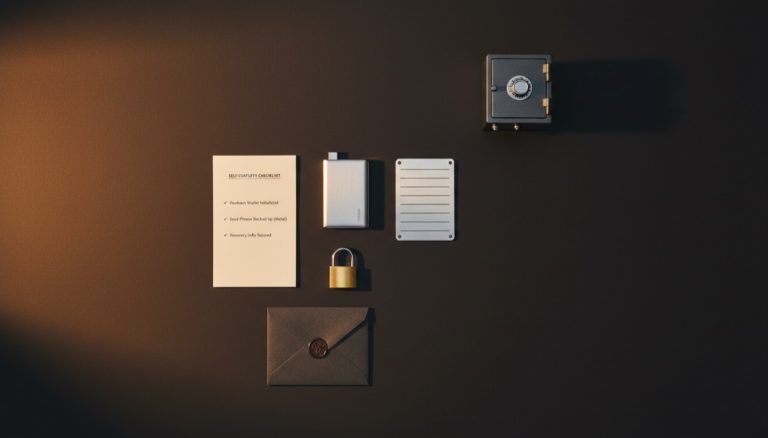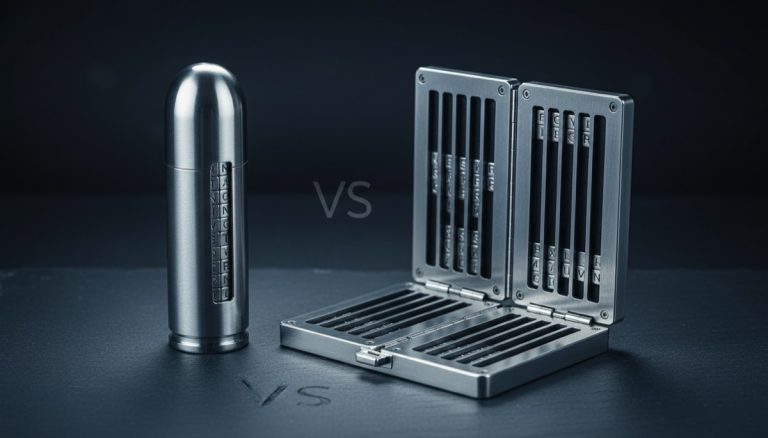

The evolution of Bitcoin security practices has led to increasingly sophisticated methods of protecting digital assets, with multi-signature wallets and physical backup solutions emerging as critical components of a robust security strategy. This comprehensive analysis explores the intricate balance between security, redundancy, and practical accessibility in Bitcoin storage solutions. For a deeper look at this topic, see our guide on Bitcoin storage solutions.
The foundation of Bitcoin security begins with proper seed phrase management, representing the ultimate backup of private keys that control access to funds. We explore this in detail in our article on Bitcoin seed phrase management. These seed phrases, typically 12 or 24 words generated using BIP39 standards, must be protected with the utmost care while remaining recoverable by authorized parties. The challenge lies in creating a system that is both highly secure against potential threats and sufficiently accessible for legitimate recovery scenarios.
Physical backup solutions have emerged as a crucial element in seed phrase storage, with metal plates becoming increasingly popular due to their durability against environmental factors like fire, water, and physical degradation. This topic is explored further in our post on hardware wallet storage tips. These solutions range from simple stamped metal plates to sophisticated devices designed specifically for seed storage. The key consideration in choosing a physical backup solution is finding the right balance between durability, security, and ease of recovery.
Multi-signature wallet configurations represent a significant advancement in Bitcoin security architecture. You can learn more about this in our resource on Bitcoin multisig security. By requiring multiple independent signatures to authorize transactions, multi-signature setups create a distributed security model that significantly reduces single points of failure. This approach allows users to implement sophisticated security policies while maintaining practical access to their funds.
The integration of hardware wallets into multi-signature setups adds another crucial layer of security. Our comprehensive guide on hardware wallet multisig setup covers this further. These dedicated devices store private keys in secure elements, isolated from potentially compromised computers. When combined with proper physical security measures, hardware wallets provide a robust defense against both digital and physical threats while maintaining operational functionality.
A critical consideration in any Bitcoin security strategy is geographical distribution of backup materials. This distribution must account for various risk scenarios, including natural disasters, political instability, and personal emergencies. The challenge lies in maintaining sufficient separation between components while ensuring authorized access remains practical.
The role of digital password managers and encrypted storage solutions in a comprehensive security strategy cannot be overlooked. While these tools should never store seed phrases directly, they can securely manage supporting information such as PIN codes, safe combinations, and public key information. The selection of these tools must carefully consider security features, reliability, and long-term availability.
Recovery planning represents a crucial aspect of Bitcoin security that is often overlooked. A properly designed recovery system must account for various scenarios, including incapacitation or death of the primary key holder. This requires careful documentation and communication with trusted parties while maintaining operational security.
The implementation of additional security layers, such as passphrases (sometimes called the ’25th word’), can significantly enhance protection against physical security compromises. However, these additional measures must be carefully weighed against the increased complexity they introduce to both regular operations and recovery procedures.
The relationship between physical security and digital security requires careful consideration in any comprehensive Bitcoin storage solution. Physical security measures, such as safes and tamper-evident packaging, must be implemented in a way that complements digital security measures without creating new vulnerabilities or points of failure.
Looking forward, the evolution of Bitcoin security practices will likely continue to emphasize the importance of redundancy and distribution while seeking to minimize complexity. Future developments in hardware wallet technology, physical backup solutions, and multi-signature protocols will further refine these approaches, potentially introducing new tools and methodologies for securing digital assets.
The ultimate goal in Bitcoin security remains finding the optimal balance between protection against various threats while maintaining practical usability and ensuring reliable recovery procedures. This balance will continue to evolve as new security solutions emerge and our understanding of various threat models develops further.
Distributing key custody is covered in Bitcoin Collaborative Custody: How Multi-Sig Works.
Multi-signature setups add another security layer — see Multisig Bitcoin Wallet: Setup and Recovery.
Multi-signature setups add another security layer — see Multisig Xpub Verification: Security Guide.
Distributing key custody is covered in Bitcoin Security: Multi-Sig and Air-Gapped Wallets.
For a broader perspective, explore our Bitcoin seed phrase security guide.
Step-by-Step Guide
Building a comprehensive Bitcoin cold storage system with multisig security involves layering physical and digital protections. This guide walks through the complete process from initial planning to operational maintenance of a production-grade cold storage solution.
Step 1: Assess your storage requirements and risk profile. Determine the total value you intend to protect, how frequently you need to access funds, and the geographic constraints of your backup locations. A long-term holder who rarely transacts has different needs than someone who periodically moves funds between cold and hot wallets. Your storage architecture should reflect your actual usage pattern — over-engineering adds complexity that increases the chance of user error.
Step 2: Select your metal seed backup solution. Choose a metal backup plate rated for extreme conditions. Stainless steel plates (grade 304 or 316) resist corrosion and withstand temperatures up to 1,400°C, well above typical house fires (600-800°C). Options include stamping kits (letter punches with a hammer), engraving kits (electric engraving pen), and pre-manufactured plates with letter tiles. Stamping produces the most durable impressions but requires physical effort and practice on scrap metal first.
Step 3: Generate seeds on isolated hardware devices. Initialize each hardware wallet in a Faraday-shielded room or at minimum with all wireless devices powered off and removed. Use the hardware wallet’s internal random number generator, optionally supplemented with dice-roll entropy on devices that support it (such as Coldcard’s dice roll feature). Write the seed phrase on paper first as a temporary record, then immediately transfer it to your metal backup.
Step 4: Create the metal backups. Stamp or engrave each seed word onto your metal plate. Double-check every word against the device’s display before moving to the next. After completing all words, verify the entire phrase one final time by reading from the metal plate and comparing to the device screen. Mark each plate with the device’s master key fingerprint (8 hex characters) so you can associate it with the correct key position without revealing the device type or your identity.
Step 5: Build the multisig wallet. With all seeds generated and backed up, export xpubs from each device and create the multisig wallet in your coordinator software. Follow standard multisig setup procedures: import xpubs, define the quorum, register the wallet on supporting hardware devices, and verify the first several receive addresses across all devices. Export and back up the wallet descriptor file.
Step 6: Implement geographic distribution. Place each seed backup, its associated hardware device, and a copy of the wallet descriptor at separate secure locations. For a 2-of-3 setup, a common distribution pattern is: Location A (home safe) — Key 1 seed + hardware device + wallet descriptor; Location B (bank safe deposit box) — Key 2 seed + wallet descriptor; Location C (trusted family member or collaborative custody provider) — Key 3 seed + wallet descriptor. No single location compromise should provide enough keys to meet the signing threshold.
Step 7: Create a tamper-evident packaging system. Seal each metal seed backup and wallet descriptor copy in tamper-evident bags with unique serial numbers. Record these serial numbers in a separate location. During periodic inspections, verify the serial numbers and check for signs of tampering. This provides an early warning system if someone accesses your backup materials without authorization.
Step 8: Establish a maintenance schedule. Set quarterly or semi-annual reminders to: verify the integrity of tamper-evident packaging at each location, confirm that hardware devices still function correctly, update firmware on one device at a time, and test a receive-address verification across devices. Annual or bi-annual, perform a full test transaction to confirm end-to-end signing capability. Document each inspection in a maintenance log.
Common Mistakes to Avoid
1. Using low-quality metal for seed backups. Thin aluminum plates, zinc alloys, or unrated metals may deform, melt, or become illegible in a fire. Invest in plates made from grade 304 or 316 stainless steel with a thickness of at least 1.5mm. The cost difference is minimal compared to the value being protected, and inferior materials have failed in documented fire-testing comparisons.
2. Photographing or digitizing seed phrases. Never photograph, scan, type into a computer, or store seed phrases in any digital format — including encrypted digital files. Digital copies create attack surfaces that do not exist with purely physical backups. A photograph in your phone’s camera roll, even briefly, may be backed up to cloud storage, scanned by photo-organizing algorithms, or accessed by compromised apps.
3. Placing all backup materials behind a single access control. If all your seed backups require the same safe combination, the same bank’s safe deposit box system, or the same family member’s cooperation, you have a single point of failure. Diversify the access mechanisms — different safes with different combinations, banks with independent access requirements, and family members in different households.
4. Neglecting to test recovery from metal backups. After stamping or engraving, verify that the words are legible and unambiguous. Letters like “U” and “V” or “I” and “L” can appear similar on stamped metal. Recover the seed on a separate test device from the metal backup alone to confirm readability. If any letter is ambiguous, re-stamp or mark it clearly before storing the backup.
5. Forgetting humidity and environmental factors. While stainless steel resists corrosion well, the storage environment matters for tamper-evident bags, paper documentation, and hardware devices. Safe deposit boxes in humid climates can develop condensation. Home safes in basements may be flood-prone. Consider silica gel packets in enclosed storage and periodic environmental inspections.
Frequently Asked Questions
Do I need a dedicated safe for Bitcoin seed storage?
A UL-rated fire safe (minimum 1-hour fire rating at 1,700°F/927°C) provides reasonable protection for seed backups stored on metal plates. However, the safe’s primary purpose is protecting against casual discovery and fire — it should not be your only security layer. A determined thief with enough time can open most consumer safes. The multisig architecture itself provides the primary theft protection: even if one safe is breached, the attacker only obtains one key out of the required quorum. Floor-mounted or wall-embedded safes offer additional resistance against removal.
How often should I verify my cold storage backups?
A reasonable schedule for most personal holdings is quarterly visual inspection of tamper-evident packaging and semi-annual address verification on hardware devices. For institutional holdings or amounts representing a significant portion of your net worth, monthly inspections and quarterly signing tests are appropriate. The goal is catching problems (device failures, environmental damage, unauthorized access) before they become unrecoverable. Document each inspection to create an audit trail and identify emerging issues.
Can I split a single seed using Shamir’s Secret Sharing instead of using multisig?
Shamir’s Secret Sharing (SSS), implemented in some hardware wallets as SLIP-39, splits a single seed into multiple shares that must be recombined to reconstruct the full seed. While this provides backup redundancy, it differs fundamentally from multisig. SSS requires reconstructing the complete seed on a single device for signing, creating a moment of vulnerability. Multisig never requires any single device to know more than one key. For cold storage security, multisig is generally superior because the keys remain separated throughout the signing process. SSS is better suited as a backup redundancy mechanism for a single key within a multisig setup.
Should I use a passphrase (25th word) in addition to multisig?
Adding BIP-39 passphrases to individual keys in a multisig setup provides an additional authentication layer — even if an attacker obtains a seed backup, they also need the passphrase to derive the correct key. However, this adds significant complexity to recovery and inheritance planning. Each passphrase must be backed up separately from its seed, and forgetting or losing a passphrase is equivalent to losing the key entirely. For most users, the multisig quorum itself provides sufficient protection without passphrases. If you do use passphrases, use a unique passphrase per key and store passphrase backups with the same rigor as seed backups.
Related Resources
- Bitcoin Seed Phrase Storage: Best Practices and Risk Mitigation — Detailed strategies for securing seed phrase backups across various storage mediums.
- Cryptocurrency Seed Backup Solutions: Security Considerations — A comparison of different physical seed backup products and their durability.
- Hardware Wallet Storage: Security, Durability, and Best Practices — How to physically store and maintain hardware wallet devices for long-term use.
- Bitcoin Security Architecture: Designing Optimal Cold Storage Solutions — Architectural considerations for building comprehensive cold storage systems.
- The Complete Guide to Bitcoin Seed Phrase Security — Comprehensive coverage of seed phrase security fundamentals.