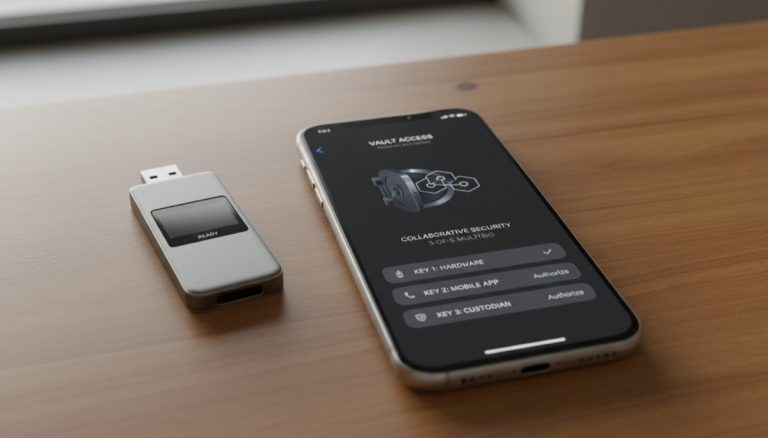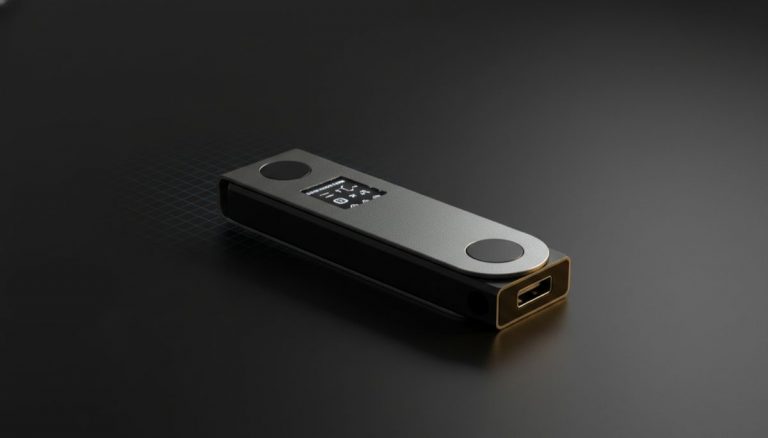

The evolution of Bitcoin security practices has led to sophisticated solutions that balance robust protection with practical usability. Among these innovations, multi-signature wallet configurations represent a significant advancement in cryptocurrency security architecture, offering a nuanced approach to digital asset protection that goes far beyond simple private key management. For a deeper look at this topic, see our guide on Bitcoin multisig security.
The fundamental architecture of multi-signature wallets introduces a sophisticated security model that requires multiple independent signatures to authorize transactions. This approach significantly reduces single points of failure and creates a more resilient system for protecting digital assets. By distributing signing authority across multiple devices or participants, multi-signature setups effectively mitigate risks associated with both technical failures and potential security breaches.
Proper backup management of multi-signature configurations emerges as a critical consideration in this security framework. While traditional single-signature wallets can be restored using a single seed phrase, multi-signature setups require additional configuration data that defines the relationship between different signing devices and their specific roles within the security protocol. You can learn more about this in our resource on hardware wallet security models. This configuration information includes public keys, threshold requirements, and wallet parameters that are essential for reconstructing the wallet structure.
Hardware wallets have evolved to play a central role in multi-signature implementations by providing secure storage not only for private keys but also for wallet configuration data. We explore this in detail in our article on hardware wallet multisig setup. This capability serves multiple critical functions in the security ecosystem. First, it ensures that devices can verify the legitimacy of receiving addresses associated with the multi-signature setup, preventing potential attacks that might attempt to redirect funds to unauthorized addresses. Second, it enables hardware wallets to properly validate and sign transactions within the context of the multi-signature arrangement.
The interaction between hardware wallets and wallet software applications represents a crucial aspect of practical multi-signature implementation. Modern hardware wallets can export configuration details in standardized formats, allowing seamless integration with compatible software wallets. This interoperability is essential for both initial wallet setup and ongoing transaction management, enabling users to maintain strong security while retaining operational flexibility. Our comprehensive guide on Bitcoin transaction privacy covers this further.
Partially Signed Bitcoin Transactions (PSBTs) play a vital role in the multi-signature ecosystem, serving as the standardized format for coordinating signatures across multiple devices. However, the PSBT format alone doesn’t carry all the necessary information about the multi-signature wallet structure. This limitation necessitates proper storage and management of wallet configuration data to ensure secure transaction processing and change address verification.
The security implications of configuration backup strategies extend beyond mere redundancy. Encrypted digital backups stored on hardware devices offer advantages over traditional paper or PDF backups, including protection against physical degradation, easier secure transportation, and reduced risk of exposure to unauthorized parties. However, maintaining multiple backup formats and locations remains a prudent practice for comprehensive disaster recovery planning.
Looking toward future developments, the integration of multi-signature capabilities with emerging Bitcoin technologies presents both opportunities and challenges. As Layer 2 solutions like Lightning Network continue to evolve, the role of multi-signature configurations in these new contexts will require careful consideration and potentially new approaches to backup and configuration management.
The practical implementation of multi-signature wallets represents a balance between security, usability, and technical sophistication. Success in this domain requires understanding not only the cryptographic principles underlying multi-signature schemes but also the practical considerations of configuration management and backup strategies. This topic is explored further in our post on Bitcoin cryptographic signatures. As the Bitcoin ecosystem continues to mature, these considerations will likely become increasingly important for both individual users and institutional implementations.
Step-by-Step Guide
Setting up a multi-signature wallet requires coordinating multiple hardware devices, generating a shared wallet configuration, and testing the full signing workflow before depositing significant funds. This guide covers a 2-of-3 multisig setup using hardware wallets and Sparrow Wallet as the coordinator.
- Acquire three hardware wallets from at least two different manufacturers. Using devices from different vendors (for example, two Coldcard devices and one Trezor, or one Coldcard, one Trezor, and one Ledger) protects against a firmware vulnerability specific to a single manufacturer. Purchase directly from manufacturers rather than third-party resellers to minimize supply-chain risk. Upon receiving each device, verify tamper-evident packaging and check firmware authenticity using each manufacturer’s verification process.
- Initialize each hardware wallet independently. Set up each device in a secure location, ideally on separate occasions and in different physical locations if possible. Generate a new seed phrase on each device, writing it down on metal or durable media rather than paper. Never enter seed phrases into a computer, phone, or any internet-connected device. Confirm each device displays its seed phrase correctly by performing the on-device verification check. Record each device’s master fingerprint (an 8-character hex identifier) — you will need these to identify each cosigner later.
- Export extended public keys (xpubs) from each hardware wallet. On each device, navigate to the multisig export function and export the xpub data via microSD card or QR code. Coldcard supports direct multisig export to microSD. Trezor and Ledger export xpubs through their companion software or via Sparrow Wallet’s connection interface. Each export file contains the device’s extended public key and derivation path. Use the native segwit multisig derivation path (
m/48'/0'/0'/2') for P2WSH multisig, which producesbc1addresses and pays the lowest transaction fees. - Create the multisig wallet in Sparrow Wallet. Open Sparrow and select File > New Wallet. Name the wallet descriptively (e.g., “Cold Storage 2of3”). Under Policy Type, select “Multi Signature.” Set the threshold to 2-of-3. For each cosigner, import the xpub from the corresponding hardware wallet export file — either by loading the microSD file, scanning the QR code, or connecting the device via USB. Sparrow will display each cosigner’s master fingerprint and derivation path. Verify these match what each device reported during setup.
- Register the wallet descriptor on each hardware wallet. Export the wallet output descriptor from Sparrow and load it onto each hardware wallet. On Coldcard, this is done by writing the multisig configuration file to microSD and importing it on the device. The device will display the quorum details (2-of-3), the derivation path, and the other cosigners’ fingerprints. Confirm these details on the device screen. This registration step allows each hardware wallet to verify that receive and change addresses belong to the multisig wallet, preventing address substitution attacks.
- Verify receive addresses across all devices. In Sparrow, navigate to the Receive tab and note the first receive address. On each hardware wallet, use its address verification function to display the same address. All three devices and Sparrow should show identical addresses. If any device shows a different address, stop immediately — the wallet configuration was not imported correctly. Repeat this verification for the second and third addresses to confirm the wallet is consistently derived across all devices.
- Test the complete signing workflow with a small amount. Send a small quantity of bitcoin (e.g., 10,000 sats) to the verified receive address. Once confirmed, create a transaction in Sparrow sending the funds back out. Export the unsigned PSBT to the first signing device via microSD or QR code. Sign the transaction on that device, then transfer the partially signed PSBT to the second signing device and add the second signature. Import the fully signed transaction back into Sparrow and broadcast it. Verify the transaction confirms on-chain. This test validates the full round-trip signing process.
- Back up the wallet descriptor and distribute keys geographically. Export the wallet descriptor file from Sparrow and store encrypted copies alongside each hardware wallet’s seed phrase backup. Each storage location should contain one seed phrase and one copy of the descriptor. Distribute the three key-and-descriptor packages across three separate physical locations — for example, your home safe, a safety deposit box, and a trusted family member’s secure storage. This distribution ensures that no single location holds enough material to spend funds, while any two locations together can authorize a transaction.
Common Mistakes to Avoid
Using hardware wallets from the same manufacturer exclusively
If all three devices in a 2-of-3 multisig come from the same manufacturer, a single firmware vulnerability could theoretically compromise the entire setup. Diversifying across manufacturers means an attacker would need to exploit multiple independent codebases simultaneously. While no Bitcoin hardware wallet firmware exploit has resulted in remote fund theft to date, manufacturer diversification follows the same defense-in-depth principle that makes multisig appealing in the first place.
Forgetting to register the wallet descriptor on hardware wallets
If you skip the descriptor registration step, your hardware wallet cannot verify that the addresses shown by Sparrow actually belong to your multisig wallet. An attacker who compromises Sparrow could display a different address and redirect your deposit. With the descriptor registered, the hardware wallet independently derives and verifies each address, providing a second confirmation that is not dependent on the coordinator software’s integrity.
Storing all seed phrases in the same physical location
Keeping all three seed backups together eliminates the geographic distribution advantage of multisig. A single burglary, fire, or natural disaster could expose all three keys simultaneously. The entire purpose of distributing keys across multiple locations is to ensure that compromise of one location does not compromise the quorum threshold. Store each seed in a different secure location that you can access independently.
Not testing recovery before depositing large amounts
Setting up the multisig wallet, depositing funds, and only then discovering that a seed backup is incorrect or a descriptor file is missing creates a potential loss scenario. Before moving significant funds, simulate a full recovery: wipe one hardware wallet, restore it from its seed backup, re-import the wallet descriptor, and verify you can still sign a test transaction. This confirms your backup and recovery process works end-to-end.
Frequently Asked Questions
What happens if one of my three hardware wallets breaks?
In a 2-of-3 configuration, you only need two devices to authorize transactions. If one device fails, purchase a replacement of the same model (or any compatible device), restore it from the corresponding seed phrase backup, and import the wallet descriptor file. The restored device will function identically to the original. Until the replacement is ready, you can still spend using the remaining two working devices. This redundancy is a core benefit of the 2-of-3 design.
Can I use a passphrase (25th word) on hardware wallets in a multisig setup?
Yes, but it adds complexity. Each device with a passphrase derives a different set of keys than the same seed without a passphrase. If you use passphrases, you must back up both the seed phrase and the passphrase for each device separately. Forgetting or incorrectly recording a passphrase for even one device in the quorum could make it impossible to reach the signing threshold. If you choose to use passphrases, test recovery thoroughly including the passphrase entry step.
Is 2-of-3 better than 3-of-5 for personal holdings?
For most individuals, 2-of-3 provides a strong balance between security and usability. It tolerates the loss of one key while preventing any single key from spending funds. A 3-of-5 setup offers greater redundancy (you can lose two keys and still spend) but requires managing five devices, five seed backups, and five storage locations. The additional complexity increases the chance of operational errors. 3-of-5 is more appropriate for organizations or very large holdings where the operational overhead is justified by the stakes involved.
Do all cosigner devices need to be online simultaneously to sign a transaction?
No. Multi-signature transactions use PSBTs (Partially Signed Bitcoin Transactions), which allow asynchronous signing. You create the transaction in Sparrow, export the unsigned PSBT to the first signing device (via microSD card, QR code, or USB), sign it, then transfer the partially signed PSBT to the second device for the additional signature. The devices never need to communicate with each other or be connected to the internet. Each signing step can happen at a different time and location.
Can I change the quorum threshold (e.g., from 2-of-3 to 3-of-5) after setup?
Changing the quorum creates an entirely new wallet with a different set of addresses. You cannot modify an existing multisig wallet’s threshold in place. To upgrade from 2-of-3 to 3-of-5, you set up the new 3-of-5 wallet with five cosigner devices, verify all addresses, test the signing flow, and then transfer funds from the old wallet to the new one via an on-chain transaction. The old wallet remains functional until you move all funds out of it.
Related Resources
- Understanding Multi-Signature Wallet Configurations
- Transitioning from Single-Signature to Multisig Bitcoin Wallets
- Hardware Wallet Security: Multisig Implementation
- Multisig Bitcoin Wallet Recovery Protocols
- Multisig Wallet Security: Backup Maps and Key Management
Distributing key custody is covered in Multisig Bitcoin Wallet Recovery Protocols.
Quorum-based security improves on this — explore Multisig Wallet: Security vs Usability.
Multi-signature setups add another security layer — see Bitcoin Collaborative Custody: How Multi-Sig Works.
Quorum-based security improves on this — explore Multisig Bitcoin Wallet: Setup and Recovery.