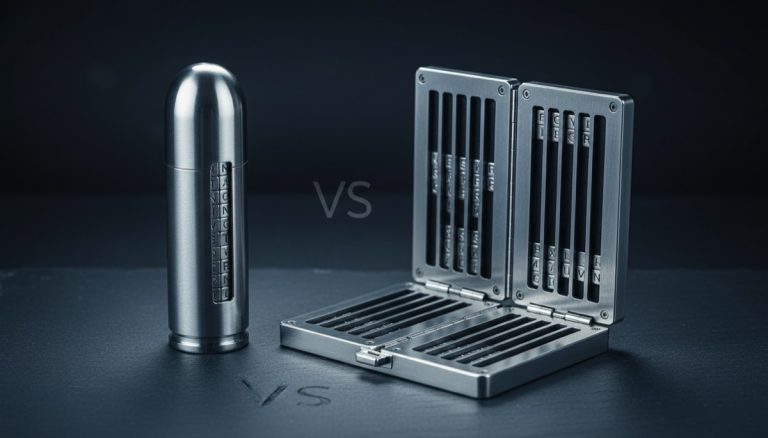

The evolution of Bitcoin custody solutions has given rise to sophisticated security architectures, with multi-signature (multisig) wallets representing one of the most robust approaches to securing digital assets. This comprehensive analysis explores the technical intricacies of multisig implementations, their recovery mechanisms, and the critical considerations for maintaining secure yet recoverable Bitcoin holdings.
At its core, a multi-signature wallet architecture implements an M-of-N signing scheme, where M signatures are required from N total possible signers to authorize a transaction. This creates a powerful security model that distributes trust and eliminates single points of failure. The most common implementation is a 2-of-3 setup, requiring two signatures from three possible signing devices to move funds. This balance provides both security through redundancy and practical usability.
The technical foundation of multisig wallets rests on the interaction between extended public keys (xpubs) and their corresponding private keys. Each participant in the multisig setup generates a unique key pair, with the xpubs being combined to create the wallet’s receiving addresses. This architecture requires careful consideration of backup and recovery procedures, as the loss of critical wallet components can lead to permanent loss of funds.
Recovery procedures for multisig wallets involve several critical components that must be preserved. The complete wallet structure requires all xpubs from participating devices, even though not all private keys are needed for signing. This creates an important distinction between operational security (requiring M signatures) and recovery requirements (needing all xpubs). Understanding this difference is crucial for implementing effective backup strategies.
The implementation of multisig recovery protocols requires careful attention to detail regarding seed phrases, wallet configuration files, and derivation paths. Each signing device typically generates a unique seed phrase, which must be securely backed up. While only M seeds are required for signing transactions, having access to all N seeds can facilitate complete wallet reconstruction if the original wallet configuration is lost.
Wallet reconstruction scenarios can vary in complexity depending on the available backup components. In a best-case scenario, users maintain an encrypted backup of their wallet configuration file, which contains all necessary xpubs and path information. This allows for straightforward wallet reconstruction requiring only M seed phrases for signing. However, in cases where the configuration is lost, users must have all N seed phrases to regenerate the complete wallet structure.
It’s crucial to distinguish between multi-signature implementations and other security schemes like Shamir’s Secret Sharing (SSS). While both provide mechanisms for distributing trust, they operate on fundamentally different principles. Multisig creates multiple independent keys that must cooperate, while SSS splits a single key into shares that can be reconstituted. This distinction has important implications for backup and recovery procedures.
The practical implementation of multisig recovery typically involves specialized wallet software that can handle complex multi-signature scenarios. These applications must manage the interaction between multiple hardware signing devices, coordinate key generation and backup procedures, and facilitate secure transaction signing. The choice of wallet software and hardware devices significantly impacts both security and recovery options.
Looking toward the future, the evolution of multi-signature implementations continues to advance. New protocols and standards are emerging to improve the robustness and user-friendliness of multisig setups while maintaining their security properties. These developments include better backup mechanisms, more intuitive recovery procedures, and improved integration with hardware security modules.
In conclusion, multi-signature wallet architectures represent a powerful tool for securing Bitcoin holdings, but their effective implementation requires careful attention to backup and recovery procedures. Success depends on maintaining proper documentation of all critical wallet components while balancing security requirements with practical usability. As the technology continues to mature, we can expect to see further improvements in both the security and recovery aspects of multi-signature implementations.
Step-by-Step Guide to Multisig Wallet Recovery
- Inventory Your Available Backup Materials
Before beginning any recovery attempt, gather every piece of backup information you have: seed phrases (written or stamped on metal), wallet configuration files (sometimes called wallet descriptors or JSON exports), xpub records, derivation path notes, and hardware devices. Lay them out and determine exactly what you have versus what you need. In a 2-of-3 setup, you need at minimum two seed phrases and all three xpubs to reconstruct and spend from the wallet.
- Identify the Wallet Coordination Software
Determine which software originally coordinated your multisig wallet. Whether it was Sparrow Wallet, Electrum, Nunchuk, or Caravan, each uses slightly different file formats for wallet descriptors. If you have the original configuration file, open it in a text editor to confirm the script type (e.g., P2WSH for native SegWit multisig), the quorum requirement (M-of-N), and the derivation paths used. This information dictates how you will rebuild the wallet.
- Regenerate Missing Xpubs from Available Seeds
If you have lost your wallet configuration file but still possess all N seed phrases, you can regenerate each xpub by importing each seed into its corresponding hardware wallet type. Load seed one into the first device, navigate to the correct derivation path (e.g., m/48’/0’/0’/2′ for native SegWit multisig), and export the xpub. Repeat for each seed. The device type matters because some hardware wallets use vendor-specific derivation paths.
- Reconstruct the Wallet Descriptor
With all xpubs and derivation paths in hand, open your wallet coordination software and create a new multisig wallet using the “import” or “restore” function. Enter each xpub in the exact same order they were originally registered. The ordering of cosigner keys affects the address generation — if you get the order wrong, the wallet will produce different addresses and appear empty. Cross-check the first receiving address against your transaction history to confirm correct reconstruction.
- Verify Address Match Against Blockchain Records
After reconstructing the wallet, generate the first several receiving addresses and compare them against addresses you previously used, which you can look up on a block explorer using your transaction IDs. If the addresses match, you have successfully recovered the wallet structure. If they do not match, revisit the xpub ordering and derivation paths.
- Execute a Test Transaction
Before attempting to move all funds, create a small test transaction. Initiate the partially signed Bitcoin transaction (PSBT) in your coordination software, sign it with your first available hardware device, then pass it to the second device for cosigning. Broadcast the fully signed transaction and confirm it settles on-chain. This validates that your signing keys are functional and correctly linked to the recovered wallet.
- Migrate to a Fresh Multisig Configuration
If your recovery was triggered by the loss or suspected compromise of one key, generate a brand-new multisig wallet with a replacement key. Transfer all funds from the recovered wallet to the new configuration. Document the new wallet descriptor, export and securely store the configuration file, and update all backup locations with the new information.
Common Mistakes to Avoid
Storing All Seed Phrases in the Same Location
The entire point of multisig is to eliminate single points of failure. Keeping all seed phrases together — whether in the same safe, the same building, or the same geographic region — undermines this protection entirely. If a fire, flood, or theft compromises that location, you lose all signing capability simultaneously. Distribute seed backups across separate secure locations, each protected independently, so that no single event can compromise enough keys to threaten your funds.
Neglecting to Back Up the Wallet Configuration File
Many users diligently protect their seed phrases but forget that multisig recovery also requires the wallet descriptor containing all xpubs, derivation paths, and the script type. Without this file, recovering a multisig wallet from seeds alone demands that you know the exact derivation paths and xpub ordering used during initial setup. Export your wallet configuration file and store encrypted copies in multiple locations alongside (but separate from) your seed backups.
Assuming Seed Phrases Alone Are Sufficient
In a single-signature wallet, a seed phrase is all you need for full recovery. Multisig wallets break this assumption. Having two of three seeds lets you sign transactions, but you cannot reconstruct the wallet addresses without all three xpubs. Users who treat multisig like singlesig — backing up only their own seeds and ignoring the rest — risk creating an unrecoverable situation. Treat xpub backup with the same seriousness as seed phrase backup.
Using Inconsistent Derivation Paths Across Devices
Different hardware wallets may default to different derivation paths for multisig. A Coldcard might default to m/48’/0’/0’/2′ while another device uses m/45′. If you do not explicitly verify and document the derivation path each device uses during wallet creation, you may be unable to regenerate the correct xpub during recovery. Always record the exact derivation path alongside each seed phrase backup.
Frequently Asked Questions
What happens if I lose one seed phrase in a 2-of-3 multisig?
You can still spend from the wallet using the remaining two seed phrases, since only two signatures are required. However, you should immediately create a new 2-of-3 multisig wallet with a fresh third key and transfer all funds to it. Operating with a missing seed means you have no margin for further key loss — if a second seed is lost or compromised before you migrate, your funds become unrecoverable or at risk.
Can I recover a multisig wallet if I only have the seed phrases but no wallet configuration?
Yes, but only if you have all N seed phrases (not just the M required for signing). From each seed, you can regenerate its corresponding xpub by restoring the seed on the original hardware device type and using the correct derivation path. You also need to know the exact key ordering. If you are missing any of this information, recovery becomes a trial-and-error process of testing different path and ordering combinations, which can be time-consuming but is technically possible.
How often should I test my multisig recovery process?
Test your recovery at least once per year, and always after making any changes to your setup (such as replacing a hardware device or updating wallet software). The test should involve reconstructing the wallet from your backups on a clean device and verifying that you can generate correct addresses. You do not need to send a transaction each time — simply confirming address generation matches your known addresses validates the backup integrity.
Is it safe to store my wallet descriptor file digitally?
A wallet descriptor file contains xpubs, which allow anyone who obtains them to view your full transaction history and balance, but not to spend your funds. This means a leaked descriptor is a privacy breach, not a theft risk. For this reason, encrypting your descriptor file with a strong passphrase before storing it digitally (on a USB drive, cloud storage, or password manager) provides an acceptable balance between accessibility and privacy protection.
Related Resources
- Understanding Multi-Signature Wallet Configurations: Security, Portability, and Practical Implementation
- The Complete Guide to Bitcoin Seed Phrase Security
- Hardware Wallet Security: A Deep Dive into Multisig Implementation and Best Practices
- Understanding Multisig Wallet Security: Backup Maps, Privacy, and Key Management
- Bitcoin Cold Storage and Multisig: A Comprehensive Security Analysis
For enhanced protection, consider Multisig Bitcoin Backup: Advanced Strategy.
Quorum-based security improves on this — explore Multi-Signature Wallet Setup: Security and Portability.
For enhanced protection, consider Bitcoin Multisig Wallets: Setup and Best Practices.
Multi-signature setups add another security layer — see Bitcoin Collaborative Custody: How Multi-Sig Works.
For enhanced protection, consider Bitcoin Multisig Security: Key Challenges.
Multi-signature setups add another security layer — see Singlesig to Multisig Bitcoin Migration.