
The relationship between Bitcoin cold storage and network dynamics represents one of the most fascinating economic phenomena in the cryptocurrency ecosystem. As institutional adoption grows through vehicles like spot ETFs and custody solutions, understanding these mechanics becomes increasingly crucial for comprehending Bitcoin’s evolving role in the global financial system.
The concept of cold storage, whether through self-custody or institutional solutions, fundamentally alters Bitcoin’s supply dynamics in ways that challenge traditional economic frameworks. When substantial portions of Bitcoin’s finite supply move into long-term cold storage, it creates a sophisticated interplay between scarcity, utility, and value that merits deep analysis. This phenomenon, rather than hindering adoption, actually reinforces Bitcoin’s core value proposition as a store of value.
A common misconception is that Bitcoin’s primary utility comes from its transactional velocity. However, the act of holding Bitcoin in cold storage represents a crucial form of economic participation that strengthens the network’s fundamental value proposition. When users choose to store Bitcoin long-term, they’re expressing confidence in its future utility and contributing to price discovery through reduced liquid supply. This behavior pattern mirrors how traditional stores of value like gold have functioned throughout history.
The mechanics of cold storage create what economists might call a ‘virtuous scarcity cycle.’ As more Bitcoin moves into long-term storage, the available supply for active trading decreases, potentially leading to increased price discovery and volatility in the short term. However, this same dynamic reinforces Bitcoin’s value proposition as a scarce digital asset, potentially attracting more long-term holders and institutional investors.
Institutional custody solutions, particularly those supporting spot ETFs, introduce an interesting layer to this dynamic. While some worry about centralization risks, these services actually serve as a crucial bridge between traditional finance and the Bitcoin ecosystem. They enable broader market participation while maintaining Bitcoin’s core characteristics of scarcity and value storage. The key is understanding that these instruments don’t fundamentally alter Bitcoin’s fixed supply – they simply provide additional methods for exposure and custody.
The network effect of Bitcoin operates on multiple levels beyond mere transaction volume. Each holder, whether actively trading or storing long-term, contributes to the network’s value proposition through their economic participation. Long-term storage actually strengthens Bitcoin’s position as a reliable store of value, which historically precedes widespread adoption as a medium of exchange in the evolution of money.
Consider how gold evolved as a monetary medium – its value proposition began with storage and preservation of wealth before it became widely used in commerce. Bitcoin appears to be following a similar trajectory, with cold storage playing a crucial role in this evolution. The reduction in circulating supply through cold storage creates natural pressure toward price discovery while building confidence in Bitcoin’s long-term value proposition.
Looking forward, the increasing sophistication of custody solutions and financial products built around Bitcoin suggests an evolving ecosystem where different forms of participation – from active trading to long-term storage – coexist and reinforce each other. This diversity of use cases strengthens rather than diminishes Bitcoin’s network effect, creating a more robust and mature market structure.
The conclusion is clear: cold storage, far from hindering Bitcoin’s adoption or network effect, represents a crucial component of its maturation as a financial asset. The movement of Bitcoin into long-term storage, whether through individual or institutional custody, contributes to its value proposition and sets the stage for broader adoption across different use cases. As the ecosystem continues to evolve, the balance between stored and actively traded Bitcoin will likely find natural equilibrium points that support both store of value and medium of exchange functions.
For more on this topic, see our guide on Lightning Node Mobile Integration Guide.
For more on this topic, see our guide on Bitcoin Chain Analysis: How Tracking Works. Financial considerations are covered in Bitcoin Mining Privacy: Home to Institutional.
The economic implications are explored in CBDCs vs Bitcoin: Privacy and Sovereignty.
Lightning Network can complement this approach — see Bitcoin Privacy: Layer 1 vs Layer 2.
Lightning Network can complement this approach — see Cross-Layer Bitcoin Transaction Privacy.
Privacy considerations are covered in Cross-Chain Bitcoin Privacy: Transfer Guide.
Maintaining on-chain privacy is relevant here — read Bitcoin Privacy Tool Costs: Full Analysis.
For a broader perspective, explore our Bitcoin privacy techniques guide.
Step-by-Step Guide to Understanding Bitcoin Cold Storage and Network Dynamics
The relationship between cold storage adoption and Bitcoin’s network economics is not immediately intuitive. Removing Bitcoin from active circulation might seem counterproductive for a payment network, but it fundamentally strengthens Bitcoin’s value proposition as sound money. This guide breaks down how cold storage impacts network dynamics and how to participate effectively.
Step 1: Understand the supply mechanics of cold storage. Bitcoin has a fixed supply of 21 million coins, of which approximately 19.8 million have been mined as of early 2026. Estimates suggest that between 3 and 4 million Bitcoin are permanently lost (early mining rewards, lost keys), and on-chain analysis firms like Glassnode classify roughly 70-75% of existing supply as “illiquid” — held in addresses that have not moved coins in over 155 days. When you move Bitcoin to cold storage, you join this illiquid supply, reducing the pool of actively traded Bitcoin and intensifying scarcity effects.
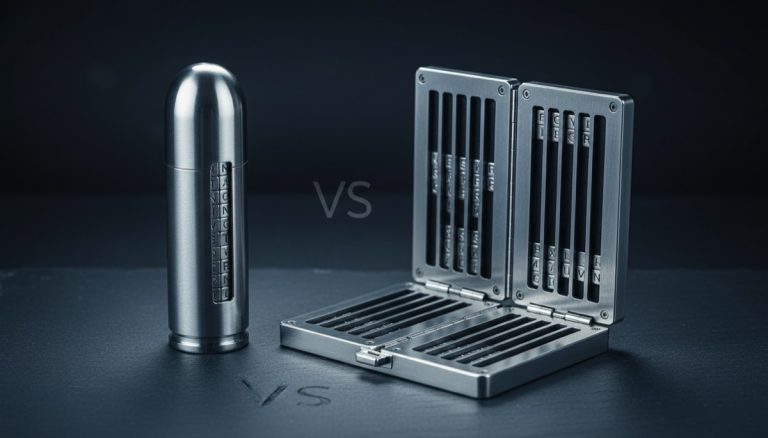
Step 2: Choose a cold storage method aligned with your time horizon. For Bitcoin you plan to hold for years, an air-gapped hardware wallet like Coldcard (never connected to a computer) with a stamped steel seed backup provides the highest security. For holdings you might access within months, a hardware wallet connected to Sparrow Wallet offers a balance of security and accessibility. Multisig setups using tools like Nunchuk or Sparrow’s multisig feature distribute risk across multiple devices and locations, suitable for very large holdings.
Step 3: Structure your cold storage to avoid affecting network liquidity unnecessarily. Do not put all your Bitcoin into a single cold storage wallet that requires a complex ceremony to access. Maintain a tiered approach: deep cold storage for your core savings, accessible cold storage for funds you might need within weeks, and a hot wallet or Lightning node for spending. This structure lets you participate in the network economy (transactions, channel liquidity) while keeping the majority of your holdings in cold storage where they contribute to scarcity dynamics.
Step 4: Monitor on-chain metrics that reflect cold storage trends. Key metrics include: the percentage of supply that has not moved in over 1 year (long-term holder supply), exchange reserves (Bitcoin held on exchanges), and the illiquid supply shock ratio (illiquid supply divided by liquid and highly liquid supply). These metrics, available through platforms like Glassnode and LookIntoBitcoin, provide insight into the macro supply dynamics that cold storage drives. When illiquid supply rises while exchange reserves fall, the supply squeeze intensifies.
Step 5: Evaluate institutional custody solutions critically. Spot Bitcoin ETFs (like those from BlackRock, Fidelity, and ARK) hold Bitcoin in institutional custody, functionally equivalent to cold storage from a supply perspective. However, these holdings carry different trust assumptions — you do not hold the keys, and the custodian (typically Coinbase Custody or Fidelity Digital Assets) could face regulatory pressure, hacking, or operational failures. If you choose ETF exposure, understand that you are trading self-sovereignty for convenience. For direct cold storage, you eliminate counterparty risk entirely.
Step 6: Understand how cold storage supports Bitcoin’s monetary premium. Bitcoin’s value as money depends on credible scarcity and widespread confidence in its future purchasing power. Cold storage holders who remove Bitcoin from circulation for years demonstrate conviction in its long-term value, which reinforces the scarcity narrative for other market participants. This feedback loop — conviction driving cold storage, cold storage driving scarcity, scarcity driving price appreciation, appreciation driving conviction — is a core mechanism of Bitcoin’s monetary network effect.
Common Mistakes to Avoid
1. Treating cold storage as a set-and-forget activity. Putting Bitcoin in cold storage does not eliminate ongoing responsibilities. You need to periodically verify that your backup seeds are intact and readable, that your hardware wallet firmware is current (update before you need to use it, not during an emergency), and that your recovery plan remains viable. At least annually, perform a test recovery on a separate device to confirm your backup process works.
2. Ignoring the impact of UTXO size on future spendability. If you send Bitcoin to cold storage in tiny increments, you may accumulate many small UTXOs that are expensive to spend when fees are high. Consolidate before sending to cold storage, creating UTXOs of meaningful size (e.g., 0.01 BTC or larger). This forward-thinking UTXO management saves significant fees when you eventually move funds out of cold storage.
3. Confusing exchange custody with cold storage. Leaving Bitcoin on an exchange is not cold storage, even if the exchange claims to use cold storage infrastructure. Exchange-held Bitcoin remains the exchange’s to control — they hold the keys, you hold an IOU. The collapse of FTX in 2022 demonstrated that exchange balances can disappear overnight. True cold storage means you control the private keys, and no third party can prevent you from accessing your Bitcoin.
4. Moving Bitcoin to cold storage without a CoinJoin step. If you purchase Bitcoin from a KYC exchange and send it directly to cold storage, the exchange (and any chain analysis firm) can observe your cold storage address and monitor its balance. Running a CoinJoin between exchange withdrawal and cold storage deposit breaks this surveillance link, preventing third parties from tracking your long-term holdings.
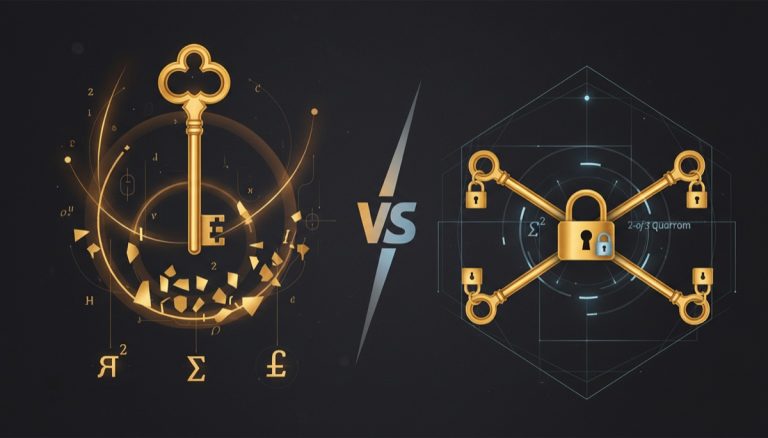
5. Over-concentrating holdings in a single cold storage wallet. A single seed phrase controlling all your cold storage Bitcoin creates a single point of failure. If that seed is compromised — through theft, natural disaster, or a $5 wrench attack — you lose everything. Distribute holdings across multiple cold storage wallets with different seeds stored in different locations. A 2-of-3 multisig arrangement provides redundancy while maintaining security.
Frequently Asked Questions
Does cold storage reduce Bitcoin’s usefulness as a payment network?
No. Bitcoin’s base layer is increasingly used for large-value settlement rather than daily payments, a role similar to how central banks move gold between vaults rather than using gold coins for coffee purchases. The Lightning Network handles everyday payment volume at scale, and Lightning channels can be funded from a portion of holdings while the majority remains in cold storage. Cold storage strengthens Bitcoin’s monetary properties (scarcity, store of value), which in turn supports the economic viability of the payment layers built on top.
How do ETFs affect Bitcoin’s supply dynamics differently than self-custody cold storage?
From a pure supply perspective, ETF-held Bitcoin is just as “removed from circulation” as self-custodied cold storage. Both reduce liquid supply. The differences are in trust model and velocity. ETF holders can sell their shares instantly on stock markets, potentially releasing the underlying Bitcoin back to exchanges faster than a self-custody holder who needs to physically access a hardware wallet. This means ETF-held Bitcoin has higher potential velocity than deep cold storage, and ETF redemption events can increase liquid supply more rapidly.
What percentage of my Bitcoin should be in cold storage?
A common framework is: 80-90% in cold storage for long-term holding, 5-15% in a hot wallet or Lightning channels for spending and transactions, and 0-5% on exchanges for active trading. These ratios depend on your individual usage patterns. Someone who regularly uses Bitcoin for payments might keep 20-30% accessible, while a pure long-term holder might keep 95%+ in cold storage. The key principle is that any Bitcoin you do not plan to spend within the next few months belongs in cold storage.
Can cold storage Bitcoin still participate in the network’s security?
Cold storage Bitcoin does not directly contribute to mining security (which requires expenditure of energy, not Bitcoin holdings). However, cold storage holders indirectly support network security by maintaining demand for block space when they eventually transact, and by supporting the economic value that makes mining profitable. Additionally, running a full node — which you can do without moving your cold storage Bitcoin — directly contributes to network security by validating transactions and blocks.
Related Resources
- Bitcoin Cold Storage Security: Advanced Privacy Strategies and Best Practices — Technical guide to implementing cold storage with optimal security and privacy configurations.
- Bitcoin Storage Solutions: From Paper Wallets to Modern Hardware — Comparative analysis of cold storage methods from basic paper wallets to modern hardware devices.
- Bitcoin Wealth Creation: Balancing Innovation with Security — How long-term holding strategies interact with Bitcoin’s economic growth dynamics.
- Bitcoin’s Yield Landscape: Risks, Layer 2s, and Staking — Analysis of yield opportunities and their risk profiles compared to simple cold storage holding.
- Bitcoin: Store of Value and Payment System Through Layer 2 — How the store-of-value function (cold storage) and payment function (Layer 2) complement each other.