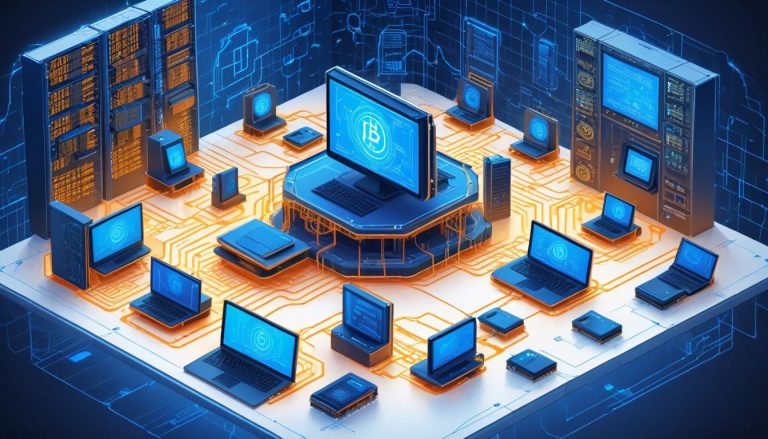
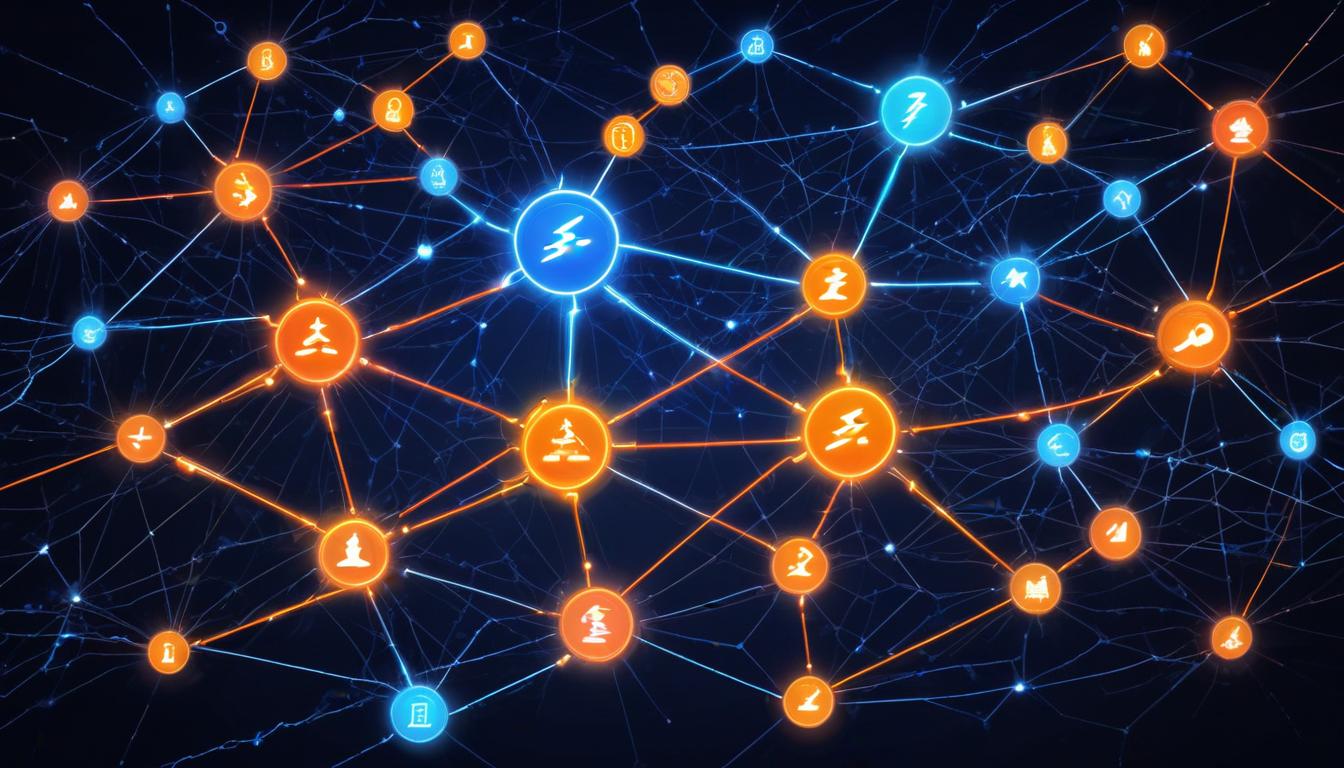
The Lightning Network represents a revolutionary advancement in Bitcoin’s scalability solution, offering instant payments and reduced transaction costs through a sophisticated second-layer protocol. For a deeper look at this topic, see our guide on Lightning Network architecture. Understanding the intricacies of operating a Lightning node requires careful consideration of channel management, liquidity distribution, and privacy implications.
Channel establishment forms the foundation of Lightning Network participation, requiring strategic decisions about initial capacity and peer selection. When opening channels, operators must balance between multiple competing factors: minimum channel sizes that affect routing reliability, the reputation and connectivity of potential peers, and the distribution of inbound versus outbound liquidity. The initial funding amount locks bitcoin in payment channels, though these funds remain under user control and can be moved back to cold storage through submarine swaps.
Node operators must carefully consider fee policies when configuring their Lightning nodes. The fee structure consists of two main components: a base fee charged per forwarded payment regardless of size, and a fee rate typically expressed in parts per million (ppm) that scales with payment amount. These fees incentivize efficient routing while covering operational costs, but setting them too high can result in reduced routing volume as payments find cheaper paths through the network.
Liquidity management emerges as a critical operational consideration. Inbound liquidity enables receiving payments, while outbound liquidity allows sending. Channel rebalancing may become necessary as channels become imbalanced through normal operation. Watchtowers provide an important security layer by monitoring for breach scenarios where channel partners attempt to broadcast old states, though this introduces minimal privacy tradeoffs through transaction monitoring.
The privacy characteristics of Lightning Network transactions offer significant advantages over on-chain payments. Individual payments are only visible to direct channel partners, with routing nodes unable to determine payment source or destination. Channel closes reveal only the final netted balance rather than individual transaction history. However, care must be taken when selecting watchtowers and other service providers to avoid potential privacy leaks through transaction correlation.
Node operators should implement proper backup procedures and maintain high uptime to ensure reliable payment routing. Multiple channel connections provide redundancy in case individual peers become temporarily unavailable. Regular monitoring of channel states, fee earnings, and routing statistics helps optimize node performance and identify potential issues before they impact users.
For those new to Lightning Network operation, starting with modest channel sizes while learning the system can help minimize risk. As experience is gained, channels can be scaled up and more sophisticated features like watchtowers and automated rebalancing can be implemented. The growing ecosystem of Lightning Network management tools continues to make node operation more accessible while maintaining security and privacy. We explore this in detail in our article on self-sovereign Bitcoin node operation.
Step-by-Step Guide: Setting Up a Lightning Node for Routing
This guide covers installing, configuring, and operating a Lightning Network node capable of routing payments, using LND on a dedicated Linux system.
Step 1: Prepare your hardware and Bitcoin Core backend. You need a fully synced Bitcoin Core node with txindex=1 and ZMQ enabled (zmqpubrawblock=tcp://127.0.0.1:28332 and zmqpubrawtx=tcp://127.0.0.1:28333 in bitcoin.conf). For dedicated node hardware, a mini PC (Intel NUC, Beelink) with 16GB RAM and a 2TB NVMe SSD provides excellent performance. Alternatively, use a pre-built node solution like Start9, RaspiBlitz, or Umbrel if you prefer a guided setup.
Step 2: Install LND. Download the latest LND release from github.com/lightningnetwork/lnd/releases. Verify the release signatures with GPG. Extract the binaries and place lnd and lncli in your PATH. Create an LND configuration file at ~/.lnd/lnd.conf:
[Application Options]

alias=YourNodeName

color=#FF9900

listen=0.0.0.0:9735

rpclisten=localhost:10009
[Bitcoin]
bitcoin.active=1
bitcoin.mainnet=1
bitcoin.node=bitcoind
[Bitcoind]
bitcoind.rpchost=127.0.0.1
bitcoind.rpcuser=yourrpcuser
bitcoind.rpcpass=yourrpcpassword
bitcoind.zmqpubrawblock=tcp://127.0.0.1:28332
bitcoind.zmqpubrawtx=tcp://127.0.0.1:28333
Step 3: Create your Lightning wallet. Start LND with lnd, then in another terminal run lncli create. Choose a strong wallet password and write down the generated seed phrase. This seed backs up your on-chain funds and channel closing transactions — store it with the same security as your Bitcoin wallet seed. Unlock the wallet with lncli unlock each time LND restarts.
Step 4: Fund your node and open channels. Generate an on-chain address with lncli newaddress p2wkh and send Bitcoin to it. Once confirmed, open your first channel: lncli openchannel --node_key=<peer_pubkey> --local_amt=2000000. Start with 2-5 channels to well-connected routing nodes. Use Amboss or 1ML to identify reliable peers with high uptime and good connectivity. Aim for a mix of large routing nodes and Lightning service providers.
Step 5: Configure fee policies. Set initial routing fees with lncli updatechanpolicy --base_fee_msat=1000 --fee_rate_ppm=250. Monitor forwarding activity with lncli fwdinghistory over the first week. If you see zero forwards, reduce fees. If channels drain quickly, increase fees on the depleted direction. Tools like charge-lnd can automate fee adjustments based on channel balance ratios.
Step 6: Set up watchtowers and backups. Enable the built-in watchtower client by adding [Watchtower] and watchtower.active=1 to lnd.conf, then connect to public watchtower servers with lncli wtclient add <watchtower_pubkey>@<host>:<port>. Configure automatic Static Channel Backups: export with lncli exportchanbackup --all --output_file=/path/to/backup.scb and automate this using inotifywait or a cron job that triggers on channel.backup file changes.
Step 7: Install monitoring tools. Deploy Ride The Lightning (RTL) or ThunderHub for web-based management. For advanced monitoring, set up lndmon with Prometheus and Grafana to track channel balances, routing revenue, uptime, and fee trends over time. Set email or Telegram alerts for channel closures, offline peers, and balance thresholds.
Warning: Your Lightning node operates as a hot wallet — the funds in channels are accessible to the running software. Never allocate more Bitcoin to Lightning channels than you can afford to lose. Keep the bulk of your holdings in cold storage (hardware wallet) and only fund your Lightning node with operational capital. A reasonable starting allocation for a routing node is 0.05-0.5 BTC.
Common Mistakes to Avoid
Running a Lightning node on unreliable infrastructure. Lightning requires 24/7 uptime. A node that goes offline regularly loses routing reputation, gets force-closed by impatient peers (costing on-chain fees), and cannot defend against breach attempts in real time. Use a dedicated always-on device with a UPS (uninterruptible power supply) for power outage protection. If your home internet is unstable, consider a cloud VPS.
Opening channels without a strategy. Random channel connections waste capital. Before opening each channel, ask: Does this peer improve my routing position? Is the peer reliable (high uptime, established node)? Does this channel balance my inbound/outbound ratio? A node with 10 channels to poorly connected peers will route fewer payments than a node with 3 channels to top-tier routing hubs.
Ignoring channel backups. If your node’s disk fails and you have no Static Channel Backup (SCB), you lose all funds locked in channels. The SCB allows you to trigger cooperative closures with peers to recover funds. Without it, you must wait for peers to force-close channels — if they do not, the funds may be permanently lost. Automate SCB exports immediately after setting up your node.
Setting routing fees to zero. Zero-fee routing sounds generous but creates problems. It attracts heavy traffic that drains channels quickly without generating revenue to cover rebalancing costs. It also trains payment algorithms to route through your node preferentially, creating dependency without sustainability. Charge at least a minimal base fee and proportional rate.
Neglecting liquidity management. Channels become one-sided over time as payments flow in one direction. A channel that is 95% depleted on one side can only route payments in one direction and earns fees on only half its potential traffic. Regular rebalancing using circular payments or submarine swaps keeps channels usable in both directions.
Frequently Asked Questions
How much can I earn running a Lightning routing node?
Most small routing nodes earn 1,000-10,000 satoshis per month in routing fees. Well-capitalized and well-connected nodes with 1+ BTC in channels and optimized fee policies can earn significantly more. Routing income depends on your capital allocation, network position, fee strategy, and the volume of payments flowing through your region of the network. Treat it as a hobby or a contribution to Bitcoin infrastructure rather than a primary income source.
What happens if my Lightning node goes offline permanently?
Your channel partners will eventually force-close their channels with you, returning your funds to your on-chain Bitcoin wallet after a time delay (typically 144-2016 blocks, or 1-14 days depending on channel parameters). If you have a Static Channel Backup (SCB), you can trigger these closures yourself to recover funds faster. The LND seed phrase allows you to recover on-chain funds even without the SCB.
Should I run LND, Core Lightning, or Eclair?
LND is the most widely adopted implementation with extensive tooling, documentation, and community support — it is the best choice for most new node operators. Core Lightning (CLN) is lighter on resources and preferred by operators who value minimalism and plugin extensibility. Eclair is popular in the mobile and enterprise space. All three are production-ready and interoperable. Choose based on your platform preference and available documentation.
Do I need to open my node’s port 9735 to the internet?
For maximum routing performance, yes — open port 9735 (the Lightning Network default) on your firewall and router. This allows other nodes to initiate connections to you, improving your discoverability and routing capability. If privacy is a higher priority, you can run as a Tor-only node (no clearnet port), but this reduces connectivity and routing performance. A hybrid approach with both clearnet and Tor addresses offers a good balance.
Can I run a Lightning node on a Raspberry Pi?
Yes, and many people do. A Raspberry Pi 4 with 8GB RAM, an external SSD, and a reliable power supply runs LND effectively for a personal node with a moderate number of channels (10-20). For a serious routing node with 50+ channels and significant capital, a more powerful device (Intel NUC, mini PC) provides better performance and reliability. Projects like RaspiBlitz and Umbrel provide pre-configured Pi-based node solutions.
Related Resources
- Lightning Network Channel Management Best Practices
- Lightning Network Personal Node Operation Guide
- Privacy and Liquidity Challenges in the Lightning Network
- Lightning Network Architecture and Implementation
- Bitcoin Node Synchronization: Technical Challenges
Lightning Network can complement this approach — see P2P Bitcoin via Lightning: Global Impact.
The Lightning layer adds fast settlement — read about Cross-Layer Bitcoin Transaction Privacy.
Second-layer solutions are relevant here — learn about Lightning Network Liquidity: Channel Guide.
Second-layer solutions are relevant here — learn about Lightning Node Mobile Integration Guide.
For a broader perspective, explore our hardware wallet buying guide guide.