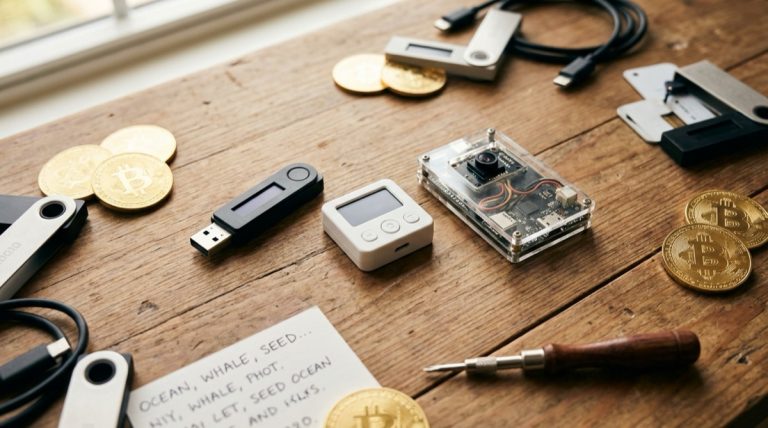

The evolution of Bitcoin wallet security represents a critical development in the cryptocurrency ecosystem, with the transition from single signature to multisignature (multisig) solutions marking a significant advancement in digital asset protection. This comprehensive analysis explores the technical implications, security considerations, and practical aspects of upgrading one’s Bitcoin storage strategy from traditional single signature wallets to more robust multisig configurations.
The fundamental architecture of Bitcoin wallet security hinges on the concept of private key management. Single signature wallets, while functional, represent a singular point of failure in the security matrix. These wallets rely on one private key to authorize transactions, creating a binary security model where compromise of that key results in complete loss of funds. This traditional approach, though widely adopted in early Bitcoin implementations, has increasingly given way to more sophisticated security paradigms.
Multisignature wallet technology introduces a revolutionary approach to Bitcoin security by implementing an m-of-n signing scheme. In this framework, a predefined number (m) of signatures from a larger set (n) of authorized keys must approve any transaction. This distributed security model creates multiple layers of protection and significantly reduces the risk of catastrophic fund loss through any single point of compromise. The technical implementation of multisig involves complex cryptographic protocols that enable multiple independent keys to collectively authorize transactions while maintaining Bitcoin’s fundamental security properties.
When transitioning between these two wallet architectures, several technical considerations come into play. The process necessarily involves on-chain transactions, as multisig addresses utilize different script types than single signature addresses. This fundamental difference in address structure means that funds cannot simply be ‘converted’ in place – they must be transferred through standard Bitcoin transactions. This process incurs standard network fees but provides an opportunity to implement improved security practices from the ground up.
The implementation of a multisig setup requires careful consideration of key management strategies. Unlike single signature wallets where key backup consists of securing a single seed phrase, multisig configurations demand more sophisticated backup and recovery protocols. Each signing device must be properly initialized, backed up, and tested before being integrated into the multisig quorum. This includes verification of recovery procedures and thorough testing of the signing workflow under various scenarios.
Security best practices for multisig transitions emphasize the importance of incremental testing and verification. Initial transfers should involve minimal amounts to verify proper wallet configuration and recovery procedures. This includes testing the complete recovery process from backup information and confirming the ability to sign transactions with different key combinations according to the chosen multisig script requirements.
The technical architecture of multisig wallets introduces additional complexity in transaction construction and signing. Coordinator software, such as specialized wallet applications, manages the creation of partially signed Bitcoin transactions (PSBTs) and coordinates the signing process across multiple devices. This coordination layer must be thoroughly understood and tested to ensure reliable operation of the multisig setup.
Network fee considerations play a crucial role in the transition strategy. While the movement of funds requires on-chain transactions, careful timing and fee rate selection can optimize the cost of transition. The implementation of transaction batching and strategic timing of transfers during periods of lower network congestion can significantly reduce the overall cost of the security upgrade.
Looking toward the future, the evolution of Bitcoin wallet security continues to advance. The development of new protocols and standards around multisig implementations promises to further enhance the security and usability of these systems. Innovations in key management, backup procedures, and coordination protocols are actively being developed by the Bitcoin technical community.
The transition to multisig represents more than a simple security upgrade – it reflects a fundamental shift in how we approach Bitcoin custody. This shift acknowledges the growing sophistication of threats to digital asset security while providing a framework for institutional-grade protection of private keys. The technical challenges of implementation are balanced against the substantial security benefits offered by distributed signing authority.
In conclusion, the migration from single signature to multisig wallet architectures represents a critical evolution in Bitcoin security practices. While the process requires careful planning and execution, the resulting improvement in security posture justifies the technical complexity and associated costs. As the Bitcoin ecosystem continues to mature, the adoption of multisig solutions will likely become increasingly standard for significant digital asset holdings.
Step-by-Step Guide
Migrating from a single-signature wallet to a multisig configuration involves setting up the new multisig wallet, verifying its functionality, transferring funds, and decommissioning the old singlesig wallet. This guide covers the complete migration process for a 2-of-3 multisig setup.
- Audit your current singlesig holdings and UTXO structure. Before beginning the migration, review your existing wallet’s UTXO set in your wallet software (such as Sparrow Wallet). Note the number of UTXOs, their individual sizes, and the total balance. If you have dozens of small UTXOs, consider whether to consolidate them before migration to reduce the number of transactions required. Consolidation during low-fee periods (weekends, late night UTC) can save substantial fees. Also identify any UTXOs that have privacy implications — mixing consolidated UTXOs from different sources links their transaction histories.
- Procure and initialize hardware wallets for the multisig quorum. Purchase at least three hardware wallets, preferably from two or more manufacturers. Initialize each device with a fresh seed phrase — never reuse seed phrases from your existing singlesig wallet. Write each seed phrase on steel or titanium backup plates rather than paper, which degrades over time and is vulnerable to water and fire. Verify each backup by checking the seed on-device before proceeding. Record each device’s master fingerprint for later verification.
- Build the multisig wallet in coordinator software. Using Sparrow Wallet, Specter Desktop, or a similar PSBT-compatible coordinator, create a new 2-of-3 multisig wallet. Import the extended public key (xpub) from each of the three hardware wallets using the P2WSH derivation path (
m/48'/0'/0'/2'). Verify that each cosigner’s master fingerprint in the coordinator matches what the corresponding hardware wallet displays. Save the wallet output descriptor — this file is required for wallet reconstruction and must be backed up alongside each seed phrase. - Register the multisig wallet on each hardware device. Export the wallet descriptor from your coordinator software and load it onto each hardware wallet. On Coldcard, write the descriptor to microSD and import it. On Trezor or Ledger, the registration happens through the coordinator software during the first address verification. Each device should display the quorum configuration (2-of-3) and the fingerprints of all three cosigners. Confirm these details match on every device. Without registration, hardware wallets cannot independently verify that addresses belong to your multisig wallet.
- Verify addresses and test a complete signing round-trip. Display the first receive address in your coordinator and independently verify it on all three hardware wallets. Send a small test amount (e.g., 50,000 sats) from your singlesig wallet to this verified multisig address. Once confirmed, create a transaction in the coordinator spending from the multisig wallet. Sign with two of the three devices using PSBTs transferred via microSD or QR code. Broadcast the signed transaction and verify it confirms. Then test recovery: wipe one device, restore from its seed backup, re-import the descriptor, and verify the device can sign a second test transaction.
- Plan the fund transfer strategy. Decide whether to move all funds in a single transaction or in batches. A single transaction is simpler and cheaper in fees but creates a brief period where your entire balance is in an unconfirmed state. Batched transfers allow you to verify each deposit confirms before sending the next, reducing risk but costing more in cumulative fees. For holdings above 1 BTC, batched transfers of 20-30% of the total balance provide a reasonable balance of safety and cost. Wait for at least one confirmation between batches.
- Execute the migration during a low-fee period. Monitor mempool conditions using a mempool visualizer (mempool.space or similar). When fee rates drop below 10 sat/vB, begin the transfer. In your singlesig wallet, create a transaction sending to the verified multisig receive address. Set a fee rate appropriate for the current mempool — there is no urgency, so targeting next-block confirmation is unnecessary. A fee rate that targets confirmation within 6-12 blocks is typically 30-50% cheaper. For each batch, use a fresh receive address from the multisig wallet to avoid address reuse.
- Verify all funds have arrived and decommission the singlesig wallet. After all transfer transactions confirm, verify the total balance in the multisig wallet matches what you sent minus transaction fees. Check that the singlesig wallet shows a zero balance. Do not destroy the singlesig wallet’s seed phrase immediately — retain it for 30-60 days in case any change outputs or pending transactions were missed. After confirming the singlesig wallet is fully emptied and all funds are accounted for in the multisig wallet, you can securely destroy the old singlesig seed phrase. Store each multisig seed phrase and a copy of the wallet descriptor in geographically separated secure locations.
Common Mistakes to Avoid
Reusing your singlesig seed phrase as one of the multisig keys
Some users attempt to “upgrade” their existing singlesig wallet by using its seed phrase as one of the multisig cosigners. This is problematic for two reasons. First, the singlesig seed may already be compromised without your knowledge — using it in the multisig perpetuates that risk. Second, the singlesig wallet derived from that seed still exists and could be accessed by anyone with the seed phrase. Always generate fresh seeds for every cosigner in your multisig setup.
Migrating all funds before testing recovery
Transferring your entire bitcoin holdings to a multisig wallet that you have never recovered from backup creates a dangerous situation. If any seed backup is incorrect, any descriptor file is missing, or any device fails to register the wallet properly, you may not discover the problem until you need to sign a transaction. Always perform a full recovery test — including restoring a device from seed, importing the descriptor, and signing a transaction — before the wallet holds anything beyond test amounts.
Consolidating all UTXOs into a single UTXO during migration
Sending all your bitcoin from multiple singlesig UTXOs into a single multisig address in one transaction links all those UTXOs together on the blockchain, making it clear they belong to the same owner. If privacy matters to you, consider sending different groups of UTXOs to different multisig receive addresses across separate transactions at different times. This preserves some separation between previously unlinked UTXOs, though the multisig script type itself provides some fingerprinting information.
Ignoring fee optimization during the transfer
Migration transactions are not time-sensitive — there is no urgency to confirm within the next block. Paying high fee rates during mempool congestion wastes bitcoin unnecessarily. Use fee estimation tools to find periods when the mempool clears below 5-10 sat/vB. For large balances split across many UTXOs, consolidating during these low-fee windows before migrating can save substantial amounts compared to transferring many small UTXOs individually at higher rates.
Destroying the singlesig seed phrase immediately after transfer
Change outputs, pending transactions, or miscounted UTXOs can leave small amounts behind in the singlesig wallet. If you destroy the seed phrase immediately, those funds become permanently inaccessible. Wait at least 30 days after the final transfer, verify the singlesig wallet balance is exactly zero across all address types (legacy, nested segwit, and native segwit), and confirm no pending transactions remain before destroying the old seed.
Frequently Asked Questions
How much does it cost in transaction fees to migrate from singlesig to multisig?
The cost depends on the number of UTXOs you are consolidating and the current fee rate. A singlesig P2WPKH input is approximately 68 vBytes, while a 2-of-3 P2WSH multisig output is approximately 43 vBytes. If you have 10 UTXOs to transfer, the transaction would be roughly 720 vBytes. At 5 sat/vB, that costs about 3,600 sats ($3-4 at typical prices). At 50 sat/vB, the same transaction costs 36,000 sats ($30-40). Timing the migration during low-fee periods can reduce costs by 80-90% compared to peak congestion.
Should I migrate to multisig if I only hold a small amount of bitcoin?
The security benefit of multisig must be weighed against the operational complexity. For holdings below approximately $10,000, a well-secured singlesig hardware wallet with a properly stored seed phrase and optional passphrase provides adequate protection for most threat models. The additional cost of multiple hardware wallets ($150-$400), the need for multiple secure storage locations, and the complexity of transaction signing may not justify the security improvement for smaller amounts. As your holdings grow, multisig becomes increasingly worthwhile.
Can I migrate from any singlesig wallet to multisig, or do I need specific software?
You can migrate from any singlesig wallet that allows you to send bitcoin — the migration is simply an on-chain transfer. The singlesig wallet sends bitcoin to a multisig receive address, which is just a standard Bitcoin transaction. The multisig wallet setup requires compatible coordinator software (Sparrow Wallet, Specter Desktop, Nunchuk, or similar) and hardware wallets that support PSBT-based multisig signing. Most modern hardware wallets (Coldcard, Trezor Model T, Trezor Safe, Keystone, Jade) support this functionality.
What happens to my transaction history during the migration?
Your transaction history remains on the blockchain permanently. The singlesig wallet’s history shows the outbound transfer to the multisig address. The multisig wallet’s history starts with the incoming transfer. Your coordinator software (Sparrow, Specter) tracks the multisig wallet’s history from that point forward. If you need a record of your historical transactions for tax purposes or personal records, export the transaction history from your singlesig wallet before deleting it from your software. The blockchain itself always retains the full history.
Is it possible to migrate back from multisig to singlesig if I change my mind?
Yes. Migrating from multisig back to singlesig follows the same process in reverse — you create a transaction in the multisig coordinator, sign it with the required number of devices, and send the funds to a singlesig receive address. The same considerations about fee optimization, batch sizing, and testing apply. There is no technical lock-in with multisig; funds can always be moved to any valid Bitcoin address as long as you can produce the required number of signatures.
Related Resources
- Transitioning from Single-Signature to Multisig Bitcoin Wallets
- Multi-Signature Wallet Setup: Security and Portability
- Multisig Wallet Security: Backup Maps and Key Management
- The Evolution of Bitcoin Self-Custody
- Hardware Wallet Buying Guide 2026
For more on this topic, see our guide on Cold Storage Migration: Secure BTC Transfer.
For enhanced protection, consider Bitcoin Collaborative Custody: How Multi-Sig Works.
Multi-signature setups add another security layer — see Bitcoin Security: Multi-Sig and Air-Gapped Wallets.
Quorum-based security improves on this — explore Multisig Wallet Security in the Bitcoin Ecosystem.
Distributing key custody is covered in Multisig Security Analysis: Advanced Wallet Tech.
Quorum-based security improves on this — explore Bitcoin Cold Storage and Multisig Security.
For enhanced protection, consider Multisig Bitcoin Backup: Advanced Strategy.