
The evolving landscape of cryptocurrency infrastructure presents both opportunities and challenges for users seeking to navigate between different blockchain networks and asset types. This analysis explores the intricate relationship between privacy tools, cross-chain solutions, and regulatory compliance in the modern digital asset ecosystem.
The intersection of privacy technology and cryptocurrency transactions has become increasingly relevant as users seek to maintain financial sovereignty while operating within a complex web of regional restrictions and regulatory frameworks. The fundamental architecture of blockchain technology promotes transparency, yet the growing need for privacy-preserving solutions has led to the development of sophisticated tools that enable users to interact with digital assets more discretely.
Privacy-enhancing technologies, particularly the Tor network, have emerged as crucial tools for cryptocurrency users seeking to access global financial services. Tor’s architecture, which routes internet traffic through a volunteer overlay network, provides a robust solution for circumventing geographical restrictions while maintaining user anonymity. This technology has become particularly valuable in the context of cryptocurrency operations, where regional restrictions can significantly impact access to essential services.
The cryptocurrency ecosystem has evolved to include various specialized protocols and networks, each offering distinct advantages and use cases. The emergence of stablecoins across different blockchain networks has created a need for efficient cross-chain solutions. These bridges and swap services have become essential infrastructure, enabling users to move assets between networks while managing costs and maintaining security.
The technical implementation of cross-chain transfers involves complex mechanisms to ensure security and reliability. Modern swap services utilize automated market makers (AMMs) and liquidity pools to facilitate seamless asset exchanges. These systems must carefully balance user accessibility with robust security measures to protect against potential vulnerabilities and attacks.
The role of decentralized infrastructure in enabling financial inclusion cannot be overstated. While centralized exchanges and services often impose strict regional restrictions, decentralized alternatives provide critical access points for users in underserved markets. This infrastructure plays a vital role in promoting financial sovereignty and reducing dependency on traditional banking systems.
The integration of privacy-preserving tools with cryptocurrency services represents a significant advancement in digital financial sovereignty. Users can now access global financial services while maintaining privacy through technologies like Tor, which effectively masks their geographic location and identity. This combination of tools creates a more inclusive and accessible financial system.
Looking forward, the continued development of privacy-preserving technologies and cross-chain solutions will likely shape the future of cryptocurrency adoption. As regulatory frameworks evolve, the ability to maintain privacy while ensuring compliance will become increasingly important. The cryptocurrency ecosystem must continue to innovate in ways that balance these competing demands while promoting financial inclusion and user sovereignty.
The emergence of sophisticated privacy tools and cross-chain solutions represents a significant milestone in the maturation of the cryptocurrency ecosystem. These developments enable users to navigate complex regulatory landscapes while maintaining control over their digital assets. As the industry continues to evolve, the integration of privacy-preserving technologies with cryptocurrency infrastructure will remain crucial for ensuring accessible and sovereign financial services for users worldwide.
Step-by-Step Guide
This guide provides concrete steps for maintaining Bitcoin privacy when moving assets across different blockchain networks and swap platforms.
- Prepare a clean operating environment before any cross-chain transfer
Boot into Tails OS or launch Whonix to ensure all network traffic routes through Tor by default. Do not perform cross-chain operations from your regular operating system, as browser fingerprinting, DNS leaks, and cached cookies can link your activity to your real identity. In Tails, use the built-in Tor Browser with JavaScript enabled only for the specific swap platform you are using. Disable JavaScript for all other browsing. This limits the information that the swap service and any embedded analytics trackers can collect about your session.
- Use atomic swaps or trustless bridges instead of centralized exchanges
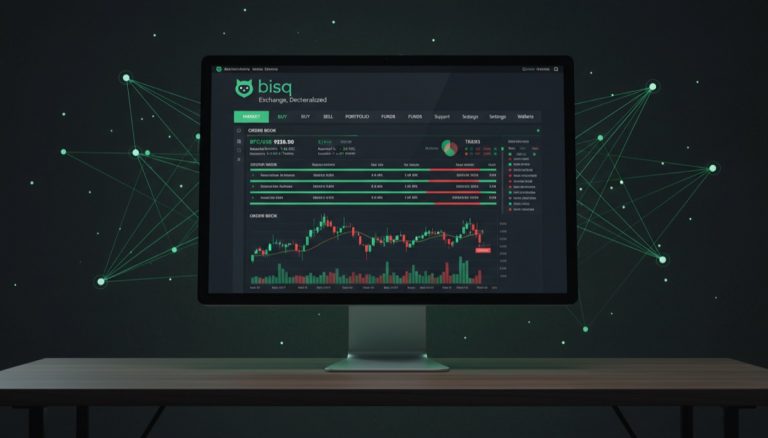
When converting Bitcoin to assets on another chain (or vice versa), prefer atomic swap protocols or decentralized bridges that do not require account creation or KYC. Platforms like Bisq support Bitcoin-to-Monero atomic swaps directly. For Bitcoin-to-Ethereum or Bitcoin-to-stablecoin conversions, use decentralized swap aggregators accessible via Tor. Centralized swap services that require email registration or identity verification create permanent records linking your Bitcoin address to the destination chain address. Trustless protocols eliminate this data collection point entirely.
- Break the on-chain link before initiating the cross-chain transfer
Run your Bitcoin through a CoinJoin protocol before sending it to any swap or bridge contract. If the Bitcoin you are swapping can be traced back to a KYC exchange, the receiving address on the destination chain inherits that identity linkage. By CoinJoining first, the UTXO you send to the swap has no deterministic connection to your identified coins. Use Sparrow Wallet’s Whirlpool integration and allow the UTXO to remix at least once beyond the initial mix before sending it to the swap address.
- Generate fresh receiving addresses on the destination chain
On the destination blockchain, create a new wallet specifically for receiving the swapped assets. Do not use an existing wallet that has previous transaction history or address associations. For Ethereum-based chains, generate a new address from a fresh MetaMask seed or use a hardware wallet with a new derivation. For Monero, generate a new wallet with its own mnemonic. The goal is to prevent address clustering: if the destination address already has a transaction history, an observer can link the incoming swap to your existing on-chain identity on that network.
- Verify the swap service does not log transaction data
Before using any decentralized swap service, review its source code if open source, read its privacy policy, and check whether it operates any on-chain analytics. Some DEX frontends embed analytics services like Google Analytics or Amplitude that track wallet addresses connected through the UI. Use browser developer tools (F12 > Network tab) to monitor outgoing requests during the swap process. If you see requests to analytics domains, the service is logging your activity. Prefer services that have been audited for privacy or that have a documented no-logging architecture.
- Use time delays between the Bitcoin CoinJoin and the cross-chain swap
Do not send a CoinJoin output directly to a swap contract within the same block or even the same hour. Chain analysis can use temporal correlation to probabilistically link a CoinJoin output to a swap input when the timing is tight. Wait at least 12 to 24 hours between completing the CoinJoin and initiating the swap. During this waiting period, do not interact with the UTXO at all. The added time gap forces an observer to consider all CoinJoin outputs from that round as potential sources, rather than narrowing the set based on timing.
- Manage the destination chain assets with the same privacy discipline
After receiving assets on the destination chain, do not immediately transfer them to a centralized exchange or service that requires KYC. If you later send the swapped assets to a KYC platform, you retroactively link the cross-chain swap to your identity. Maintain the privacy chain by using the destination chain’s own privacy tools (Tornado Cash alternatives on Ethereum, Monero’s built-in ring signatures) or by spending directly in peer-to-peer transactions. The privacy gained from a careful cross-chain transfer is only as strong as your weakest subsequent action.
Common Mistakes to Avoid
Using the same IP address for both the Bitcoin and destination chain transactions
If you broadcast your Bitcoin transaction from one IP address and then interact with the destination chain swap contract from the same IP, a network-level observer (ISP, VPN provider, or surveillance node) can correlate both sides of the swap. Always use Tor for both the Bitcoin side and the destination chain side. If the destination chain wallet does not natively support Tor, configure your system to route all traffic through Tor at the OS level using Tails or Whonix, rather than relying on application-level Tor settings that may leak DNS queries.
Swapping the exact same amount across chains
If you CoinJoin 0.05 BTC and then swap exactly 0.05 BTC for USDC on another chain minutes later, the amount correlation makes it straightforward for analysts to link the two transactions even without a direct on-chain connection. Swap a slightly different amount than what you CoinJoined. Split the amount across multiple smaller swaps conducted over different days. The added friction of multiple transactions is a worthwhile tradeoff for breaking the amount-based correlation that chain analysis firms exploit.
Reusing browser sessions across different swap operations
Web browsers store cookies, local storage data, and browser fingerprints that persist across sessions. If you perform one swap while logged into a social media account or webmail, and then perform another swap in the same browser profile, the swap service or embedded trackers can link both operations to the same browser fingerprint. Use Tor Browser in Tails (which resets state on each boot) or manually clear all browser data between swap sessions. Better yet, use a fresh Tails boot for each swap operation.
Trusting centralized bridge services with large amounts
Centralized bridge services act as custodians: you send them Bitcoin, and they send you tokens on another chain. During this process, they hold your funds and can freeze, delay, or refuse the transfer. They also log the mapping between your Bitcoin address and destination address. For privacy-sensitive transfers, prefer truly decentralized bridges or atomic swaps where no intermediary takes custody. If you must use a centralized bridge, limit the amount and use it only for funds that are already post-CoinJoin with no identity linkage.
Frequently Asked Questions
Can an atomic swap between Bitcoin and Monero be traced by chain analysis?
On the Bitcoin side, the atomic swap transaction is visible on-chain and shows funds being sent to a time-locked contract. Chain analysis can identify that a swap occurred. However, on the Monero side, the received funds are protected by Monero’s ring signatures, stealth addresses, and RingCT, making it computationally infeasible to link the Monero output to the Bitcoin input. The privacy gain comes from Monero’s protocol-level privacy: once funds cross into Monero, the trail ends. If you later convert back to Bitcoin, you would need to apply CoinJoin on the new Bitcoin to maintain the privacy chain.
How do decentralized bridges maintain security without a central operator?
Decentralized bridges use various trust-minimization mechanisms. Some employ hash time-locked contracts (HTLCs) that ensure either both sides of the swap complete or neither does. Others use multi-party computation (MPC) networks where a committee of independent validators collectively authorize cross-chain transfers without any single party having full control. Optimistic bridges assume transactions are valid and use a challenge period where fraud proofs can be submitted. Each model has different security tradeoffs: HTLCs are safest but limited in supported chains, MPC networks introduce committee trust assumptions, and optimistic bridges have withdrawal delays.
Does using Tor slow down cross-chain transactions?
Tor adds latency to network connections, typically between 200ms and 2 seconds per request, depending on circuit quality. For most cross-chain swaps, this latency is negligible because the swap itself takes minutes (for atomic swaps) or 10-60 minutes (for bridge confirmations). The bottleneck is blockchain confirmation time, not network latency. However, if you are interacting with a DEX that requires rapid transaction signing (such as during high-volatility AMM swaps), the added Tor latency could result in slightly worse execution prices. For privacy-focused users, this minor slippage cost is a reasonable tradeoff.
What happens if a cross-chain swap fails midway through?
In properly designed atomic swap protocols, a failed swap returns funds to both parties. The HTLC mechanism ensures that if the counterparty does not complete their side within the time lock period, you can reclaim your Bitcoin. The funds are never at risk of permanent loss due to a protocol failure. However, with centralized bridge services, a failure may result in funds being held in limbo until the service resolves the issue. This is another reason to prefer trustless atomic swaps: the worst case is a temporary delay and a transaction fee loss, not a permanent fund loss.
Can I maintain privacy when moving Bitcoin to the Lightning Network across chains?
Opening a Lightning channel is an on-chain transaction, so the channel funding UTXO is publicly visible. To maintain privacy, fund the channel with a post-CoinJoin UTXO so the channel opening cannot be linked to your identity. Once funds are on Lightning, payments are onion-routed and do not appear on the blockchain. For cross-chain Lightning swaps (e.g., Lightning BTC to on-chain Liquid BTC), use submarine swap services that do not require account creation. The privacy of the swap depends on whether the service logs the invoice-to-address mapping, so choose services with a documented no-logging policy.
Related Resources
- Bitcoin Privacy Techniques: Practical Guide
- Bitcoin Privacy and CoinJoin: Mixing Strategies and Risks
- Digital Surveillance and Bitcoin’s Role in Financial Privacy
- Bitcoin Taint Analysis and Chain Surveillance
- Bitcoin Privacy Economics: Costs and Benefits
For more on this topic, see our guide on Bitcoin Node Privacy and Accessibility.
For more on this topic, see our guide on Bitcoin Seed Phrase Security. To keep your transactions private, see Digital Surveillance and Bitcoin Privacy.
Privacy considerations are covered in Buy Non-KYC Bitcoin: Privacy Methods Guide.
Privacy considerations are covered in Bitcoin Wallet Privacy Features Explained.
To keep your transactions private, see Crypto Regulation: Travel Rule and Privacy Impact.
To keep your transactions private, see CoinJoin Costs: Privacy Transaction Fees.
Maintaining on-chain privacy is relevant here — read Verify Bitcoin Holdings: Privacy Methods.