
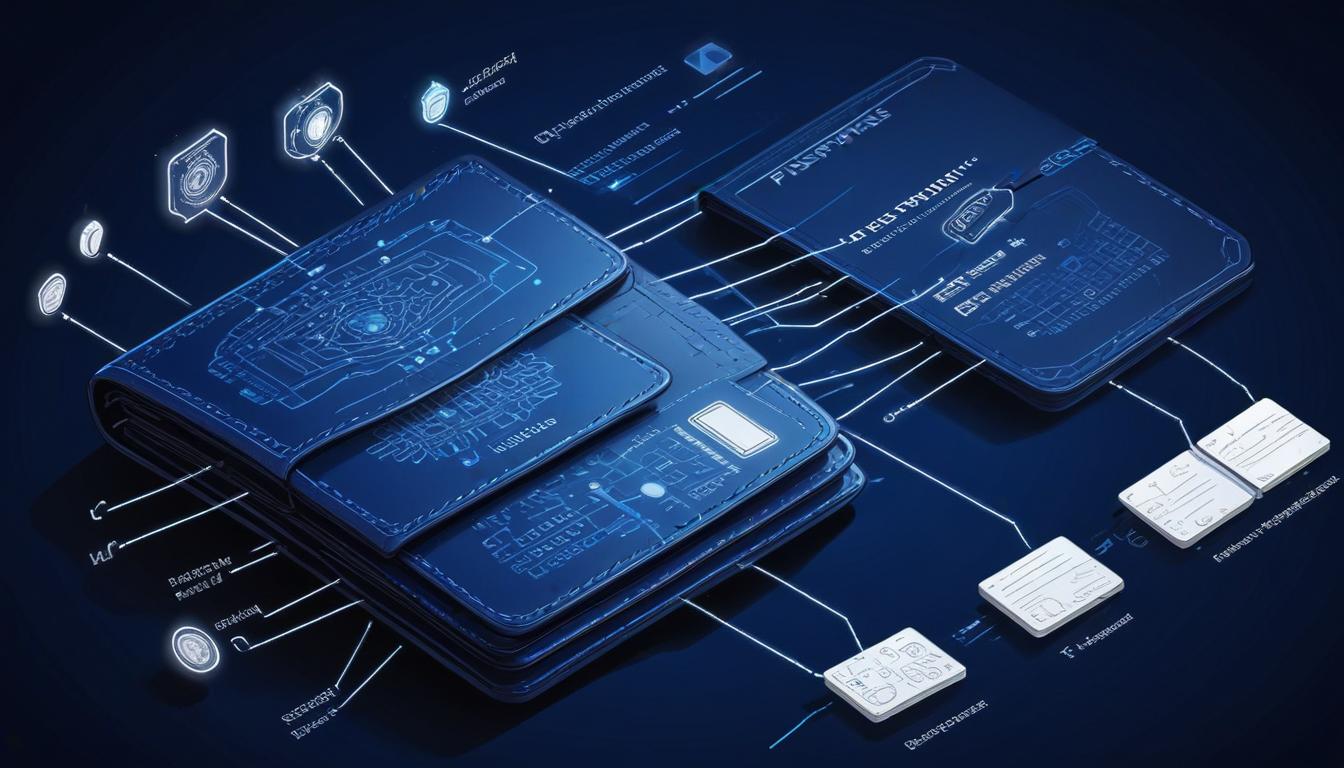
The concept of wallet passphrases represents one of the most powerful yet commonly misunderstood security features in Bitcoin custody. This additional security layer builds upon the fundamental seed phrase system to create an extraordinarily flexible and robust method of protecting digital assets. For a deeper look at this topic, see our guide on Bitcoin seed phrase management. Understanding how passphrases work requires delving into both the technical implementation and practical implications of this critical security feature.
The foundation of modern Bitcoin wallet security rests on hierarchical deterministic (HD) wallet architecture, which generates all addresses from a single seed. This topic is explored further in our post on HD wallet key management. This seed, typically represented as 12 or 24 words, serves as the primary key to accessing funds. However, the passphrase feature, sometimes called the ’25th word,’ introduces an additional layer of complexity that fundamentally alters the mathematical derivation of addresses and keys.
When a passphrase is applied to a seed, it creates an entirely new and separate wallet through a process of cryptographic transformation. You can learn more about this in our resource on Bitcoin wallet segregation. This transformation occurs through the HMAC-SHA512 algorithm, which combines the seed with the passphrase to generate a completely different master private key. Each unique passphrase creates its own distinct wallet, with its own set of addresses and private keys, all derived from the same original seed phrase but producing entirely different results.
The implications of this architecture are profound for both security and practical applications. Since each passphrase generates a completely separate wallet, users can create multiple independent wallets from a single seed phrase. This enables sophisticated security strategies like plausible deniability, where users can maintain multiple wallet layers with varying amounts of funds, each accessible only with its specific passphrase.
The security benefits of passphrases extend beyond mere access control. Unlike seed phrases, which must conform to the BIP39 word list, passphrases can be any combination of characters, making them potentially more resistant to brute force attacks. Additionally, since passphrases are never stored on hardware wallets and must be re-entered after each device restart, they provide protection against physical device theft or compromise.
From a practical perspective, implementing passphrases requires careful consideration of backup and recovery procedures. While the seed phrase can be backed up using traditional methods like steel plates or paper storage, the passphrase must be secured separately to maintain security. Our comprehensive guide on Bitcoin storage solutions covers this further. This separation of security elements creates a true two-factor authentication system, where an attacker would need both the seed phrase and the passphrase to access funds.
The flexibility of the passphrase system allows for creative security solutions. Users can implement tiered access systems, where different passphrases access wallets with varying amounts of funds. This can be particularly useful for creating ‘decoy’ wallets that could be revealed under duress while keeping the majority of funds secured behind a different passphrase. The system also enables the creation of emergency recovery wallets, accessible by trusted parties who possess both the seed phrase and a predetermined passphrase.
Hardware wallet implementations of passphrases have evolved to provide robust security while maintaining usability. Modern devices offer features like temporary passphrase sessions, allowing users to access passphrase-protected wallets without storing the passphrase on the device. This approach balances security with convenience, enabling regular access to funds while maintaining the security benefits of the passphrase system.
The relationship between passphrases and wallet software requires careful attention to detail. When connecting hardware wallets to software interfaces, users must ensure they’re accessing the correct passphrase-derived wallet. This involves properly importing public keys and verifying addresses to prevent confusion between different passphrase-derived wallets.
Looking to the future, the passphrase system continues to evolve with the Bitcoin ecosystem. Advanced features like multi-signature setups can be combined with passphrases to create increasingly sophisticated security arrangements. As hardware wallet technology advances, we may see new innovations in how passphrases are implemented and managed, potentially including biometric integration or other novel security mechanisms.
In conclusion, the passphrase feature represents a cornerstone of modern Bitcoin security architecture. Its implementation provides a powerful tool for creating layered security systems while maintaining the simplicity of seed-based wallet recovery. Understanding and properly implementing passphrases is crucial for anyone serious about securing their Bitcoin holdings, whether for personal use or institutional custody solutions. We explore this in detail in our article on modern Bitcoin custody solutions.
Understanding seed security is foundational — read about Seed Phrase Backup: Digital vs Physical.
Your backup strategy impacts your long-term security — see BIP-85 Explained: Derive Multiple Seeds From One.
Proper seed phrase management matters — explore Bitcoin Seed Phrase Storage: Best Practices.
Proper seed phrase management matters — explore Hardware Wallet Seed Phrase Migration: Step by Step.
Step-by-Step Guide to Setting Up a Bitcoin Wallet Passphrase
Configuring a passphrase on your hardware wallet creates an additional security layer that separates your primary holdings from a decoy wallet. This guide walks through the process using common hardware wallets and best practices for passphrase management.
Step 1: Ensure your seed phrase backup is secure. Before adding a passphrase, verify that your 12-word or 24-word seed phrase is properly backed up on a durable medium like a steel plate. The passphrase creates an entirely separate wallet, so your base seed phrase wallet and passphrase wallet each need independent backup verification.
Step 2: Choose a strong passphrase. Select a passphrase between 12 and 50 characters long that combines uppercase letters, lowercase letters, numbers, and special characters. Avoid dictionary words, names, dates, or phrases that could be guessed through social engineering. The passphrase is case-sensitive and space-sensitive, so MyBitcoin2024! and mybitcoin2024! produce completely different wallets.
Step 3: Access the passphrase feature on your hardware wallet. On a Coldcard, navigate to Settings → Passphrase → Edit Passphrase. On a Trezor, enable the passphrase feature in Trezor Suite under Device Settings. On a Ledger, access it through Ledger Live under Advanced Settings. Each device handles passphrase entry differently, but the cryptographic result is identical.
Step 4: Enter your passphrase and verify the derived wallet. After entering the passphrase, your device will derive a new master key using HMAC-SHA512 with the passphrase as additional input. The wallet software will display a new set of addresses. Write down the first receiving address and the wallet fingerprint for future reference.
Step 5: Send a small test transaction. Transfer a small amount of bitcoin to the passphrase-protected wallet. Verify that the transaction appears with the correct receiving address. After confirmation, disconnect the hardware wallet, reconnect it, re-enter the passphrase, and confirm the balance is visible. This end-to-end test validates your complete setup.
Step 6: Back up the passphrase separately from the seed phrase. Store the passphrase on a separate steel plate or in a different secure location from your seed phrase backup. The separation ensures that anyone who discovers one backup element cannot access your funds without the other. Consider using a bank safety deposit box for one element and a home safe for the other.
Step 7: Set up a decoy wallet on the base seed. Deposit a small, believable amount of bitcoin on the wallet accessible without the passphrase. This creates a plausible deniability scenario where revealing only your seed phrase under duress shows a wallet with some funds, while your primary holdings remain hidden behind the passphrase.
Step 8: Document your wallet configuration securely. Record which addresses belong to your passphrase wallet versus your base wallet. Store this configuration record in an encrypted file on an air-gapped device or in a sealed envelope with your physical backups. This documentation prevents confusion during future recovery scenarios.
Common Mistakes to Avoid
Using a weak or guessable passphrase. Short passphrases or those based on common words are vulnerable to brute-force attacks. If an attacker obtains your seed phrase, they can systematically test millions of passphrase combinations. Use a passphrase with sufficient length and complexity to resist dictionary and combinatorial attacks.
Storing the passphrase alongside the seed phrase. The entire security model of passphrases relies on geographic and physical separation from the seed phrase. Keeping both in the same safe, envelope, or storage device collapses the two-factor security model into a single point of compromise.
Failing to test wallet recovery before depositing significant funds. Always perform a complete recovery test — wiping the hardware wallet, restoring from seed phrase, and re-entering the passphrase — before transferring large amounts. This confirms that you can reliably reproduce the exact passphrase and access the correct wallet.
Forgetting that passphrases are case-sensitive and whitespace-sensitive. A single character difference produces a completely different wallet with different addresses and keys. There is no error correction or password reset mechanism. If you enter the wrong passphrase, you will see a valid but empty wallet, potentially causing panic or confusion.
Not informing trusted parties about the passphrase setup. In inheritance or emergency scenarios, family members who know your seed phrase but not your passphrase will see only the decoy wallet. Include passphrase recovery instructions in your inheritance plan without revealing the actual passphrase to anyone prematurely.
Frequently Asked Questions
Can I use multiple passphrases with the same seed phrase?
Yes, each unique passphrase creates a completely separate wallet. You can maintain multiple passphrase-protected wallets from a single seed phrase, each with its own set of addresses and balances. Some users employ this to segregate funds by purpose — such as savings, spending, and emergency reserves — all derived from one seed phrase but accessible only through their respective passphrases.
What happens if I enter the wrong passphrase?
The wallet will not display an error message. Instead, it will derive and display a valid but different wallet — one that likely has zero balance. This behavior is by design and supports the plausible deniability feature. If you see an empty wallet where you expected funds, verify that you are entering the passphrase with the exact same capitalization, spacing, and special characters.
Do all hardware wallets support BIP39 passphrases?
Most major hardware wallets support BIP39 passphrases, including Coldcard, Trezor, Ledger, and BitBox02. The implementation varies by manufacturer — some prompt for passphrase entry at startup, while others require navigating to a specific menu option. The underlying cryptographic process follows the same BIP39 standard, ensuring interoperability between devices.
Is a passphrase more secure than a multi-signature setup?
Passphrases and multi-signature setups address different threat models. A passphrase adds a second factor to a single seed phrase, protecting against seed phrase theft. Multi-signature requires multiple independent keys from separate devices to authorize transactions, protecting against single device compromise. For maximum security, advanced users combine both approaches.