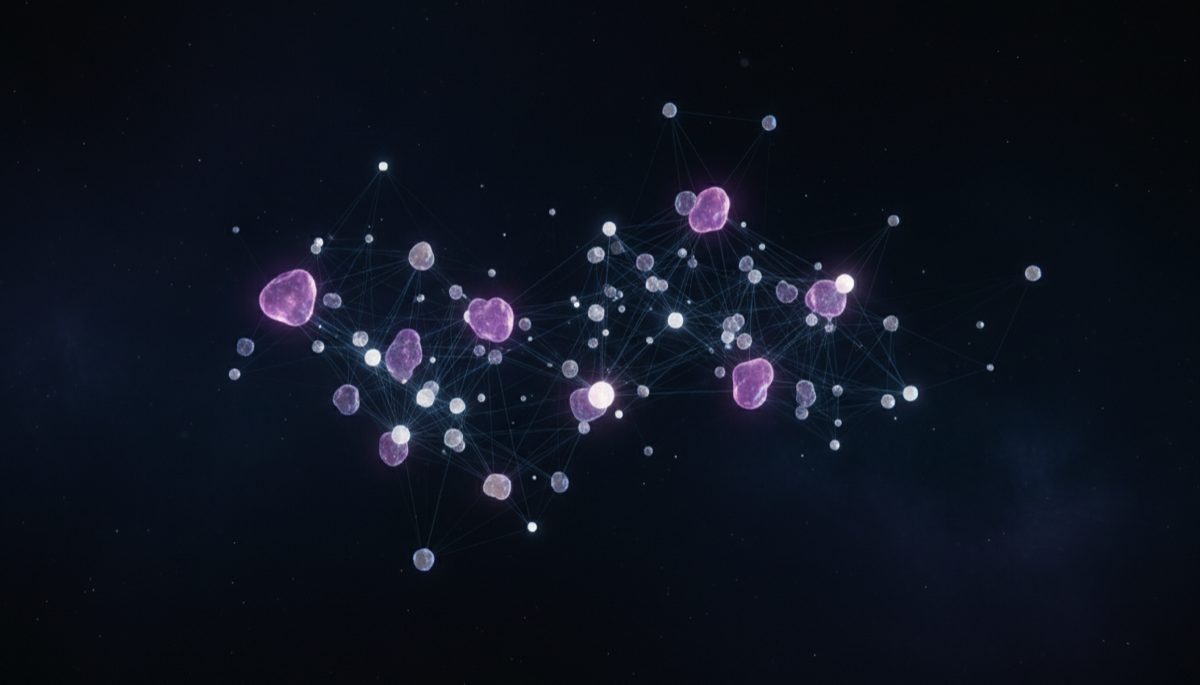
The Nostr protocol is an open, decentralized communication protocol that enables censorship-resistant social media, messaging, and content publishing without relying on any company, server, or platform gatekeeper. Short for “Notes and Other Stuff Transmitted by Relays,” Nostr uses cryptographic key pairs and a network of independent relay servers to let anyone publish and read content without permission from a central authority. For bitcoiners building a sovereignty stack, Nostr fills the communication layer that Bitcoin and Lightning fill for money.
Bitcoin Sovereignty Plan from the
Advanced Bitcoin Security & Privacy course.
Why Nostr Matters for Bitcoin Users
Bitcoin gives you financial sovereignty — the ability to send and receive value without permission. But communication sovereignty is equally fundamental. If a platform can ban your account, your ability to coordinate, transact, and share information depends on that platform’s continued tolerance of your activity.
Nostr solves this by making your identity portable. Your Nostr identity is a cryptographic key pair (a public key and a private key) — identical in concept to your Bitcoin keys. No company owns your identity, no server hosts your account, and no moderator can permanently silence you. If one relay bans you, you publish through others. Your followers find you through your public key, not through a platform-assigned username.
The integration between Nostr and Bitcoin’s Lightning Network goes deeper than philosophy. Nostr clients support “zaps” — instant Lightning micropayments attached to posts. Instead of clicking a meaningless “like” button, you send actual satoshis to the content creator. This creates a native, censorship-resistant economy where value flows directly between participants with no payment processor in the middle.
How the Nostr Protocol Works
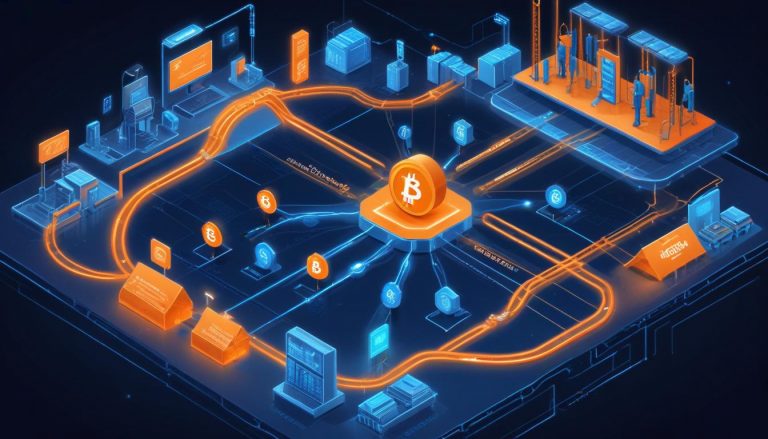
Nostr’s architecture is deliberately simple. It has only two components: clients and relays.
Clients
A client is the application you use to read and write Nostr content — similar to how a browser is the client for the web. Clients can be mobile apps, desktop applications, or web interfaces. Popular clients include:
- Damus — iOS client with a Twitter-like interface, Lightning wallet integration, and zap support
- Amethyst — Feature-rich Android client supporting custom emoji reactions, marketplace listings, live streams, and zaps
- Primal — Cross-platform (web, iOS, Android) with a built-in Lightning wallet on mobile, making zapping seamless
- noStrudel — Web-based client focused on power users with advanced filtering and relay management
- Coracle — Lightweight web client with a clean reading experience
You can use multiple clients simultaneously with the same identity — your key pair works everywhere. Switching clients is like switching email apps: your data follows you because it lives on relays, not inside any single application.
Relays
Relays are servers that store and forward Nostr messages (called “events”). Anyone can run a relay — it’s open-source software that accepts events from clients, stores them, and serves them to other clients that request them. Relays are the infrastructure layer, but no single relay is essential. Your client connects to multiple relays simultaneously, so if one goes down or bans you, your content remains available through the others.
Relays can choose their own policies: some accept everything (public relays), some require payment (paid relays that filter spam), and some are invite-only (community relays). This creates a free market for message distribution where relay operators compete on reliability, speed, and moderation quality rather than controlling the protocol itself.
Events and Signatures
Everything on Nostr is an “event” — a JSON object containing the content, the author’s public key, a timestamp, and a cryptographic signature proving the author created it. Events are published to relays and can be verified by anyone. The signature scheme uses Schnorr signatures on the secp256k1 curve — the same cryptography that secures Bitcoin transactions. This isn’t a coincidence: it enables tight integration between Nostr identities and Bitcoin/Lightning infrastructure.
Event types (called “kinds”) define different content categories: kind 1 is a short text note (like a tweet), kind 0 is profile metadata, kind 4 is encrypted direct messages, kind 30023 is long-form content (like blog posts). The NIP (Nostr Implementation Possibilities) system defines these standards, allowing the protocol to evolve through community proposals.
Zaps: Lightning Payments on Social Media
Zaps are Nostr’s killer feature for bitcoiners. When you zap a post, your client sends a Lightning payment to the author’s Lightning address and publishes a public receipt (a kind 9735 event) to relays. The result: everyone can see that the post received real monetary value, and the author receives actual satoshis — not points, not tokens, not promises.
Zaps work because Nostr identities can be linked to Lightning Network addresses. Set your Lightning address in your Nostr profile, and any client that supports zaps can send you sats. Popular wallets like Alby, Wallet of Satoshi, and Primal’s built-in wallet handle the Lightning payment seamlessly.
Emerging features include zap splits (automatically dividing payments between multiple creators), zap-powered polls (vote with sats), and zap-based content ranking where posts surface based on total value received rather than algorithmic engagement metrics.
Setting Up Nostr: Getting Started
- Generate your keys. Download a Nostr client (Damus on iOS, Amethyst on Android, or Primal for cross-platform). The app generates your key pair automatically. Your public key (npub) is your identity — share it publicly. Your private key (nsec) is your secret — never share it. Back up your private key the same way you’d back up a seed phrase.
- Set up your profile. Add a display name, profile picture, bio, and Lightning address. The Lightning address enables zaps from other users.
- Connect to relays. Most clients connect to a default set of relays automatically. You can add or remove relays based on your preferences — more relays means wider reach, fewer relays means faster performance.
- Verify your identity with NIP-05. NIP-05 lets you link a domain name to your Nostr key, providing human-readable verification. If you own yourdomain.com, you can set up [email protected] as your verified Nostr identity — similar to a blue checkmark but controlled by you, not a platform.
- Start following people and publishing. Follow other users by their public keys, engage with content, and send zaps. Your social graph is portable — if you switch clients, your follows come with you.
Nostr vs Traditional Social Media
| Factor | Nostr | Twitter/X | Mastodon |
|---|---|---|---|
| Account ownership | You (cryptographic keys) | Platform | Server admin |
| Censorship resistance | High (multi-relay) | None (platform decides) | Partial (server-level) |
| Identity portability | Full (key pair works everywhere) | None (locked to platform) | Limited (migration between servers) |
| Native payments | Lightning zaps | None native | None native |
| Algorithm control | Client-side (you choose) | Server-side (platform controls) | Chronological |
| Data ownership | Published to chosen relays | Platform owns data | Server admin controls |
| Developer openness | Fully open protocol | API increasingly restricted | Open source |
Running Your Own Relay
Like running your own Bitcoin node, running your own Nostr relay gives you maximum sovereignty. Your relay can serve as a personal backup (all your events stored on your own hardware), a community hub (a relay for your local Bitcoin meetup or organization), or a paid relay that charges for access to filter out spam.
Several open-source relay implementations exist: nostr-rs-relay (Rust), strfry (C++), and nostream (TypeScript). A relay runs comfortably on a Raspberry Pi or a small VPS. If you already run an Umbrel or Start9 node, Nostr relay apps are available in their app stores.
Privacy Considerations
Nostr improves on traditional social media privacy in several ways — your IP can be hidden behind Tor, your identity is pseudonymous (a public key, not a name), and no company collects your data for advertising. But it’s not a privacy silver bullet:
- Public by default: Standard Nostr events are visible to anyone connected to the same relays. Treat public posts as fully public.
- Metadata: Relay operators can see which public keys publish events and from which IP addresses (unless you use Tor).
- DMs improved but imperfect: NIP-44 encryption (XChaCha20-Poly1305) secures private messages, and NIP-17 improves private message handling. However, metadata (who is messaging whom) can still be visible to relays.
- Lightning address correlation: Your Lightning address links your Nostr identity to your payment activity. Use separate Lightning wallets for zapping and for private transactions if this matters for your privacy model.
The Nostr Ecosystem in 2026
Nostr has grown far beyond Twitter-like microblogging. The protocol now supports:
- Long-form content: Blog posts and articles published directly on Nostr (kind 30023), readable by any compatible client
- Marketplaces: Peer-to-peer selling with Lightning payment integration
- Live streaming: Video streams with real-time zapping
- Group chats: NIP-28 defines public and private group channels
- Git collaboration: Code repository hosting and collaboration through Nostr events
- Audio content: Podcasts and audio spaces with Lightning micropayments per minute listened
Jack Dorsey’s significant financial support ($10 million to a Nostr development collective in 2025) has accelerated ecosystem development. The NIP process continues to produce new standards, with the developer community actively proposing and implementing protocol enhancements.
Verdict
Nostr completes the sovereignty stack. Bitcoin gives you monetary sovereignty. The Lightning Network gives you payment speed and privacy. Running your own node gives you transaction verification independence. And Nostr gives you communication sovereignty — the ability to publish, message, and transact socially without any platform’s permission.
The protocol is still maturing. Client UX varies in quality, relay reliability isn’t uniform, and the network effect is smaller than incumbent platforms. But for bitcoiners who already understand the value of holding their own keys and running their own infrastructure, Nostr is a natural extension of the same principles. Your identity is your key pair. Your data lives on relays you choose. And value flows through Lightning, not through advertising.
Frequently Asked Questions
Is Nostr only for Bitcoin users?
No. Anyone can use Nostr for censorship-resistant communication without touching Bitcoin. However, the integration with Lightning (zaps, payments, value exchange) makes it particularly attractive to bitcoiners. The shared cryptographic infrastructure (secp256k1 keys) means your Nostr and Bitcoin keys use the same math, though you should use separate key pairs for security.
What happens if I lose my Nostr private key?
You lose access to that identity permanently — just like losing a Bitcoin private key. There’s no “forgot password” option because no company controls your account. Back up your nsec (private key) the same way you’d back up a seed phrase: write it down, store it securely, and never enter it on untrusted websites or apps.
Can Nostr be shut down?
No single entity can shut down Nostr because there’s no central server, company, or organization that operates it. Individual relays can be shut down, but new relays can be spun up by anyone. Your content and identity persist as long as at least one relay stores your events. This is similar to how Bitcoin can’t be shut down because no single entity controls the network of nodes.
How do I find people to follow on Nostr?
Most clients have discovery features — trending posts, recommended follows, and topic-based feeds. You can also import your Twitter follows if your contacts have published their Nostr public keys. Bitcoin conferences, meetups, and podcasts are strong Nostr communities. Search by NIP-05 identifiers (like [email protected]) for verified accounts.
Is Nostr more private than Signal or Telegram?
For direct messages, Signal provides stronger privacy guarantees (sealed sender, minimal metadata). Nostr’s advantage isn’t in private messaging — it’s in public, censorship-resistant publishing combined with native Lightning payments. Use Nostr for public communication and zaps, and Signal for private conversations where metadata protection matters most.