Two Philosophies for Running Your Own Node
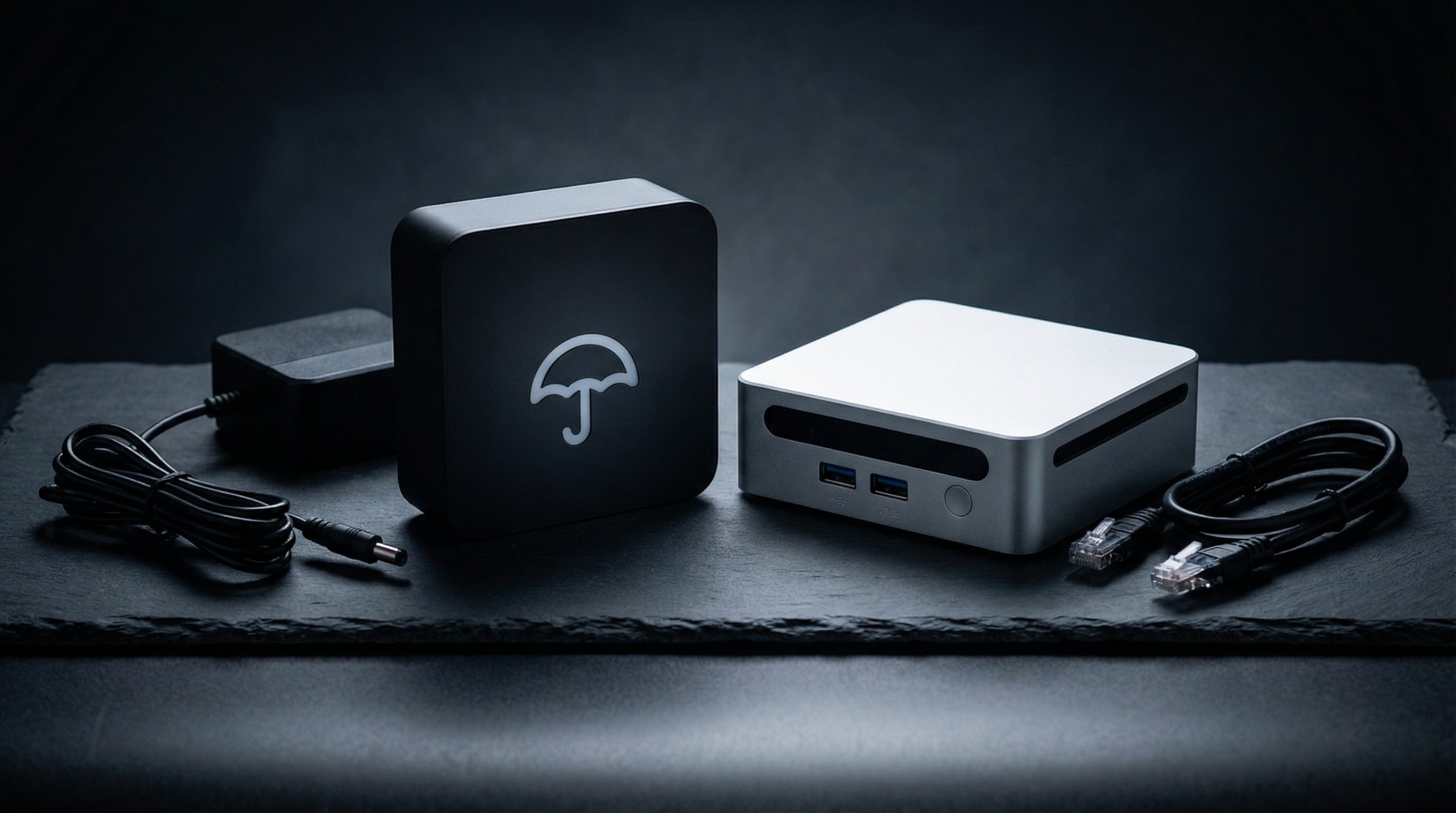
Umbrel and Start9 (StartOS) are the two most popular platforms for running a Bitcoin and Lightning node at home. Both transform commodity hardware into a self-sovereign server with a web-based interface, but they differ fundamentally in their approach to architecture, privacy, and user experience.
This is not a case where one platform is objectively better. Your choice depends on what you value most: Umbrel optimizes for ease of use and breadth of applications, while Start9 prioritizes data sovereignty and architectural rigor. We tested both extensively to help you make an informed decision.
Head-to-Head Comparison
| Feature | Umbrel | Start9 (StartOS) |
|---|---|---|
| Current Version | Umbrel OS 1.x | StartOS 0.3.6+ |
| Architecture | Docker containers | Docker with dependency system |
| App Ecosystem | 100+ apps | 40+ curated apps |
| Lightning | LND | LND or CLN |
| Hardware | Pi 4/5, x86, custom | Pi 4/5, x86, Server Pure/One |
| Tor | Default enabled | Default enabled |
| Update Model | Automatic + manual | Manual with changelogs |
| Open Source | Source available (PolyForm) | Fully open source |
| Backup System | Basic (seed + manual) | Encrypted full-system backup |
| Networking | Tor + clearnet | Tor + clearnet + LAN discovery |
| Support | Community + docs | Community + premium support |
| Price (Software) | Free | Free |
| Price (Hardware) | N/A (BYO) | Server Pure ~$600, Server One ~$400 |
App Ecosystem: Breadth vs Depth
Umbrel’s Approach
Umbrel’s App Store includes over 100 applications spanning far beyond Bitcoin. You can run Nextcloud, Pi-hole, Home Assistant, Jellyfin, and dozens of other self-hosted services alongside Bitcoin Core and LND. The app submission process is relatively open, leading to a rapidly expanding catalog.
Bitcoin and Lightning-specific apps include:
- Lightning Node (LND) — primary Lightning implementation
- ThunderHub — advanced channel management
- Ride the Lightning (RTL) — node management interface
- LNbits — extensible Lightning accounting system
- BTCPay Server — self-hosted payment processor
- Mempool — blockchain explorer
- Electrs / Fulcrum — Electrum server implementations
- BOS (Balance of Satoshis) — command-line channel tools
The broad app catalog is Umbrel’s strongest differentiator. If you want your node hardware to double as a home server for media, file storage, and network management, Umbrel accommodates that vision. For practical setup steps, see our guide on how to run a Lightning node at home.
Start9’s Approach
Start9’s marketplace is more curated, focusing primarily on sovereignty-related applications. Every app in the Start9 marketplace includes a dependency management system that ensures services are properly configured and interconnected.
Bitcoin and Lightning-specific apps include:
- LND and CLN — both major Lightning implementations available
- ThunderHub and RTL — node management
- LNbits — Lightning accounting
- BTCPay Server — payment processing
- Mempool — blockchain explorer
- Electrs — Electrum server
- Spark Wallet — CLN web interface
Start9 offers CLN as a first-class option alongside LND — a meaningful advantage for users who prefer Blockstream’s implementation. The dependency system automatically configures apps to work together: installing BTCPay Server, for example, automatically connects it to your Bitcoin Core and LND instances.
Setup Experience
Umbrel Setup
Umbrel’s setup is designed to be as frictionless as possible:
- Flash Umbrel OS to SD card using Raspberry Pi Imager.
- Boot device and access via
umbrel.localin your browser. - Create account, receive seed phrase, start Bitcoin sync.
- Install apps from the App Store with one click.
Total hands-on time: approximately 10 minutes (excluding blockchain sync). The process requires almost no technical knowledge. Umbrel’s web interface uses clear visual design and guides users through each step.
Start9 Setup
Start9’s setup involves slightly more steps but provides more transparency:
- Flash StartOS to SD card or USB drive.
- Boot device and discover it on your network (Start9 provides a dedicated setup wizard).
- Create a master password (Start9 uses a password-based system, no seed phrase for the OS itself).
- Configure your server identity (Tor address is generated automatically).
- Install services from the marketplace, reviewing dependency information for each.
Total hands-on time: approximately 15-20 minutes. The extra time comes from Start9’s more explicit configuration process, which gives users better understanding of what is running on their server.
Architecture: How They Differ Under the Hood
Umbrel’s Architecture
Umbrel runs each app as a Docker container managed by docker-compose. The system is straightforward: each app gets its own container with isolated networking, and Umbrel’s middleware handles authentication and proxying.
The advantage is simplicity and speed of deployment. The limitation is that inter-app communication relies on Docker networking, and apps cannot express formal dependencies on each other through the system (though they work together through compatible APIs).
Start9’s Architecture
StartOS uses Docker containers but adds a service management layer on top. Each app declares its dependencies, configuration options, and health checks in a structured manifest. The system enforces these declarations:
- Installing BTCPay Server automatically ensures Bitcoin Core and LND are installed and configured.
- Health checks verify that dependent services are running correctly.
- Configuration changes propagate through the dependency chain.
This architecture trades some of Umbrel’s “install anything quickly” simplicity for stronger guarantees about system consistency. It is the more robust engineering approach, particularly for users running many interconnected services.
Privacy and Security
Tor Integration
Both platforms use Tor by default for accessing your node remotely. Your node gets an .onion address that you can use to access the dashboard from anywhere without exposing your home IP address.
Start9 goes further in network isolation. Each service can be configured with its own Tor identity, and the system provides more granular control over which services are exposed and how. For a comprehensive analysis of why Tor matters for node operation, see our guide on running nodes with privacy considerations.
Open Source Status
This is a significant philosophical difference:
Umbrel uses a “source-available” license (PolyForm Shield or similar). The code is viewable, but the license restricts competitive commercial use. This means Umbrel controls the commercial terms of its software — it is not free software in the FSF sense.
Start9 uses fully open source licensing. The StartOS code is available under permissive terms, and Start9 has been vocal about the importance of genuine open source for sovereignty software. If Start9 the company disappears, the community can maintain and fork the software without legal restrictions.
For users who consider open source licensing a core principle of Bitcoin sovereignty, this distinction matters. For users focused purely on functionality, both platforms deliver comparable capabilities.
Backup and Recovery
Umbrel provides a 24-word seed phrase during setup that recovers on-chain Bitcoin funds. Lightning channel recovery relies on Static Channel Backups, which must be managed manually or through external tools. Full system recovery requires reflashing and reinstalling.
Start9 offers encrypted full-system backups to external drives or network storage. These backups capture the complete state of all services, including Lightning channel databases. Recovery from a Start9 backup restores your entire server — apps, configurations, and data — to the backup state. This is a substantially stronger recovery solution.
Hardware Options
Umbrel
Umbrel is software-only. You supply your own hardware. This is flexible and keeps costs low but means you source and assemble components yourself. Umbrel supports Raspberry Pi 4/5 and any x86-64 machine running Linux.
Start9
Start9 offers two hardware products in addition to supporting DIY hardware:
- Server Pure: A pre-built device using high-quality x86 hardware. Includes NVMe storage and comes pre-loaded with StartOS. Approximately $600.
- Server One: A more compact option, roughly $400. Suitable for Bitcoin-focused setups.
The hardware products provide a turnkey experience — unbox, plug in, configure. The premium over DIY hardware pays for quality testing, pre-configuration, and Start9’s support. However, Start9 software runs identically on a DIY Raspberry Pi setup for users who prefer to build their own. For more on the DIY approach, see our guide to personal node infrastructure.
Lightning Node Experience
Umbrel Lightning
Umbrel ships with LND as its Lightning implementation. The built-in Lightning dashboard provides basic channel management, payment history, and fund management. For advanced operations, users install ThunderHub or RTL from the app store.
The LND version is typically current, though updates depend on Umbrel’s release cycle. Channel management through the dashboard is straightforward for basic operations (open, close, view) but lacks features like automated rebalancing — you need ThunderHub or command-line tools for that. For a deeper dive into managing your channels effectively on either platform, see our Lightning channel management masterclass.
Start9 Lightning
Start9 offers both LND and Core Lightning (CLN) in its marketplace. This is a meaningful advantage for users who prefer CLN’s plugin-based architecture or want to experiment with both implementations. The dependency system ensures your Lightning implementation is properly connected to Bitcoin Core.
The ability to run CLN is particularly valuable because many innovative Lightning features (like the CLN plugin ecosystem) are CLN-exclusive. Running CLN on Start9 with the Spark or RTL interface provides a capable alternative to the LND-dominated ecosystem.
Update and Maintenance
Umbrel Updates
Umbrel checks for updates and presents them in the dashboard. App updates are one-click. OS updates are generally smooth but occasionally require manual intervention (particularly major version upgrades). The update cadence is frequent — Umbrel releases updates regularly.
Start9 Updates
StartOS updates are manual — you choose when to update and can review changelogs before applying. Service updates are also manual and include dependency checks. This deliberate approach reduces the risk of automated updates causing issues but requires more active management.
Start9’s approach aligns with the principle that verification matters — you should know what software is running on your node and deliberately approve changes.
Community and Support
Umbrel: Large and active community with extensive documentation, YouTube tutorials, and forum discussions. The barrier to getting help is low because of the user base size. Third-party guides and videos are abundant.
Start9: Smaller but deeply engaged community with a focus on technical discussion. Start9 offers premium support for hardware purchasers and maintains detailed documentation. The community skews more technical, which means answers tend to be more thorough but the available help base is narrower.
Our Recommendation
Choose Umbrel If:
- You want the fastest path to a working Lightning node.
- You plan to run non-Bitcoin apps (file storage, media server, DNS filtering).
- You value breadth of application support.
- You are comfortable with source-available licensing.
- You want maximum community resources for troubleshooting.
Choose Start9 If:
- Fully open source software is a hard requirement.
- You want to run Core Lightning instead of (or alongside) LND.
- Robust, encrypted full-system backups matter to you.
- You prefer explicit, manual control over updates and configuration.
- You want a pre-built hardware option with guaranteed compatibility.
- You value architectural rigor over maximum app selection.
The Bottom Line
Both Umbrel and Start9 are excellent platforms that accomplish the same core mission: making self-sovereign Bitcoin and Lightning nodes accessible to home users. The differences are real but secondary to the much larger gap between running either platform and not running your own node at all. For a broader discussion of why running your own Bitcoin node matters, see our dedicated article. If you are debating between them, pick the one that aligns with your values and start running your node. You can always migrate later — your Bitcoin and Lightning operations are not locked to either platform.
Umbrel vs Start9 from the
Lightning Network & Bitcoin Nodes course.
FAQ
Can I switch from Umbrel to Start9 (or vice versa) without losing my Bitcoin?
Your on-chain Bitcoin is secured by your seed phrase, which works independently of the node platform. When switching, you recover your Bitcoin Core wallet from the seed. Lightning channels require more care: export your Static Channel Backups from your old platform, then restore them on the new one. This triggers force-closes of existing channels, returning funds on-chain. You then open new channels on the new platform. It is also worth setting up a Lightning watchtower to protect your channels during the transition. Plan for on-chain fees and temporary loss of Lightning channel liquidity during the transition. Our Lightning Network fees guide can help you estimate costs.
Which platform is more stable for 24/7 operation?
Both platforms are designed for continuous operation and handle it well. Stability depends more on your hardware than the software. SSDs (not microSD cards for data storage), adequate cooling, and stable power are more important stability factors than the choice between Umbrel and Start9. If stability is your top priority, invest in quality hardware and a UPS rather than agonizing over the platform choice.
Do I need to choose one Lightning implementation, or can I run both LND and CLN?
On Start9, you can install and run both LND and CLN simultaneously, each with its own channels and liquidity. This is useful for testing or running different services on different backends. On Umbrel, LND is the primary option, and running CLN requires manual Docker configuration outside the standard app framework. Most home users should start with one implementation and add the second only if they have a specific need.
Is the Start9 hardware worth the premium over building my own?
The Server Pure at ~$600 costs roughly $200-300 more than equivalent DIY hardware. The premium buys you guaranteed hardware compatibility, pre-installation, professional assembly, and access to Start9’s premium support. If your time is valuable and you want zero hardware debugging, the premium is justified. If you enjoy building things and are comfortable troubleshooting, DIY hardware with StartOS is equally capable at lower cost.
For a broader perspective, explore our Bitcoin seed phrase security guide.
{“@context”: “https://schema.org”, “@type”: “FAQPage”, “mainEntity”: [{“@type”: “Question”, “name”: “Can I switch from Umbrel to Start9 (or vice versa) without losing my Bitcoin?”, “acceptedAnswer”: {“@type”: “Answer”, “text”: “Your on-chain Bitcoin is secured by your seed phrase, which works independently of the node platform. When switching, you recover your Bitcoin Core wallet from the seed. Lightning channels require more care: export your Static Channel Backups from your old platform, then restore them on the new one. This triggers force-closes of existing channels, returning funds on-chain. You then open new channels on the new platform. It is also worth setting up a Lightning watchtower to protect your channe…”}}, {“@type”: “Question”, “name”: “Which platform is more stable for 24/7 operation?”, “acceptedAnswer”: {“@type”: “Answer”, “text”: “Both platforms are designed for continuous operation and handle it well. Stability depends more on your hardware than the software. SSDs (not microSD cards for data storage), adequate cooling, and stable power are more important stability factors than the choice between Umbrel and Start9. If stability is your top priority, invest in quality hardware and a UPS rather than agonizing over the platform choice.”}}, {“@type”: “Question”, “name”: “Do I need to choose one Lightning implementation, or can I run both LND and CLN?”, “acceptedAnswer”: {“@type”: “Answer”, “text”: “On Start9, you can install and run both LND and CLN simultaneously, each with its own channels and liquidity. This is useful for testing or running different services on different backends. On Umbrel, LND is the primary option, and running CLN requires manual Docker configuration outside the standard app framework. Most home users should start with one implementation and add the second only if they have a specific need.”}}, {“@type”: “Question”, “name”: “Is the Start9 hardware worth the premium over building my own?”, “acceptedAnswer”: {“@type”: “Answer”, “text”: “The Server Pure at ~$600 costs roughly $200-300 more than equivalent DIY hardware. The premium buys you guaranteed hardware compatibility, pre-installation, professional assembly, and access to Start9’s premium support. If your time is valuable and you want zero hardware debugging, the premium is justified. If you enjoy building things and are comfortable troubleshooting, DIY hardware with StartOS is equally capable at lower cost. For a broader perspective, explore our Bitcoin seed phrase sec…”}}]}