
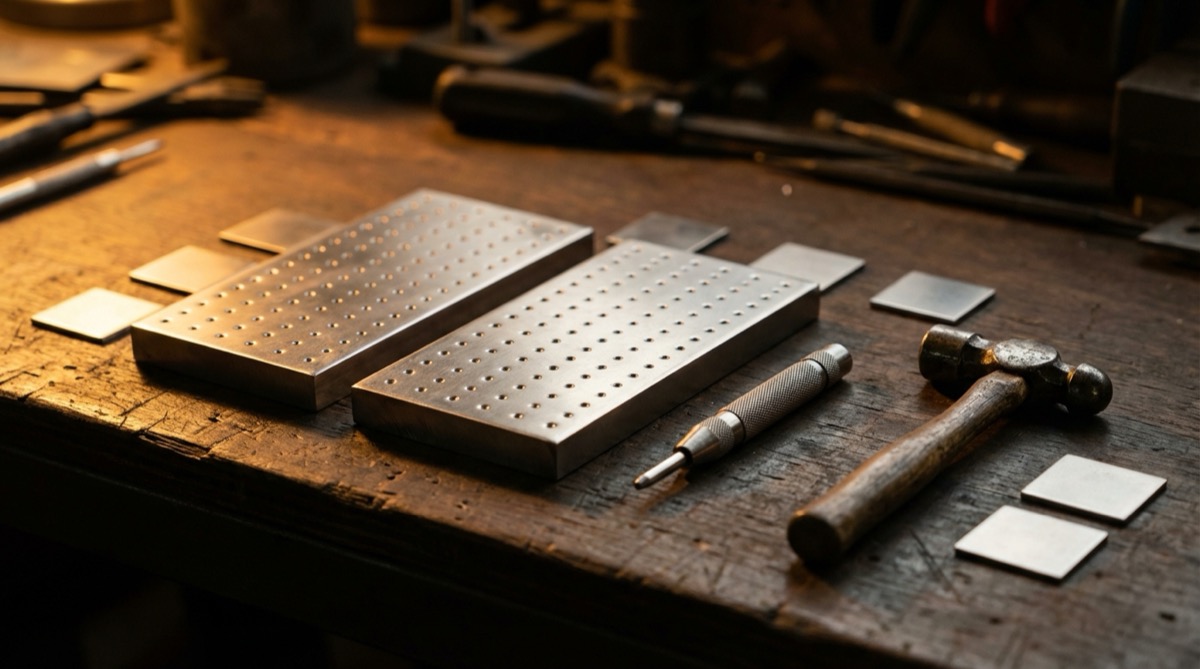
Your Bitcoin seed phrase is the master key to your funds. Write it on paper and you are one house fire, one flood, or one curious family member away from losing everything. Metal seed phrase backups solve this problem by storing your recovery words on materials that survive the disasters paper cannot.
This guide compares every major metal backup product on the market, explains how to set them up correctly, and covers real-world durability testing so you can make an informed choice about protecting your bitcoin for the long term.
Why Metal Backups Matter
The standard backup method for a hardware wallet is writing your 12 or 24-word recovery phrase on the paper card that ships in the box. This works fine until it does not. Paper degrades over time, is destroyed by water, burns in fires, and can be accidentally thrown away.
Consider the realistic threats to a paper seed backup:
- House fires: Average house fire temperatures reach 600 degrees Celsius (1,100 degrees Fahrenheit). Paper ignites at approximately 230 degrees Celsius (450 degrees Fahrenheit). Your paper backup will not survive even a minor fire.
- Water damage: Flooding, pipe bursts, or even high humidity over years can render ink illegible on paper. If you cannot read even one word, the entire seed phrase is useless.
- Physical degradation: Paper yellows, ink fades, and storage conditions matter more than most people realize. A seed phrase stored for 10+ years in a basement or attic may be partially or fully illegible when you need it most.
- Accidental destruction: Paper can be thrown away during moves, shredded by mistake, or damaged by pests. These are not hypothetical scenarios. They happen regularly.
Metal backups eliminate all of these failure modes. Stainless steel resists fire up to 1,400 degrees Celsius, is impervious to water, and will not degrade over decades of storage. For anyone holding meaningful amounts of bitcoin, a metal backup is not optional. It is the minimum standard for responsible self-custody.
Before choosing a metal backup method, make sure you understand the fundamentals of seed phrase security, including why your seed phrase is the single most important thing to protect in your entire Bitcoin setup.
Product Comparison: The Major Players
The metal seed backup market has matured significantly. Here are the products worth considering, from budget options to premium solutions.
Cryptosteel Capsule ($99)
The Cryptosteel Capsule is a cylindrical stainless steel container that holds individual letter tiles on a threaded core. You slide tiles onto the core to spell out each word of your seed phrase (using the first 4 letters of each BIP39 word, which is sufficient for unique identification). The core is then locked inside the capsule with a screw cap.
Material: 303 and 304-grade stainless steel. The capsule body and all letter tiles are solid steel with no welds or joints that could fail under stress.
Durability: Tested to withstand temperatures up to 1,400 degrees Celsius (2,500 degrees Fahrenheit), which is well above any house fire scenario. Water and corrosion resistant. Can withstand crushing force up to 150,000 Newtons.
Setup experience: Moderate difficulty. Sorting through hundreds of small letter tiles to find the ones you need is tedious. Plan for 30-60 minutes for initial setup. The tiles are small and easy to drop. Work on a clean, flat surface with good lighting.
Capacity: Stores up to 24 words using the first 4 characters of each word, which uniquely identifies every word in the BIP39 wordlist.
The Cryptosteel Capsule was one of the first metal backup products and has a long track record. Its cylindrical form factor is compact and easy to store in a safe deposit box or fireproof safe. The main downside is the fiddly setup process with tiny tiles. For a direct comparison with its closest competitor, see our detailed Cryptosteel vs Billfodl review.
Billfodl ($99)
Billfodl uses a flat, credit-card-style stainless steel case with a hinged design. Like Cryptosteel, it uses individual letter tiles, but they slot into clearly labeled rows on a flat plate rather than threading onto a core. Each row corresponds to one word of your seed phrase.
Material: Marine-grade 316 stainless steel. This is a higher-grade steel than the Cryptosteel Capsule’s 304, offering better corrosion resistance, particularly in salt-water environments.
Durability: Fireproof up to 1,200 degrees Celsius (2,192 degrees Fahrenheit). Waterproof and corrosion resistant. Has been proven in a documented real house fire where the Billfodl survived intact and the seed phrase was fully readable after recovery from the debris.
Setup experience: Slightly easier than Cryptosteel because the flat layout makes it clearer where each tile goes. Still requires sorting through small tiles. Plan for 20-45 minutes.
Capacity: Stores up to 24 words using the first 4 characters of each word.
Billfodl has been trusted by over 100,000 Bitcoiners since 2017 and has the most real-world track record of any metal backup. The flat form factor is a matter of preference: it is easier to read and set up than the Cryptosteel Capsule, but slightly less compact for storage.
BlockPlate ($69)
BlockPlate takes a fundamentally different approach. Instead of letter tiles, you use a center punch (included) to stamp dots into a thick stainless steel plate. Each word is represented by its position number in the BIP39 wordlist, and you punch dots at specific positions on a grid to encode each number.
Material: 12-gauge 304-grade hardened stainless steel plate. Thicker than the Cryptosteel or Billfodl, with no moving parts or small components.
Durability: Fire and heat protection up to 1,149 degrees Celsius (2,100 degrees Fahrenheit). Water and corrosion resistant. Because the backup is physically stamped into the metal rather than assembled from loose tiles, there is zero risk of tiles falling out or becoming disordered during a disaster.
Setup experience: Different from tile-based products. You need a hammer and the included center punch. The physical act of punching is simple but requires care to hit the correct grid positions. A mistake means starting over with a new plate. Plan for 15-30 minutes.
Capacity: Available in 12-word and 24-word versions.
BlockPlate is the best value option at $69 and has a critical advantage over tile-based products: there are no loose parts. In a fire or flood scenario, tiles in a Cryptosteel or Billfodl could potentially shift or scatter if the container is compromised. A BlockPlate’s stamped dots cannot move because they are permanently deformed into the steel. This permanence is both a strength (disaster proof) and a weakness (mistakes are permanent).
Seedplate by Coinkite ($49)
Made by the same company behind the Coldcard hardware wallet, the Seedplate uses a similar stamping approach to BlockPlate. You use a center punch to mark positions on a stainless steel plate that encode your seed words.
Material: 304 stainless steel, approximately 2mm thick.
Durability: Comparable to BlockPlate. Resistant to fire, water, and corrosion. Stamped markings are permanent.
Setup experience: Similar to BlockPlate. Center punch approach with a grid layout. Clear instructions included.
Capacity: 12 or 24 words.
At $49, the Seedplate is the most affordable option from a reputable manufacturer. Coinkite’s Bitcoin-only focus means the product is designed specifically for BIP39 seed phrases with no unnecessary features. If you are already in the Coldcard ecosystem, the Seedplate is a natural complement.
SAFU Ninja ($35-$45)
SAFU Ninja is a budget stamping plate system that uses a similar grid-and-punch approach. It is one of the most affordable options available and has gained a following in the Bitcoin community for offering solid durability at a low price point.
Material: Stainless steel plates.
Durability: Fire and water resistant. Similar performance characteristics to other stamped steel plates.
Setup experience: Straightforward center punch approach. Minimal learning curve.
Capacity: 12 or 24 words depending on the version purchased.
SAFU Ninja proves that effective metal seed storage does not need to be expensive. For Bitcoiners on a tight budget, this is a perfectly functional option that dramatically outperforms any paper backup.
Comparison Table
| Product | Price | Material | Fire Rating | Water Proof | Method | Loose Parts |
|---|---|---|---|---|---|---|
| Cryptosteel Capsule | $99 | 303/304 SS | 1,400°C / 2,500°F | Yes | Letter tiles | Yes (tiles) |
| Billfodl | $99 | 316 Marine SS | 1,200°C / 2,192°F | Yes | Letter tiles | Yes (tiles) |
| BlockPlate | $69 | 304 Hardened SS | 1,149°C / 2,100°F | Yes | Center punch | No |
| Seedplate | $49 | 304 SS | ~1,100°C / 2,000°F | Yes | Center punch | No |
| SAFU Ninja | ~$40 | Stainless Steel | ~1,100°C / 2,000°F | Yes | Center punch | No |
Tile-Based vs Stamped: Which Approach Is Better?
This is the most important design decision in the metal backup space, and it affects both setup experience and disaster resilience.
Tile-Based Products (Cryptosteel, Billfodl)
Advantages:
- Reusable: if you make a mistake or generate a new seed, you can rearrange the tiles
- Easier to read: individual letter tiles are immediately human-readable
- No special tools required beyond what ships in the box
Disadvantages:
- Loose tiles could potentially shift or scatter in extreme scenarios (structural fire causing the container to deform, for example)
- More complex setup with many small parts to sort and place
- Higher cost due to manufacturing many individual precision-cut tiles
- The container must maintain structural integrity for the tiles to remain in order
Stamped Products (BlockPlate, Seedplate, SAFU Ninja)
Advantages:
- Permanent: stamped marks cannot move, fall out, or become disordered
- No loose parts means nothing to scatter in a disaster
- Simpler construction with fewer potential failure points
- Generally less expensive
- Fastest setup once you understand the grid system
Disadvantages:
- Permanent: mistakes cannot be corrected. A wrong punch means starting over.
- Requires a hammer and steady hand
- Not immediately human-readable without a BIP39 wordlist reference (you are reading numbers, not letters)
- Cannot be reused if you generate a new seed phrase
For pure disaster resistance, stamped products win. For ease of use and reusability, tile products win. Both approaches dramatically outperform paper. If you are backing up a seed phrase that you intend to use for years without changes, a stamped plate is the most robust choice. If you expect to rotate seeds periodically, a tile-based product offers more flexibility.
How to Set Up Your Metal Backup
Regardless of which product you choose, follow these security practices during setup.
Before You Start
- Work in private. Set up your metal backup in a private room with no cameras, no windows facing public areas, and no other people present. Your seed phrase gives anyone who sees it full access to your bitcoin.
- Disconnect from the internet. If you are referencing the BIP39 wordlist on a computer, use an offline copy. Better yet, use the printed wordlist that comes with most hardware wallets.
- Verify your seed phrase first. Before committing it to metal, confirm that your seed phrase actually works by performing a test recovery on your hardware wallet. Do not stamp a seed phrase you have not verified.
- Clear your workspace. Work on a clean, well-lit surface. For tile products, use a tray or towel to prevent tiles from rolling away. For stamped products, use a solid surface that can handle hammer strikes.
Setting Up a Tile-Based Backup (Cryptosteel or Billfodl)
- Sort the letter tiles into alphabetical groups. This makes finding specific letters much faster.
- For each word in your seed phrase, find the first 4 letters. The first 4 letters of any BIP39 word uniquely identify that word. For example, “abandon” becomes “ABAN” and “abstract” becomes “ABST.”
- Slide or place the tiles into the corresponding slot for that word position.
- After placing all tiles, read through the entire sequence to verify accuracy against your paper backup.
- Secure the device: for Cryptosteel, screw the cap on firmly. For Billfodl, close and secure the hinge mechanism.
- Store the leftover tiles separately. Do not store them with the backup, as scattered tiles near a seed backup could aid an attacker in decoding it.
Setting Up a Stamped Backup (BlockPlate, Seedplate, SAFU Ninja)
- Look up each seed word’s position number in the BIP39 wordlist. For example, “abandon” is word number 1, “ability” is word number 2, and so on up to 2048.
- Place the plate on a hard, solid surface. A concrete floor or anvil works well. A wooden table may dent.
- Using the center punch and hammer, mark the correct grid positions for each word number.
- Use moderate, controlled strikes. One clean hit per position is better than multiple light taps.
- After stamping all words, verify each position against your original seed phrase by reading back the numbers and converting to words.
- Double-check everything. A single misplaced dot could make recovery impossible.
Storage Best Practices
A metal backup that sits next to your hardware wallet in a desk drawer defeats the purpose. Proper storage requires geographic separation and physical security.
- Separate locations: Store your metal backup in a different physical location from your hardware wallet. If both are in your home and your home burns down, you have lost both. A safe deposit box, a trusted family member’s safe, or a second property are all valid options.
- Fireproof safe: Even though the metal backup itself is fireproof, storing it in a fireproof safe adds protection against theft and casual discovery. A basic fireproof document safe ($50-$100) is sufficient.
- Consider a passphrase: If you use a BIP39 passphrase (25th word), someone who finds your metal backup still cannot access your funds without the passphrase. This adds a layer of security that makes geographic distribution safer.
- Multiple backups: For significant holdings, consider making two metal backups and storing them in different locations. The cost of a second backup ($50-$100) is trivial compared to the bitcoin it protects.
- Do not label it: Do not write “Bitcoin seed phrase” or “crypto backup” on or near your metal backup. Plausible deniability matters. A plain metal plate in a safe deposit box attracts far less attention than one labeled with its purpose.
Real-World Fire and Water Testing
Jameson Lopp, a well-known Bitcoin security researcher, has conducted extensive stress tests on metal seed storage devices, documenting the results publicly. His testing methodology includes subjecting devices to extreme heat (propane torch at over 1,500 degrees Celsius), submersion in water, and physical crushing.
Key findings from stress testing:
- All stainless steel products survived fire tests. Both tile-based and stamped products remained readable after exposure to extreme heat. The steel itself did not melt, deform enough to lose data, or become illegible at temperatures far exceeding house fire conditions.
- Tile-based products survived but with caveats. In some extreme tests, the container housing deformed slightly, but tiles remained in place and readable. In the most extreme scenarios (direct industrial heat application), there is a theoretical risk of tiles shifting if the container structure fails completely.
- Stamped products were effectively indestructible in all realistic disaster scenarios. Because the data is physically deformed into the metal, there is no mechanism for data loss short of melting the steel itself (which requires temperatures no house fire reaches).
- Water submersion had zero effect on all stainless steel products regardless of design type. Weeks of submersion caused no degradation or readability loss.
The bottom line: every product in this guide will survive any realistic disaster scenario. The differences between products are about ease of use, price, and the theoretical extreme edges of durability rather than practical failure risks. Even the cheapest stamped plate dramatically outperforms the best paper backup.
Which Metal Backup Should You Buy?
Best overall: BlockPlate ($69). The stamped approach eliminates loose-part risk, the price is reasonable, and the 304 hardened steel construction is more than sufficient for any realistic threat. The no-loose-parts design gives peace of mind that your backup will survive any scenario without tile displacement.
Best budget option: Seedplate ($49) or SAFU Ninja (~$40). Both use the same proven stamping approach at a lower price point. Coinkite’s Seedplate has the advantage of coming from a well-established Bitcoin company.
Best tile-based: Billfodl ($99). The 316 marine-grade steel is the highest quality in this class, and the documented real-fire survival gives confidence. If you prefer the readability and reusability of tiles, Billfodl is the one to get.
Best for multiple seeds: If you run a multisig setup with multiple seed phrases to back up, the stamped plates are the most cost-effective approach. Three Seedplates ($147 total) cost less than two Billfodls ($198) and provide arguably better disaster resistance for your 2-of-3 multisig setup.
No matter which product you choose, the most important thing is that you actually use one. A $40 metal backup protecting a significant Bitcoin holding is one of the highest-value security investments you can make. And once your metal backup is in place, verify it works by testing a recovery, a topic we cover in detail in our cold storage methods guide.
Seed Phrase Storage Best Practices from the
Bitcoin Wallets & Self-Custody course.
Frequently Asked Questions
Do I need to store all 24 words or just the first 4 letters of each?
The first 4 letters of each BIP39 word uniquely identify that word from the entire 2,048-word wordlist. No two words in the BIP39 list share the same first 4 letters. So “ABAN” can only mean “abandon,” and “ABST” can only mean “abstract.” Most metal backup products use this 4-letter approach because it saves space while maintaining perfect recoverability.
Can I make my own metal backup instead of buying a commercial product?
Yes. Some Bitcoiners buy plain stainless steel plates and letter punch sets from hardware stores for under $30 total. This works, but commercial products offer better grid alignment, clearer marking systems, and have been stress-tested. The peace of mind from a tested product is worth the modest premium for most people.
Should I store my passphrase on the same metal backup as my seed?
No. The entire point of a passphrase is that it serves as a second factor separate from your seed. If someone finds a metal backup containing both the seed phrase and the passphrase, the passphrase provides zero additional security. Store the passphrase separately, ideally in a different location and on a different medium.
How often should I verify my metal backup is still readable?
Annually is sufficient. Stainless steel does not degrade under normal storage conditions, so this is more about verifying the backup is still where you left it and has not been tampered with. If you store it in a safe deposit box, check it during your annual box visit.
Is a fireproof safe sufficient without a metal backup?
Fireproof safes are rated for specific temperatures and durations (typically 1 hour at 927 degrees Celsius for good models). In a severe fire that burns longer than the rating, a fireproof safe can fail, and the paper inside is destroyed. A metal backup inside a fireproof safe gives you two layers of fire protection, either one of which is sufficient on its own. The safe protects against theft while the metal protects against fire. Using both together is the recommended approach.
What about titanium seed storage products?
Titanium has a higher melting point than stainless steel (1,668 degrees Celsius vs roughly 1,400 degrees Celsius) and is more corrosion resistant. Some manufacturers offer titanium plates at a premium price. For practical purposes, the difference is academic. No house fire will reach temperatures that threaten either material. Save the money and buy stainless steel unless you are protecting against threats that go well beyond normal disaster scenarios.
{“@context”: “https://schema.org”, “@type”: “FAQPage”, “mainEntity”: [{“@type”: “Question”, “name”: “Do I need to store all 24 words or just the first 4 letters of each?”, “acceptedAnswer”: {“@type”: “Answer”, “text”: “The first 4 letters of each BIP39 word uniquely identify that word from the entire 2,048-word wordlist. No two words in the BIP39 list share the same first 4 letters. So “ABAN” can only mean “abandon,” and “ABST” can only mean “abstract.” Most metal backup products use this 4-letter approach because it saves space while maintaining perfect recoverability.”}}, {“@type”: “Question”, “name”: “Can I make my own metal backup instead of buying a commercial product?”, “acceptedAnswer”: {“@type”: “Answer”, “text”: “Yes. Some Bitcoiners buy plain stainless steel plates and letter punch sets from hardware stores for under $30 total. This works, but commercial products offer better grid alignment, clearer marking systems, and have been stress-tested. The peace of mind from a tested product is worth the modest premium for most people.”}}, {“@type”: “Question”, “name”: “Should I store my passphrase on the same metal backup as my seed?”, “acceptedAnswer”: {“@type”: “Answer”, “text”: “No. The entire point of a passphrase is that it serves as a second factor separate from your seed. If someone finds a metal backup containing both the seed phrase and the passphrase, the passphrase provides zero additional security. Store the passphrase separately, ideally in a different location and on a different medium.”}}, {“@type”: “Question”, “name”: “How often should I verify my metal backup is still readable?”, “acceptedAnswer”: {“@type”: “Answer”, “text”: “Annually is sufficient. Stainless steel does not degrade under normal storage conditions, so this is more about verifying the backup is still where you left it and has not been tampered with. If you store it in a safe deposit box, check it during your annual box visit.”}}, {“@type”: “Question”, “name”: “Is a fireproof safe sufficient without a metal backup?”, “acceptedAnswer”: {“@type”: “Answer”, “text”: “Fireproof safes are rated for specific temperatures and durations (typically 1 hour at 927 degrees Celsius for good models). In a severe fire that burns longer than the rating, a fireproof safe can fail, and the paper inside is destroyed. A metal backup inside a fireproof safe gives you two layers of fire protection, either one of which is sufficient on its own. The safe protects against theft while the metal protects against fire. Using both together is the recommended approach.”}}, {“@type”: “Question”, “name”: “What about titanium seed storage products?”, “acceptedAnswer”: {“@type”: “Answer”, “text”: “Titanium has a higher melting point than stainless steel (1,668 degrees Celsius vs roughly 1,400 degrees Celsius) and is more corrosion resistant. Some manufacturers offer titanium plates at a premium price. For practical purposes, the difference is academic. No house fire will reach temperatures that threaten either material. Save the money and buy stainless steel unless you are protecting against threats that go well beyond normal disaster scenarios.”}}]}