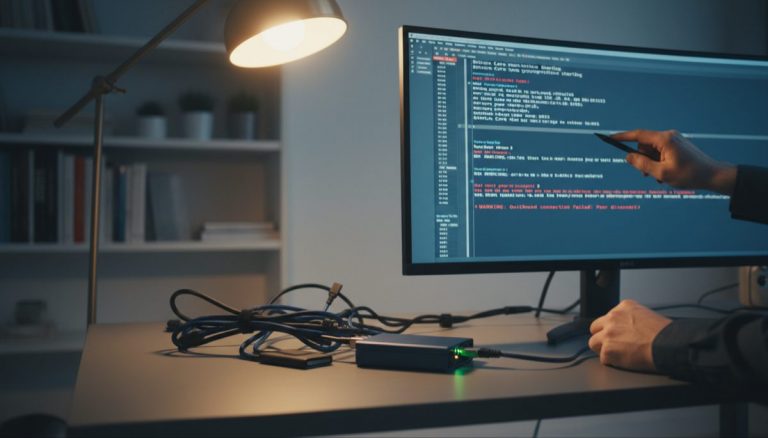

The evolution of Bitcoin infrastructure has brought forth a new era of digital self-sovereignty, where individuals can take full control of their financial destiny through personal node operation. For a deeper look at this topic, see our guide on self-sovereign Bitcoin node operation. This comprehensive analysis explores the technological and philosophical implications of running personal Bitcoin nodes, with a particular focus on modern integrated solutions that are making this crucial aspect of Bitcoin adoption more accessible to everyday users.
The foundation of Bitcoin’s decentralized nature rests upon its network of nodes, each maintaining a complete copy of the blockchain and validating transactions independently. While this architectural design ensures the network’s resilience and trustlessness, it has historically presented technical barriers for average users. The emergence of plug-and-play node solutions represents a significant milestone in Bitcoin’s journey toward mass adoption, democratizing access to full node capabilities while maintaining security and sovereignty principles. We explore this in detail in our article on Bitcoin node setup solutions.
Running a personal Bitcoin node offers several critical advantages that extend beyond mere transaction validation. It provides users with enhanced privacy by eliminating the need to rely on third-party servers for blockchain data, reduces trust requirements in the Bitcoin ecosystem, and contributes to the network’s overall decentralization. Furthermore, operating a personal node enables direct verification of all transactions and blocks, ensuring users can independently verify the rules of the Bitcoin protocol are being followed.
Modern node solutions have evolved to address various technical challenges while introducing additional functionality through modular architectures. These systems typically combine Bitcoin Core with complementary services like block explorers, lightning network implementations, and wallet backends. You can learn more about this in our resource on Lightning Network architecture. This integration creates a comprehensive platform that serves not only as a node but as a personal Bitcoin infrastructure stack.
The security considerations for personal node operation extend beyond the basic setup. Users must carefully consider their connection methods, implementing proper network security measures while ensuring their node remains accessible for their own use. This topic is explored further in our post on hardware wallet node connectivity. The balance between security and usability represents an ongoing challenge that modern solutions attempt to address through careful design choices and user-friendly interfaces.
Wallet integration with personal nodes represents another crucial aspect of the Bitcoin sovereignty stack. The ability to connect hardware wallets and software interfaces directly to one’s node eliminates reliance on third-party servers for transaction broadcasting and balance verification. This direct connection ensures maximum privacy and security while providing users with complete control over their transaction validation process.
The development of specialized operating systems for node operation has introduced new possibilities for extending functionality beyond basic Bitcoin operations. These systems often include application marketplaces that allow users to expand their node’s capabilities with additional services like block explorers, lightning network nodes, and other Bitcoin-related applications. This extensibility transforms the node from a simple blockchain validator into a comprehensive Bitcoin services platform.
Privacy considerations play a central role in personal node operation. While running a node provides inherent privacy benefits by eliminating the need to query third-party servers for transaction data, users must still carefully consider their network configuration to prevent information leakage. This includes proper implementation of Tor or VPN services, careful management of network connections, and consideration of physical security measures.
Looking toward the future, the continued evolution of personal node solutions promises to further reduce technical barriers while expanding functionality. Developments in hardware optimization, networking protocols, and user interface design are making node operation increasingly accessible to non-technical users. This democratization of node operation strengthens Bitcoin’s decentralized nature while empowering individuals to take full control of their financial sovereignty.
The implications of widespread personal node adoption extend beyond individual benefits to the broader Bitcoin ecosystem. As more users operate their own nodes, the network becomes more resilient against centralization pressures and potential attacks. This grassroots strengthening of Bitcoin’s infrastructure aligns perfectly with its foundational principles of decentralization and individual sovereignty.
In conclusion, the rise of integrated personal node solutions represents a crucial development in Bitcoin’s maturation. By making full node operation accessible to a broader audience while maintaining security and sovereignty principles, these solutions are helping to realize Bitcoin’s promise of financial independence. Our comprehensive guide on running a Bitcoin full node covers this further. As this technology continues to evolve, it will play an increasingly important role in empowering individuals to take full control of their financial future while contributing to the robustness and decentralization of the Bitcoin network.
Node operators can benefit from understanding Bitcoin Wallet-Node Sync: How It Works.
Full sovereignty starts with your own node — explore DIY Bitcoin Node: Build Your Own Setup.
Running your own node strengthens this approach — learn about Bitcoin Node Time Sync: Why It Matters.
Verifying transactions yourself requires a node — see Bitcoin Node Sync: Solve Technical Challenges.
For a broader perspective, explore our hardware wallet buying guide guide.
Step-by-Step Guide
Setting up a Bitcoin node with Umbrel or Start9 follows a structured process that eliminates most of the manual configuration traditionally required. Before purchasing hardware, verify your internet connection provides at least 50 Mbps download speeds and that your ISP does not throttle peer-to-peer traffic, as the initial blockchain synchronization transfers over 500 GB of data.
Start by selecting your hardware platform. A Raspberry Pi 4 with 8 GB RAM works for basic setups, but a mini-PC with an Intel N100 or AMD Ryzen processor delivers significantly better performance during initial block download and Electrum server indexing. Pair your chosen device with a 2 TB SSD connected via USB 3.0 or NVMe — avoid spinning hard drives as they create a bottleneck during blockchain verification.
Flash the Umbrel or Start9 operating system image to a microSD card or USB drive using Balena Etcher. Insert the boot media into your device, connect Ethernet (Wi-Fi introduces latency and reliability issues), attach the external SSD, and power on. Both platforms present a web-based setup wizard accessible from any browser on your local network, typically at umbrel.local or start9.local.
During initial setup, create a strong password and write down the recovery seed phrase provided by the system. This seed protects your node’s configuration and any Lightning channels you open later. Store this seed using the same security practices you apply to your Bitcoin wallet seed — metal backup plates in a secure location.
Install Bitcoin Core from the app marketplace. The initial block download will take anywhere from 24 hours on powerful hardware to several days on a Raspberry Pi. Do not interrupt this process. Once synchronized, install an Electrum server (Electrs or Fulcrum) to enable wallet connectivity, and a block explorer (Mempool or BTC RPC Explorer) for transaction monitoring.
Connect your wallet software to your node by configuring the Electrum server URL. In Sparrow Wallet, navigate to Preferences, then Server, and enter your node’s Tor .onion address or local IP. For hardware wallets, connect through the wallet’s companion app configured to use your node’s Electrum server rather than public servers.
Finally, enable Tor routing for your Bitcoin Core connections. Both Umbrel and Start9 handle this automatically, routing all peer-to-peer traffic through the Tor network. Verify this by checking your node’s peer connections in the Bitcoin Core dashboard — all connections should show .onion addresses rather than clearnet IP addresses.
Common Mistakes to Avoid
Using an underpowered storage device. Connecting a slow USB 2.0 external hard drive or using a microSD card for blockchain storage creates severe performance bottlenecks. The initial sync may never complete, and Electrum server indexing can take weeks instead of hours. Always use a quality SSD with USB 3.0 or NVMe connectivity.
Interrupting the initial block download. Powering off your node or disconnecting the drive during blockchain synchronization can corrupt the database, requiring you to start the entire process over. If you need to relocate the hardware, wait until synchronization completes and then shut down gracefully through the web interface before unplugging.
Neglecting to configure wallet connections. Many new node operators complete the setup but continue using their wallet’s default public Electrum servers. This defeats the privacy purpose of running a node entirely. Verify your wallet is connected to your personal node by checking the server address in your wallet’s network settings.
Exposing your node to the public internet without Tor. Port forwarding Bitcoin Core’s default port 8333 directly through your router reveals your home IP address to every peer that connects. Use Tor for all remote access. If you need to access your node outside your home network, use the .onion address provided by the node software rather than exposing your clearnet IP.
Ignoring system updates. Both Umbrel and Start9 release regular updates that patch security vulnerabilities and improve performance. Check for updates at least monthly. However, read the release notes before updating and ensure you have a working backup — occasionally updates require data migration that can fail if storage is nearly full.
Frequently Asked Questions
How much does it cost to run a Bitcoin node at home?
The minimum hardware investment is approximately $200-300 for a Raspberry Pi 4 kit with a 2 TB SSD. A more capable mini-PC setup runs $300-500. Ongoing electricity costs are modest — a Raspberry Pi draws about 5-15 watts (roughly $1-3 per month), while a mini-PC uses 15-40 watts ($3-8 per month). Internet bandwidth costs depend on your existing plan, but a node typically uses 200-500 GB per month after the initial sync.
Can I run Umbrel or Start9 on an old laptop instead of a Raspberry Pi?
Yes, both platforms support x86 hardware. An old laptop with at least 8 GB RAM, a 64-bit processor, and a 2 TB SSD provides better performance than a Raspberry Pi for less money. The built-in screen, keyboard, and battery (acting as a UPS) are additional advantages. Install the OS image directly to the internal drive or boot from USB.
Do I need to keep my node running 24/7?
While not strictly required, running your node continuously provides the best experience. Your node needs to catch up on missed blocks each time it restarts, which takes time proportional to how long it was offline. For Lightning Network channels, uptime is more critical — extended offline periods can result in force-closed channels and potential loss of funds if counterparties broadcast outdated states. A UPS (uninterruptible power supply) helps prevent unexpected shutdowns.
What happens if my node falls behind or gets corrupted?
If your node falls a few hours or days behind, it will automatically catch up when restarted. For serious corruption — such as a failed drive or interrupted database write — you may need to reindex the blockchain or re-sync from scratch. Both Umbrel and Start9 provide recovery tools in their web interface. Maintaining regular backups of your Lightning channel state is essential, as channel data cannot be reconstructed from the blockchain alone.
Related Resources
- Why Run Your Own Bitcoin Node — Understand the full privacy and sovereignty benefits of personal node operation.
- Raspiblitz Setup Tutorial 2026 — An alternative node platform with a focus on Lightning Network integration.
- Running a Lightning Node: Complete 2026 Guide — Extend your node with Lightning payment capabilities.
- Hardware Wallet Buying Guide 2026 — Choose the right hardware wallet to connect to your personal node.
- Bitcoin Privacy Techniques: Practical Guide — Comprehensive privacy practices that complement node operation.